

Perfectly cooked scallops are a true showstopper — buttery, golden on the outside, and melt-in-your-mouth tender on the inside. The kind of dish that makes you feel like you’re dining seaside at a fancy restaurant. The good news? You can absolutely make them at home. With just a few simple techniques, you’ll be searing scallops like a pro in minutes.
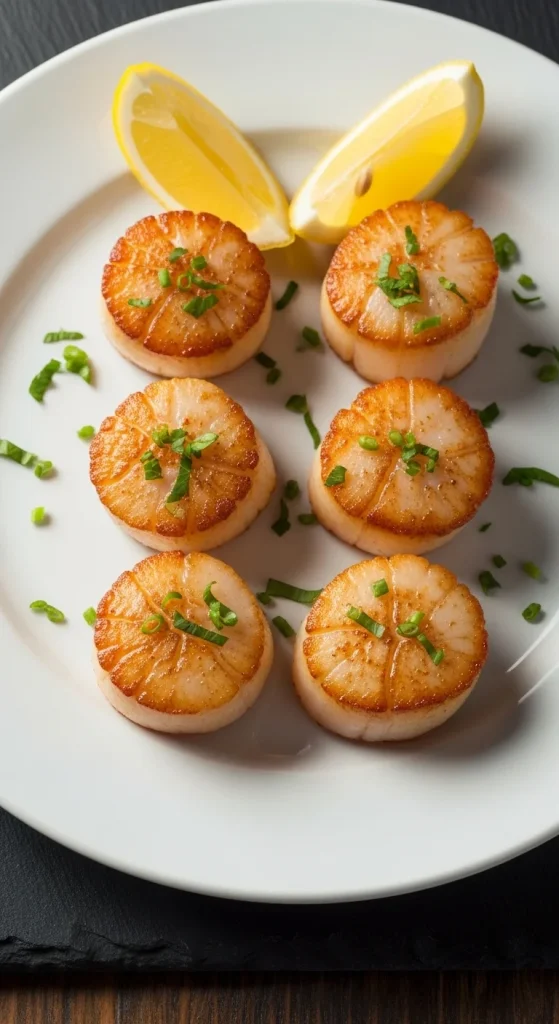
Step 1: Choose the Right Scallops
The key to restaurant-quality scallops starts long before you turn on the stove.
Types of scallops:
- Sea scallops: Larger (about 1–2 inches wide) and best for searing.
- Bay scallops: Smaller, sweeter, and great for pasta or stir-fries.
What to look for:
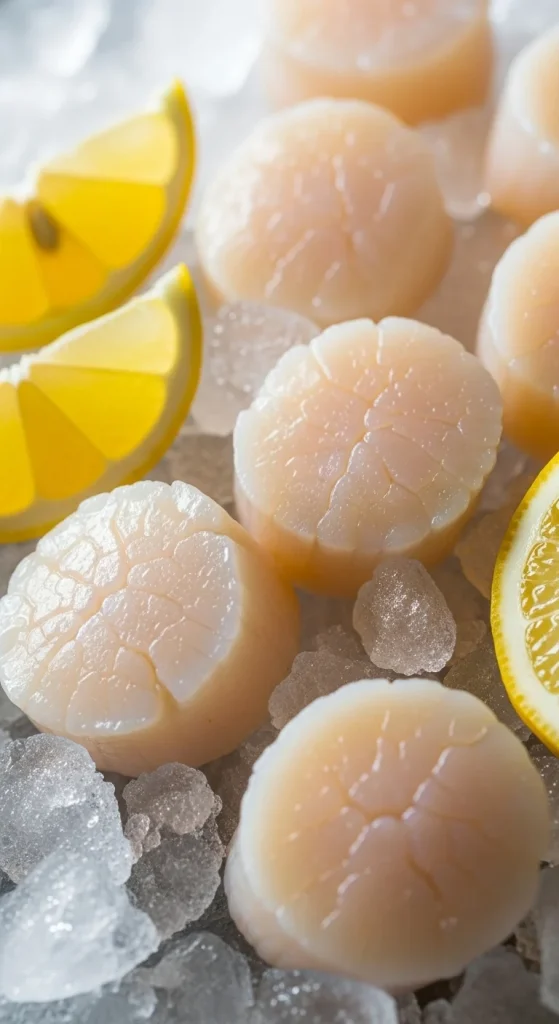
- “Dry” scallops – These are untreated and natural. They sear beautifully because they aren’t soaked in preservatives.
- Avoid “wet” scallops – They’re treated with sodium tripolyphosphate (STP), which makes them absorb water and prevents that perfect sear.
Pro tip: If your scallops look milky or slippery, they’re likely “wet.” Dry scallops have a firmer texture and a natural ocean scent.
Step 2: Prep Like a Chef
Getting scallops ready to cook takes just a few careful steps — and each one makes a difference.
Here’s how to prep them perfectly:
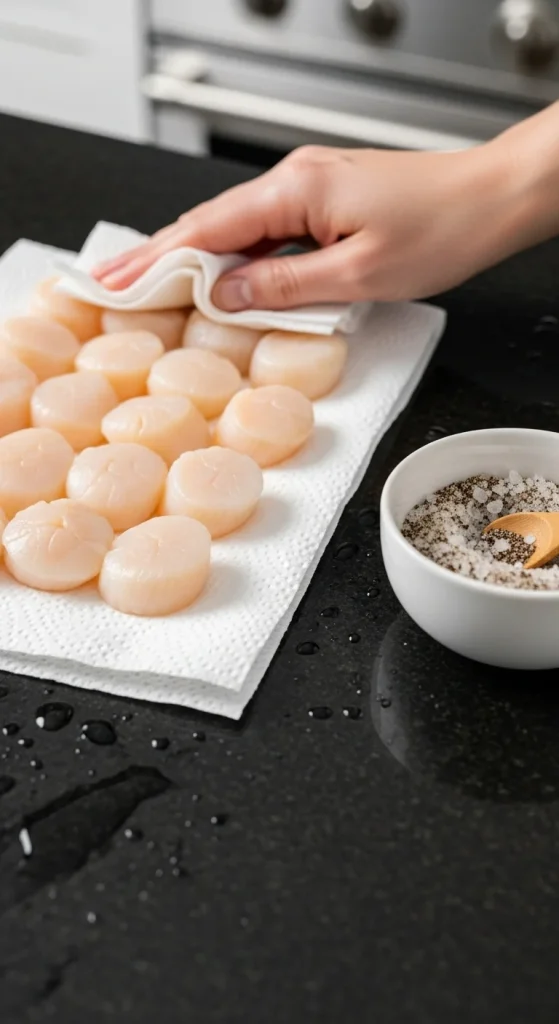
- Pat dry with paper towels. Moisture is your enemy when searing — dry scallops give you that signature golden crust.
- Remove the side muscle. It’s the small, tough piece on the edge of the scallop — just peel it off with your fingers.
- Season simply. Salt and pepper are all you need. Let the scallops sit at room temperature for 10 minutes before cooking.
Pro tip: For extra flavor, you can season lightly with smoked paprika or garlic powder — but simplicity always wins.
Step 3: Master the Sear
Now for the fun part — searing scallops to golden perfection. It’s all about heat and timing.
You’ll need:
- A heavy skillet (cast iron or stainless steel works best)
- 1–2 tablespoons oil (olive oil, avocado oil, or grapeseed oil for high heat)
- Optional: 1 tablespoon butter for flavor
Step-by-step sear:
- Preheat your pan over medium-high heat for at least 2–3 minutes — it needs to be hot before the scallops go in.
- Add oil and wait until it shimmers.
- Place scallops flat-side down in the pan — don’t crowd them. You should hear a satisfying sizzle.
- Sear for 1 ½ to 2 minutes without touching. The magic happens when you leave them alone!
- Flip and sear for another 1–2 minutes until both sides are golden brown and the centers are opaque.
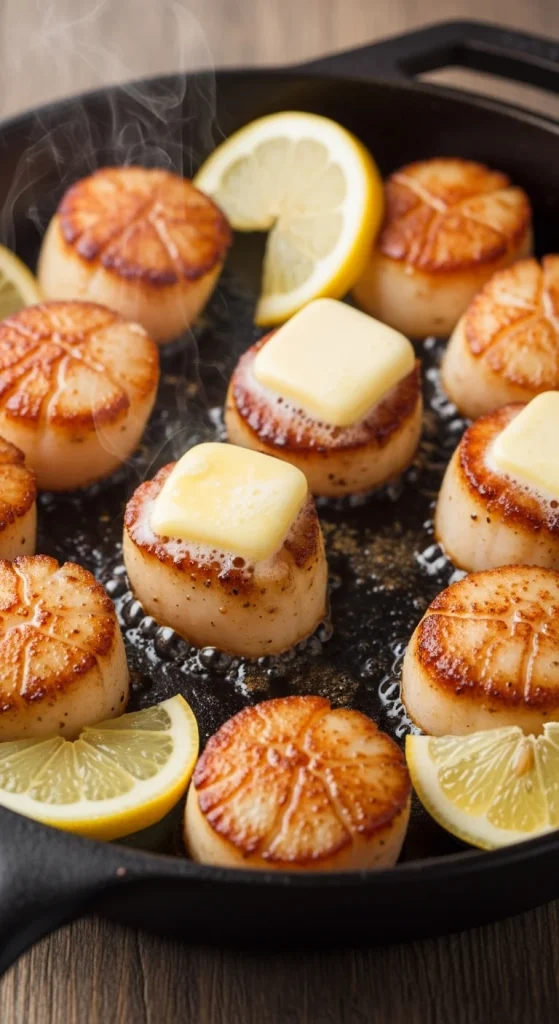
- Finish with butter (optional): Add a tablespoon of butter and a squeeze of lemon juice to the pan for that restaurant-level gloss and flavor.
Pro tip: Resist the urge to move them early — if they stick, they’re not ready to flip yet. Once the crust forms, they’ll release naturally.
Step 4: Check for Doneness
Perfectly cooked scallops are delicate, never rubbery or dry.
The signs they’re ready:
- Color: Both sides are golden brown.
- Texture: Slightly springy to the touch, not firm.
- Appearance: The center should look opaque, not translucent.
If you’re unsure, cut one open — it should be tender and just cooked through. Overcooking by even 30 seconds can make them tough, so watch them closely!
Pro tip: Once they’re done, transfer scallops immediately to a plate. They’ll keep cooking slightly from residual heat.
Step 5: Serve Like a Pro
Scallops are simple but elegant, and how you serve them can elevate the entire meal.
Pairing ideas:
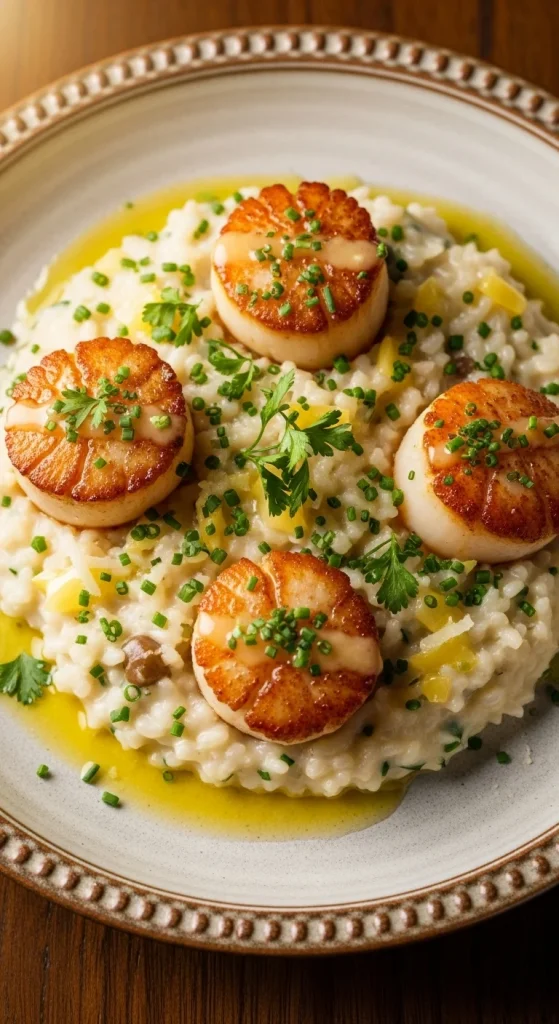
- Classic style: Serve over a bed of creamy mashed potatoes or risotto.
- Fresh & light: Pair with sautéed spinach, asparagus, or a citrus salad.
- Fancy twist: Plate them with a drizzle of lemon butter, garlic sauce, or browned butter with capers.
Garnish ideas:
- Fresh herbs like parsley, thyme, or dill
- Lemon zest or a squeeze of lemon juice
- A sprinkle of sea salt for the final touch
Step 6: Common Mistakes to Avoid
Even simple recipes can go sideways — here’s how to keep your scallops perfect every time.
Avoid these pitfalls:
- Pan too cold: You’ll never get a sear, just pale, soft scallops.
- Pan too crowded: They’ll steam instead of brown. Cook in batches if needed.
- Too much moisture: Always pat dry before seasoning.
- Overcooking: Scallops cook fast — stay close and trust your timing.
Pro tip: Once you get comfortable, experiment! Try adding white wine to deglaze the pan or finishing with a garlic-infused butter sauce.
The Final Bite
Cooking scallops like a pro isn’t about complicated techniques — it’s about precision, patience, and confidence. With a hot pan, a few simple ingredients, and a light touch, you can create a dish that feels elegant and indulgent but takes less than 10 minutes to make.
So go ahead, grab some fresh scallops, heat up that pan, and prepare to impress yourself (and anyone lucky enough to join you).
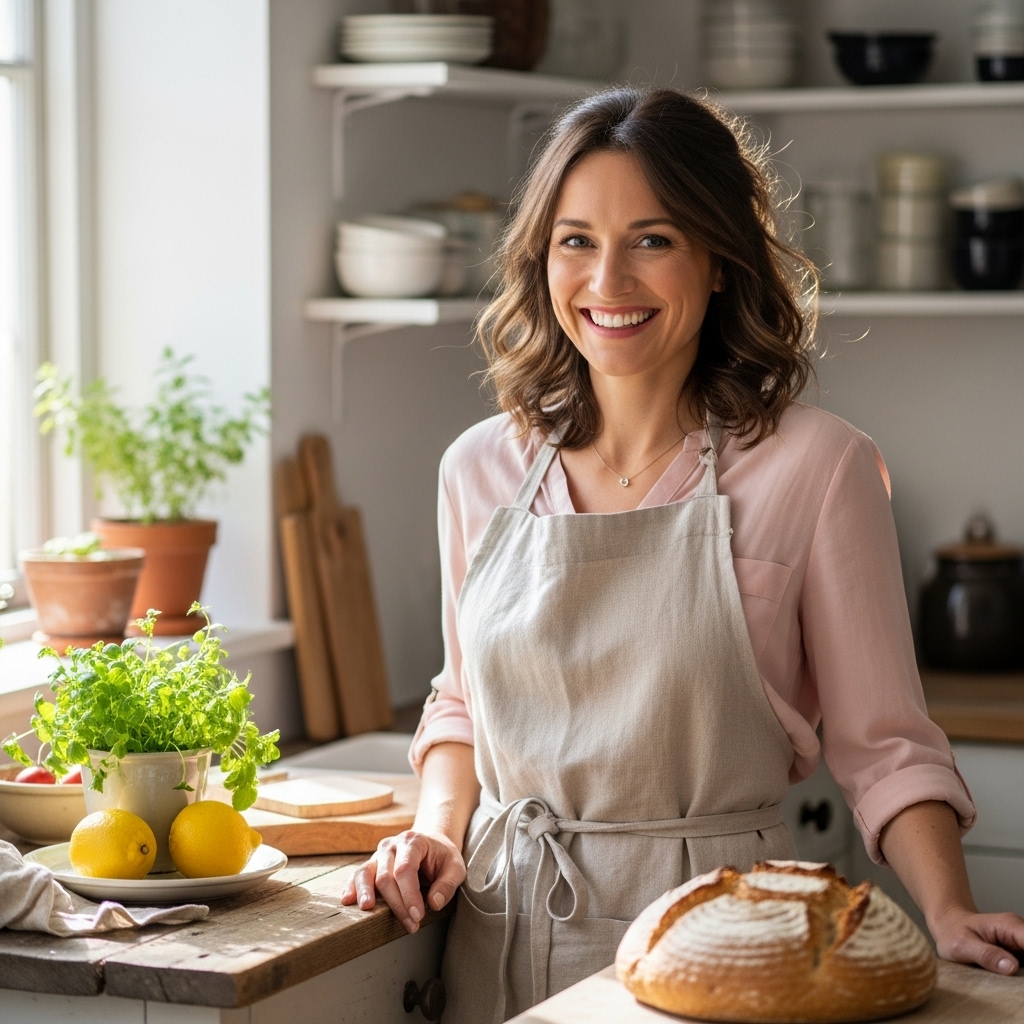
Hannah Collins is a passionate home cook and food storyteller who believes every recipe tells a little love story. At TastyWriter, she shares simple, delicious recipes made for real kitchens and busy days — from cozy comfort dishes to creative new favorites. When she’s not cooking, you’ll find her photographing food, testing family recipes, or sipping tea while dreaming up her next tasty idea.
Leave a Reply