

Cooking duck breast perfectly at home might sound like something reserved for fine dining, but it’s much easier than you think. When done right, it’s tender, rosy in the center, and beautifully crisp on the outside — the kind of dish that turns an ordinary evening into something special.
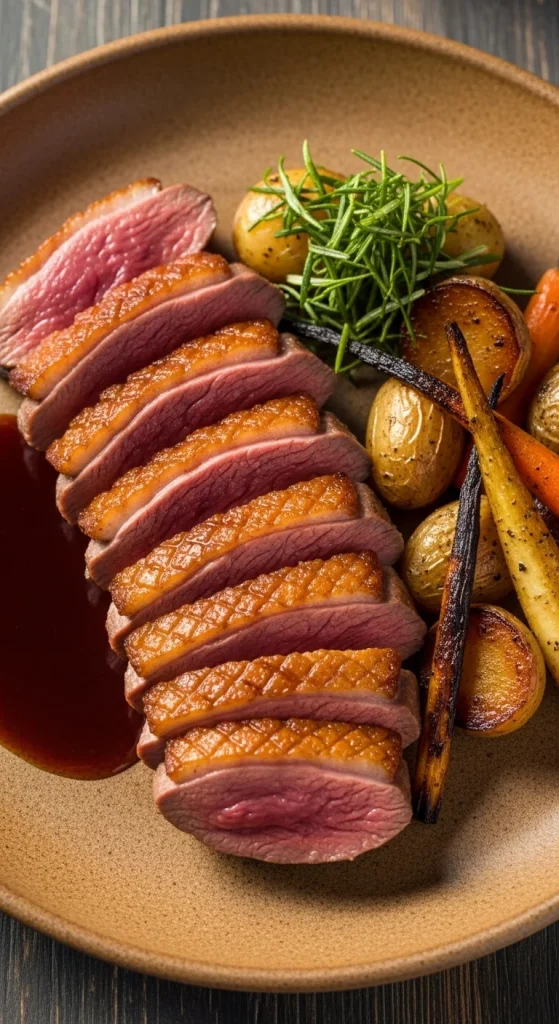
Whether you’re serving it for a romantic dinner or a dinner party showstopper, this guide will help you master that perfect medium-rare duck breast — restaurant-quality, right from your own kitchen.
Step 1: Choose the Right Duck
The best duck breasts come from Moulard, Muscovy, or Pekin ducks — each has slightly different flavor and fat levels:
- Moulard duck: Rich and meaty, great for robust sauces.
- Muscovy duck: Leaner, slightly gamey flavor.
- Pekin duck: Mild, tender, and perfect for first-timers.
Aim for skin-on duck breasts — that golden, crispy skin is half the experience.
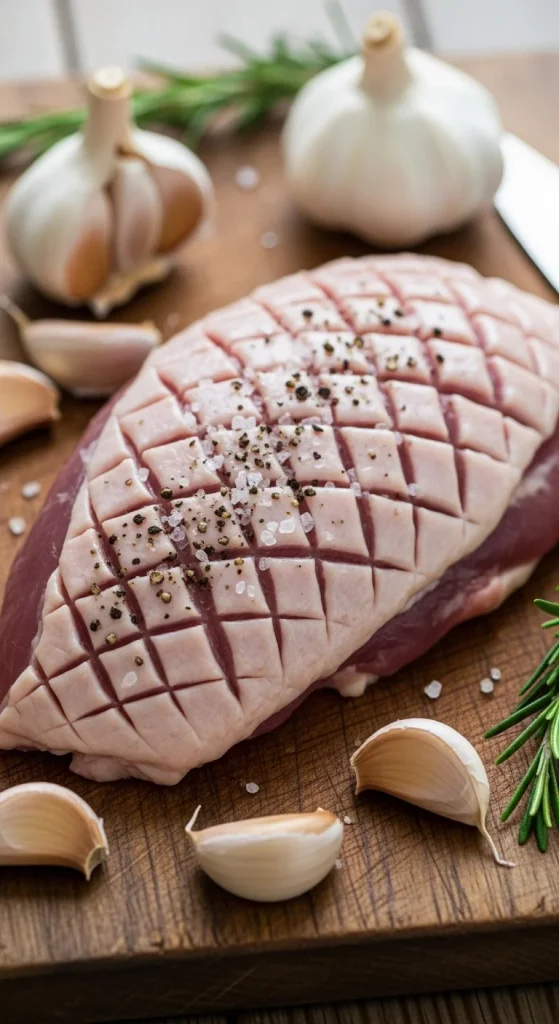
Pro Tip: If frozen, thaw the duck breasts in the fridge overnight for even cooking.
Step 2: Score and Season the Skin
That beautiful crisp skin doesn’t happen by accident. Scoring it allows the fat to render properly and the skin to crisp up without curling.
Here’s how:
- Pat the duck breast dry with paper towels.
- Using a sharp knife, lightly score the skin in a crisscross pattern, being careful not to cut into the meat.
- Season generously with salt and pepper on both sides.
Optional: Add herbs like thyme, rosemary, or a hint of orange zest for aromatic flavor.
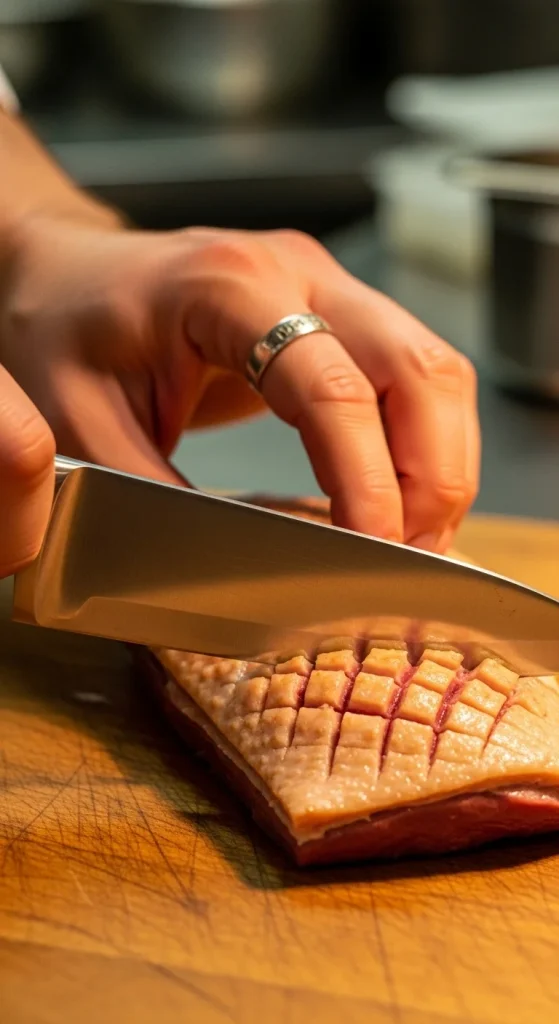
Pro Tip: The drier the skin before searing, the crispier it will become — moisture is the enemy of crispness!
Step 3: Render the Fat — The Key Step
Duck breast is naturally rich in fat, so the goal is to render it slowly until the skin turns crisp and golden.
- Place the duck breasts skin-side down in a cold, dry skillet — no oil needed.
- Turn the heat to medium-low. As the pan warms, fat will begin to melt and pool.
- Let it cook for 8–10 minutes, pouring off excess fat occasionally (save it — it’s liquid gold for roasting potatoes).
- When the skin is deeply golden brown and crisp, flip the duck.

Pro Tip: Don’t rush this part — slow rendering is what separates chewy skin from that satisfying crispy bite.
Step 4: Sear the Other Side & Finish in the Oven
Once the fat is rendered and the skin is crisp, it’s time to cook the meat to a perfect medium-rare.
- After flipping, sear the flesh side for 1–2 minutes to develop color.
- Transfer the skillet to a preheated oven at 400°F (200°C).
- Roast for 5–7 minutes, depending on the thickness of your duck breast.
Use a meat thermometer to check doneness:
- Medium-rare: 130–135°F (54–57°C)
- Medium: 140°F (60°C)
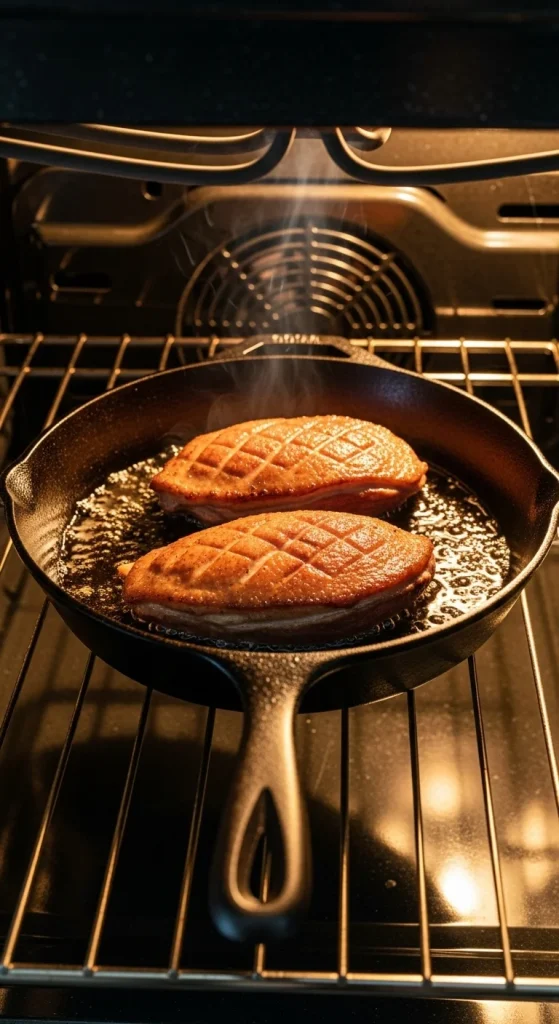
Pro Tip: Duck breast should have a blush of pink in the center — overcooking makes it tough and dry.
Step 5: Rest & Slice for Perfection
Just like steak, duck breast needs a rest before slicing to lock in those flavorful juices.
- Remove from the oven and place the duck breasts on a cutting board.
- Let them rest for 5–10 minutes, tented loosely with foil.
- Slice diagonally across the grain into thin pieces.
The inside should be rosy pink, tender, and glistening with juices — pure perfection.
Pro Tip: Don’t skip the rest time — it’s what keeps the meat juicy and restaurant-worthy.
Step 6: Make a Simple Pan Sauce
Those flavorful brown bits in the skillet? They’re your shortcut to an incredible sauce.
Easy Pan Sauce Recipe:
- Pour off excess fat, leaving about a tablespoon in the pan.
- Add a splash of red wine or orange juice to deglaze, scraping up the browned bits.
- Stir in 1 tablespoon balsamic vinegar and 1 teaspoon honey or jam (like cherry or apricot).
- Reduce slightly, then whisk in a small knob of butter for a glossy finish.
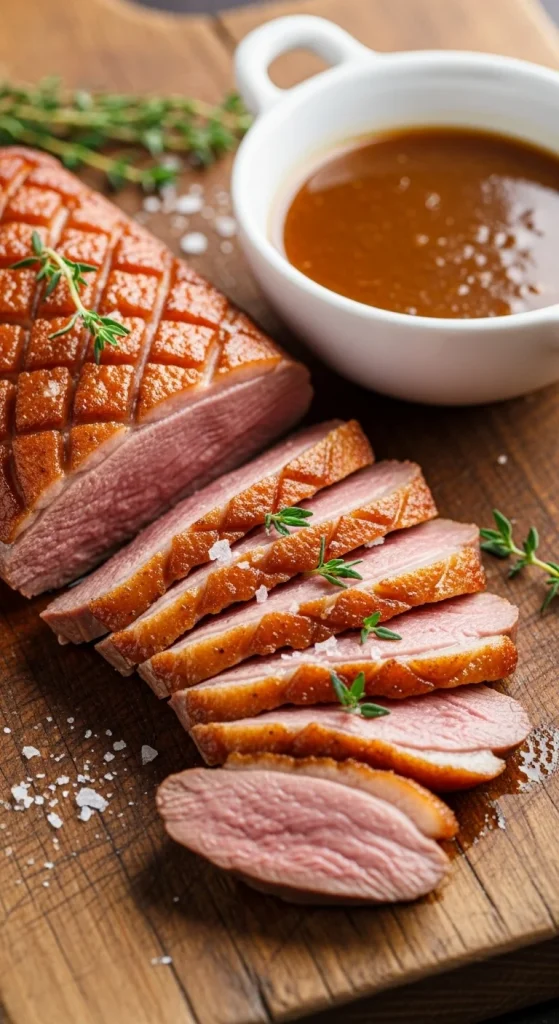
Pro Tip: Duck loves sweet and fruity flavors — think orange, cherry, or pomegranate reductions.
Step 7: Pair It Like a Pro
Duck is luxurious and pairs beautifully with rich, seasonal sides.
Delicious Pairings:
- Sides: Garlic mashed potatoes, roasted carrots, or creamy polenta.
- Greens: Sautéed spinach, kale, or Brussels sprouts.
- Wine: A medium-bodied red like Pinot Noir or Merlot balances the richness perfectly.
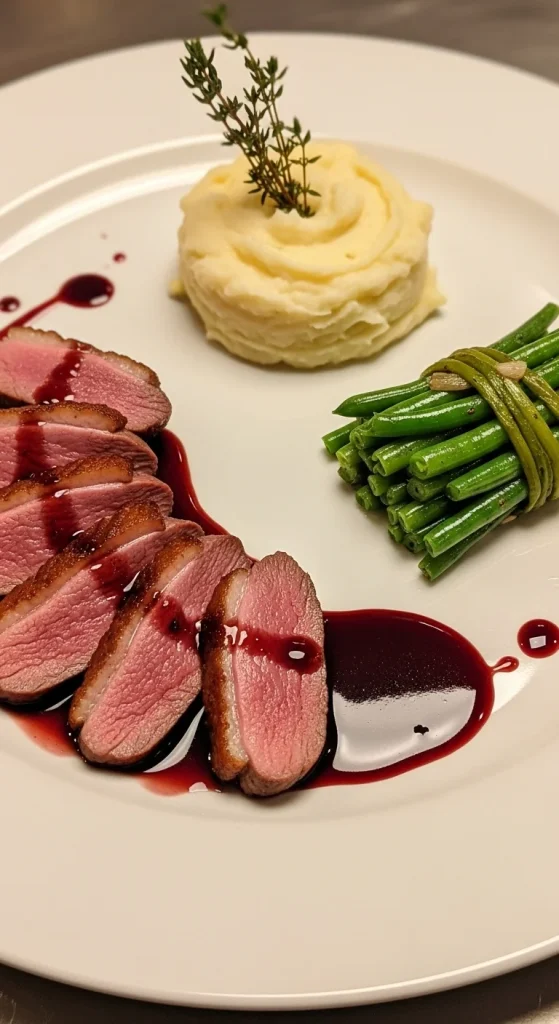
Pro Tip: For a modern twist, serve with a side of fruit compote — plum, fig, or cherry adds a beautiful contrast.
Final Bite
Cooking duck breast medium-rare at home isn’t just achievable — it’s downright rewarding. You’ll end up with crisp skin, juicy pink meat, and flavors that feel both elegant and comforting.
Once you master this method, you’ll never need to order duck at a restaurant again (unless it’s to compare your own masterpiece!).
Save this recipe for later — your next dinner party deserves this showstopper!

Hannah Collins is a passionate home cook and food storyteller who believes every recipe tells a little love story. At TastyWriter, she shares simple, delicious recipes made for real kitchens and busy days — from cozy comfort dishes to creative new favorites. When she’s not cooking, you’ll find her photographing food, testing family recipes, or sipping tea while dreaming up her next tasty idea.
Leave a Reply