

There’s something magical about turning a few humble ingredients into silky, tender pasta right at home. The texture, the flavor, and even the process — it all feels comforting and rewarding. Once you’ve tried homemade pasta, you’ll never look at store-bought noodles the same way again. The best part? It’s easier than you think and doesn’t require fancy tools or chef-level skills.
Gather Your Simple Ingredients
Making pasta from scratch only takes a few staples you likely already have in your kitchen.
You’ll need:
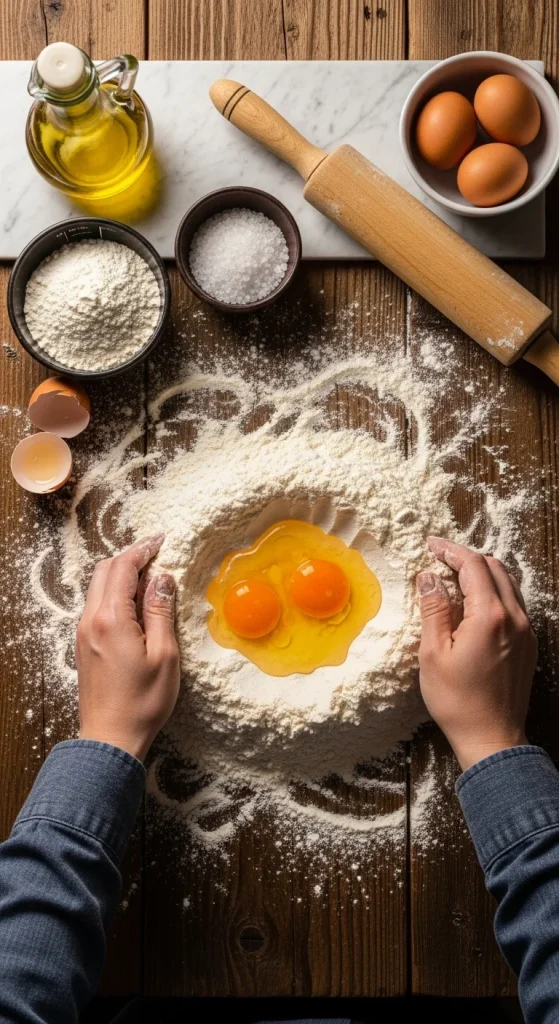
- 2 cups all-purpose flour (or “00” flour for a silkier texture)
- 3 large eggs
- A pinch of salt
- Optional: 1 tablespoon olive oil for extra elasticity
That’s it! Simple, pure ingredients that make the freshest dough imaginable.
Pro Tip: “00” flour gives you a smoother, softer pasta dough — perfect for fettuccine or ravioli. If you like a more rustic bite, use semolina or a mix of both.
Step 1: Make the Dough
This is where the magic begins.
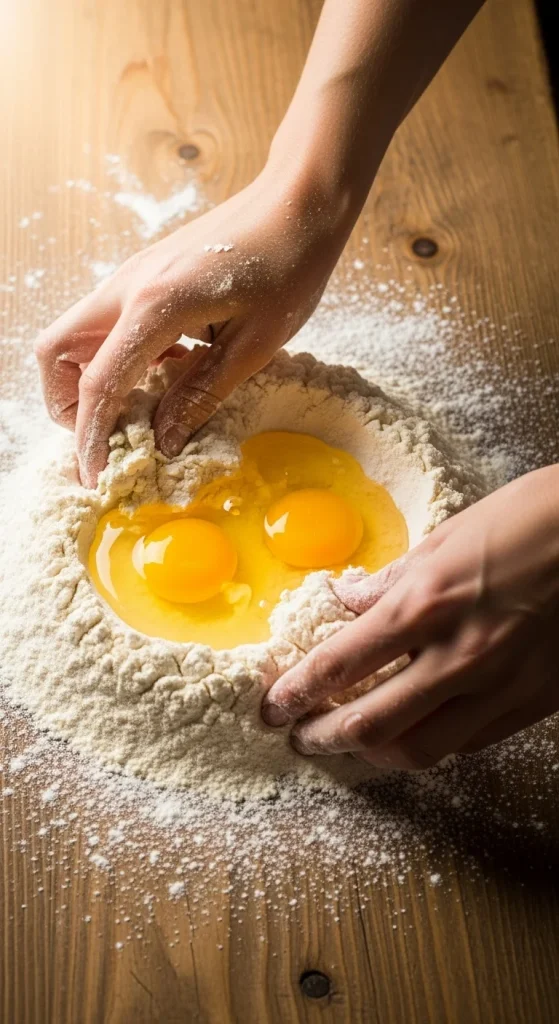
- On a clean countertop, make a flour well — a mound of flour with a hole in the middle.
- Crack your eggs into the center and add the salt.
- Use a fork to gently whisk the eggs, slowly pulling in flour from the edges until it starts forming a sticky dough.
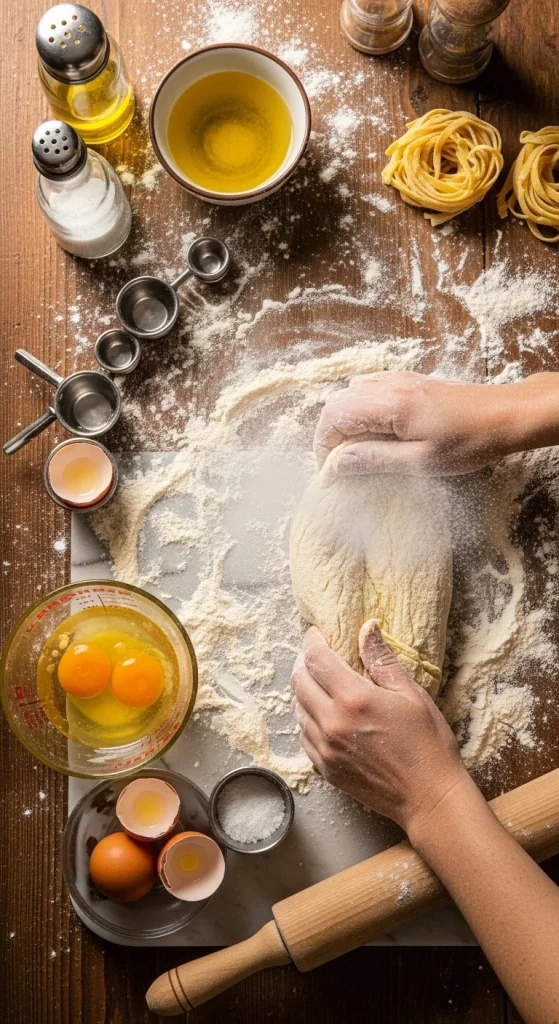
- Once it comes together, use your hands to knead it.
Knead the dough for about 8–10 minutes until it’s smooth, elastic, and slightly tacky. Wrap it tightly in plastic wrap and let it rest for 30 minutes at room temperature. This rest allows the gluten to relax, making the dough easier to roll.
Step 2: Roll It Out
After the dough has rested, it’s time to roll — either by hand or with a pasta machine.
- Divide the dough into smaller portions to make it easier to handle.
- Flatten one piece slightly and start rolling from the center outward.
- Keep dusting with flour to prevent sticking.
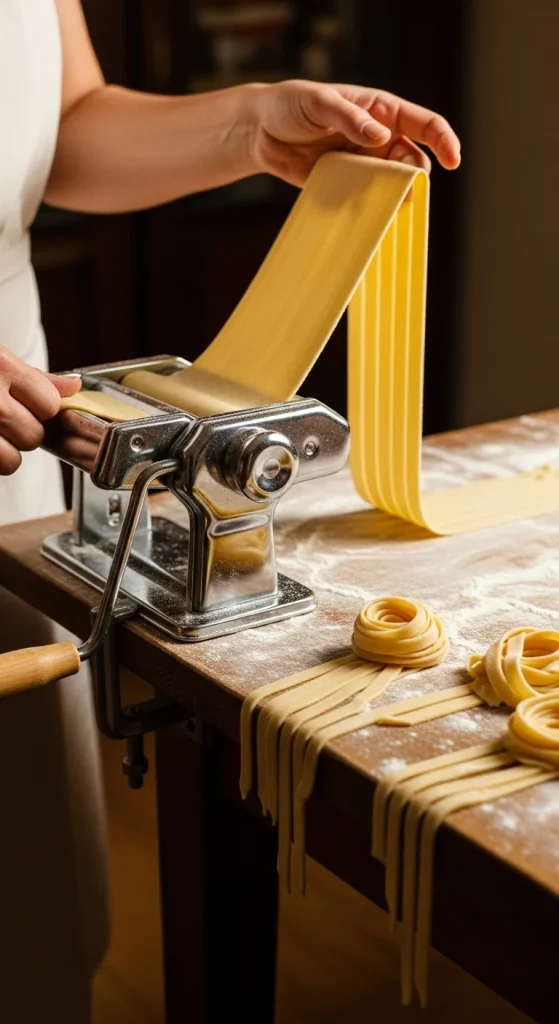
If you’re using a pasta machine, start on the widest setting and run the dough through several times, folding it in half each time until smooth. Then gradually move to thinner settings until you reach your desired thickness (usually about 1–2 mm).
Tip: You want your dough thin enough that you can almost see your hand through it.
Step 3: Cut & Shape the Pasta
Now for the fun part — shaping your pasta!
You can create endless shapes depending on what you’re craving:
- Tagliatelle or Fettuccine: Roll the sheet, then slice with a sharp knife into ribbons.
- Pappardelle: Wider ribbons, perfect for hearty sauces.
- Lasagna Sheets: Simply cut large rectangles.
- Ravioli: Sandwich small spoonfuls of filling between sheets and press to seal.
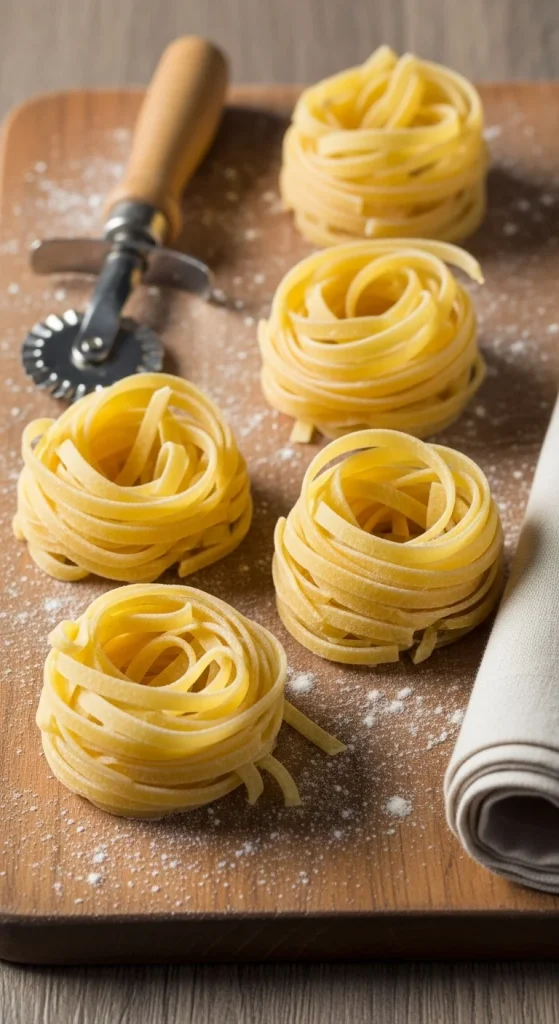
Dust your cut pasta with flour and arrange it in loose nests. If you’re not cooking it immediately, let it dry slightly or freeze it for later.
Step 4: Cook to Perfection
Fresh pasta cooks fast — usually 2–4 minutes is all it takes.
- Bring a large pot of salted water to a rolling boil.
- Add the pasta and stir gently to keep it from sticking.
- When it floats to the top and feels tender, it’s done!
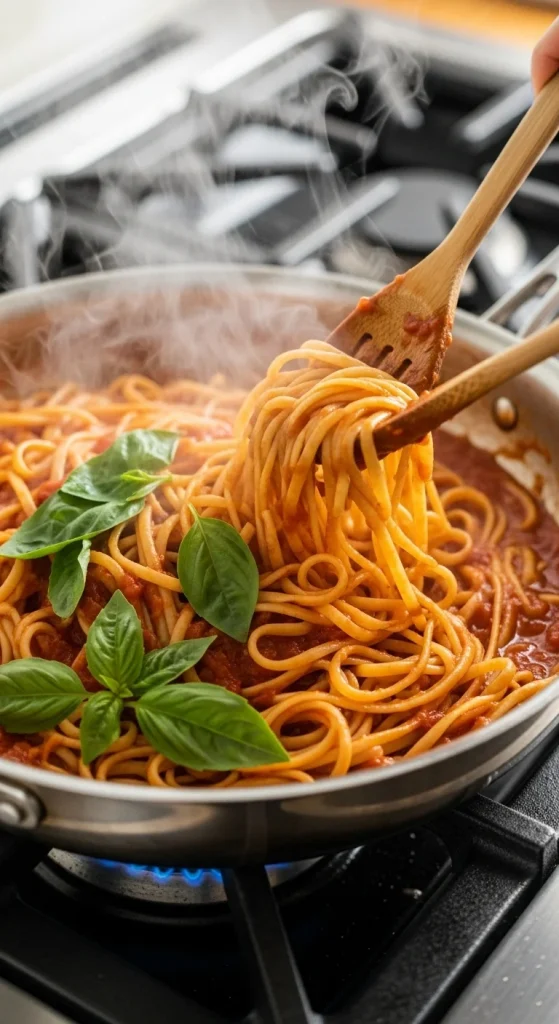
Drain it (save a little pasta water for sauce), then toss it immediately with your favorite sauce — think buttery garlic, creamy Alfredo, or a bright tomato basil.
Step 5: Serve & Enjoy
Nothing beats the first bite of pasta you made entirely by hand. The texture is soft but satisfying, the flavor is richer, and the satisfaction? Off the charts.
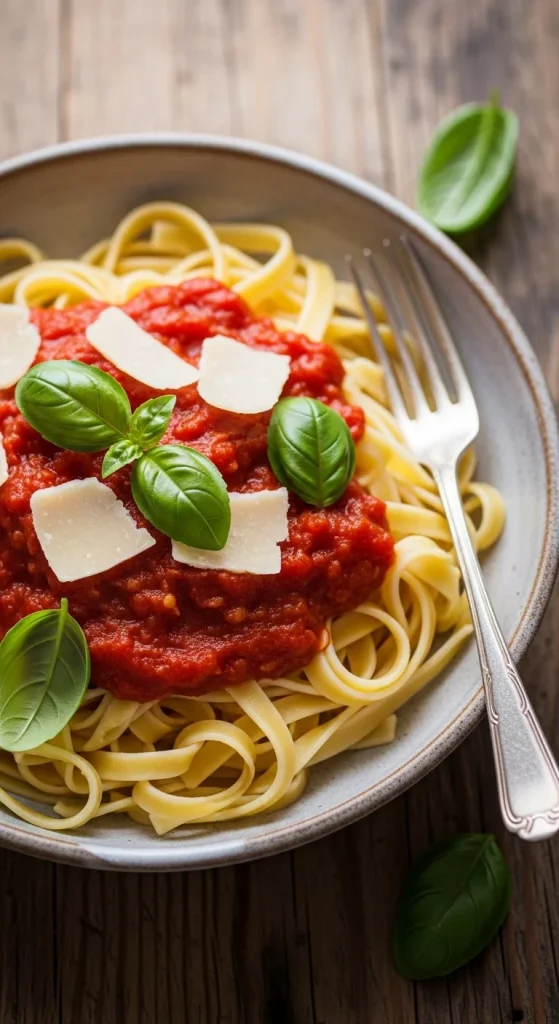
Top it with freshly grated Parmesan, a drizzle of olive oil, and a sprinkle of herbs. Pair it with a glass of wine and enjoy the fact that you just created something truly Italian and truly yours.
Extra Tips for Success
- Rest the dough: Don’t skip this — it makes rolling easier and improves texture.
- Flour is your friend: Keep it handy to stop sticking, but don’t overuse it or your pasta will turn dry.
- Freeze it: Fresh pasta freezes beautifully — just dust it with flour, coil into nests, and freeze in an airtight container.
- Use pasta water in your sauce: The starch helps it cling perfectly to your noodles.
The Takeaway
Homemade pasta isn’t just food — it’s a little ritual of care, creativity, and connection. Once you experience the joy of mixing, rolling, and shaping it yourself, you’ll wonder why you ever settled for boxed noodles.
So next time you’re planning dinner, skip the store-bought and make your own. It’s simpler than it sounds — and infinitely more satisfying.
Save this guide for your next kitchen adventure — your pasta night will never be the same again!

Hannah Collins is a passionate home cook and food storyteller who believes every recipe tells a little love story. At TastyWriter, she shares simple, delicious recipes made for real kitchens and busy days — from cozy comfort dishes to creative new favorites. When she’s not cooking, you’ll find her photographing food, testing family recipes, or sipping tea while dreaming up her next tasty idea.
Leave a Reply