

Spring vegetables can go from crisp and vibrant to sad and soggy in minutes. If you’ve ever overcooked asparagus, turned peas grey, or made radishes taste flat, you’re not alone. The good news? You don’t need chef skills or fancy gear. You just need a few smart habits that lock in colour, texture, and taste—every time.
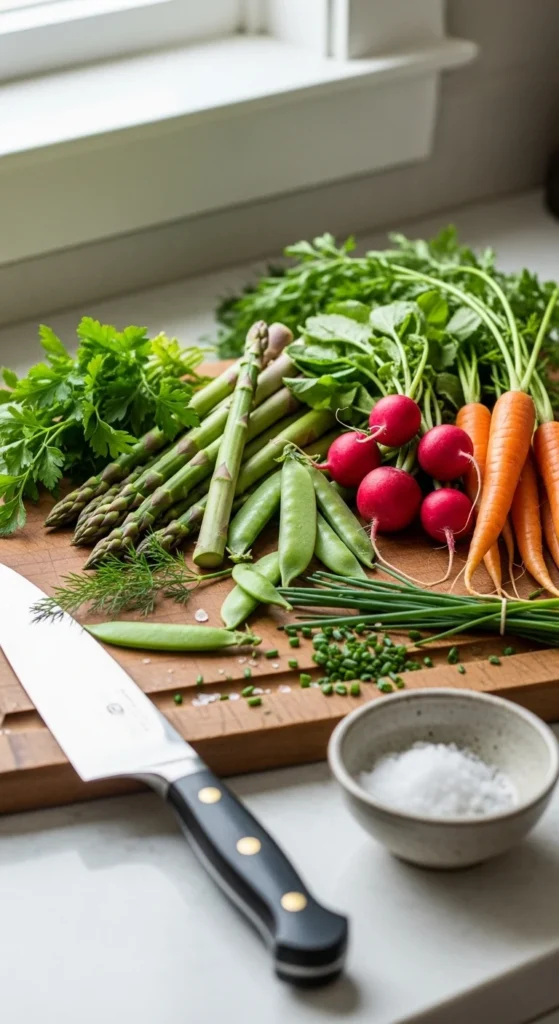
Start with the Right Prep (This Is Where Colour Begins)
Bright veggies start before the heat even hits the pan. Prep can either protect colour or set you up for mush.
Do this first:
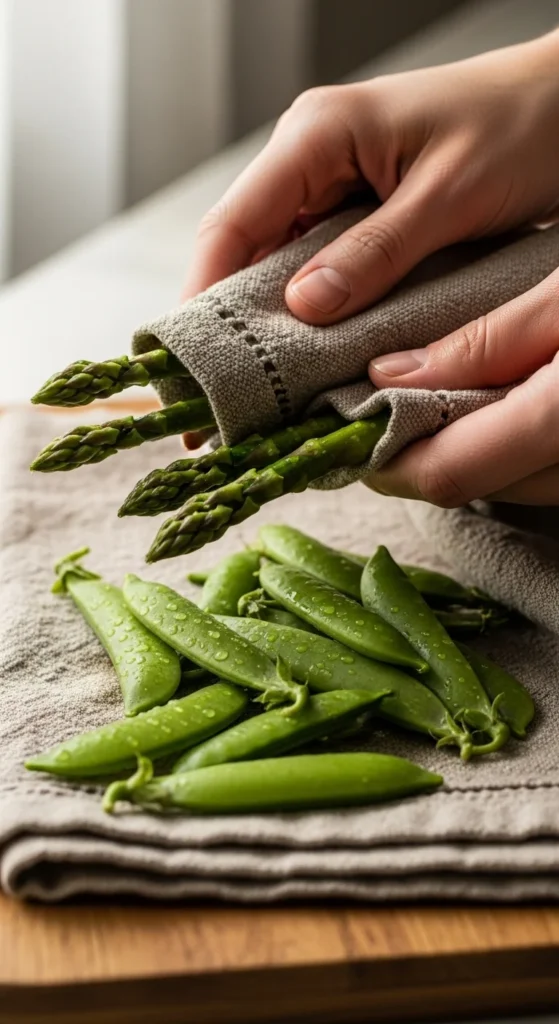
- Dry your vegetables well. Water on the surface creates steaming instead of browning. Use a clean towel or paper towels.
- Cut evenly. Mixed sizes cook at different speeds. That’s how you end up with half soft, half raw.
- Keep delicate veggies whole or in big pieces. Asparagus spears, snap peas, and green beans hold up better when they aren’t chopped tiny.
- Salt at the right time. Salt pulls water out. For quick-cooking vegetables, add salt near the end if you want them snappy.
Quick prep tips by veggie:
- Asparagus: snap off tough ends, keep spears whole
- Snap peas: trim strings, leave whole
- Radishes: halve or quarter, keep some bite
- Spring carrots: scrub, slice on a diagonal
- Peas: frozen peas are fine, just don’t boil them forever
Use High Heat, Short Time (The Fast Track to Bright Veg)
If you remember one rule, make it this: spring vegetables like quick cooking. Long cook times drain colour and make flavours dull.
Best methods for bright results:
- Sautéing: Fast, great for asparagus, beans, peas, spinach
- Roasting: Best for carrots, radishes, broccolini, spring onions
- Blanching: Great for peas, beans, asparagus if you want crisp-tender
- Grilling or grill pan: Adds char and keeps texture
Simple sauté formula (works for most spring veg):
- Heat pan first (medium-high).
- Add a little oil.
- Add vegetables in a single layer.
- Toss once or twice. Don’t babysit.
- Finish with salt and acid.
One easy trick: Don’t overcrowd the pan. If the vegetables pile up, they steam. Steam can be fine sometimes, but it often turns things soft and pale.
Blanching 101: The “Bright Green” Trick That Actually Works
Blanching is a simple way to keep greens bright and crisp. It’s also the fastest way to prep veggies for salads, pasta, or quick stir-fries.
How to blanch without overcooking:
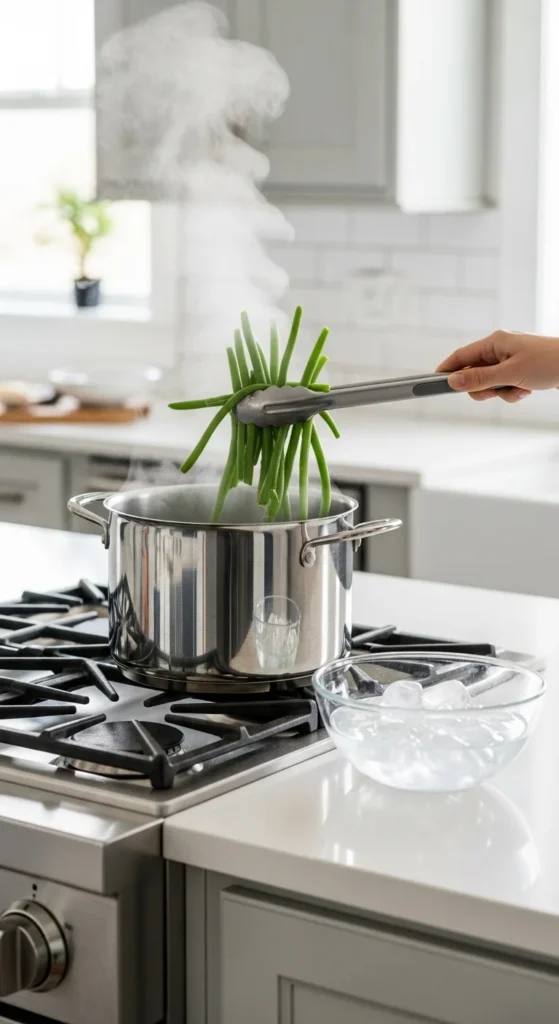
- Bring a pot of water to a strong boil.
- Salt the water so it tastes slightly salty.
- Drop in veggies for a short time:
- Asparagus: 1–2 minutes
- Green beans: 2–3 minutes
- Peas: 30–60 seconds
- Move them straight into a bowl of ice water.
- Drain and dry.
Why the ice water matters: it stops the cooking fast, so colour stays bright and the texture stays crisp.
Use blanched veggies in:
- Pasta dishes
- Grain bowls
- Salads with lemon dressing
- Quick stir-fries (they’ll finish in seconds)
Add Acid at the End (Lemon, Vinegar, Even Pickle Juice)
Spring vegetables taste best when you add a little “spark.” That’s what acid does. It makes flavours pop and keeps your dish from tasting heavy.
Easy acids that work:
- Lemon juice
- Lime juice
- A splash of white wine vinegar
- Apple cider vinegar
- Pickle juice (yes, really—great on roasted carrots and beans)
Timing matters: add acid after cooking, not before. If you add it too early, it can soften certain vegetables faster and mess with texture.
Try these quick finishers:
- Asparagus: lemon + black pepper
- Peas: lemon zest + olive oil
- Roasted radishes: vinegar + a pinch of sugar
- Carrots: lime + chilli flakes
Season Like You Mean It (Without Making It Complicated)
If vegetables taste bland, it’s usually not the vegetable. It’s the seasoning.
Here’s a simple “flavour kit” that covers most spring dishes:
Choose 1 from each column:
- Salt: flaky salt, kosher salt
- Fat: olive oil, butter, vegan butter, sesame oil
- Aromatic: garlic, spring onion, shallot
- Acid: lemon, vinegar, lime
- Extra: herbs, chilli flakes, toasted nuts, sesame seeds
Budget-friendly “big flavour” extras:
- Toasted sunflower seeds (cheap, crunchy)
- A spoon of mustard in a dressing
- Soy sauce for umami
- A pinch of sugar to balance bitter greens
Herbs that match spring vegetables:
- Dill (great with peas, potatoes, carrots)
- Parsley (works with everything)
- Mint (great with peas, cucumbers, salads)
- Basil (great with tomatoes, beans, zucchini)
The Quick Roast Method for Sweet, Caramelised Veg (Without Drying Them Out)
Roasting is perfect for spring carrots, radishes, broccolini, and spring onions. But roasting too long can dry them out.
Use this simple method:
- Heat oven to 220°C / 425°F.
- Cut veggies into similar sizes.
- Toss with oil and salt.
- Spread in one layer on a tray.
- Roast until edges brown, still a little firm.
Fast roast times:
- Radishes: 15–20 minutes
- Carrots (thin): 18–25 minutes
- Broccolini: 10–15 minutes
- Spring onions: 10–12 minutes
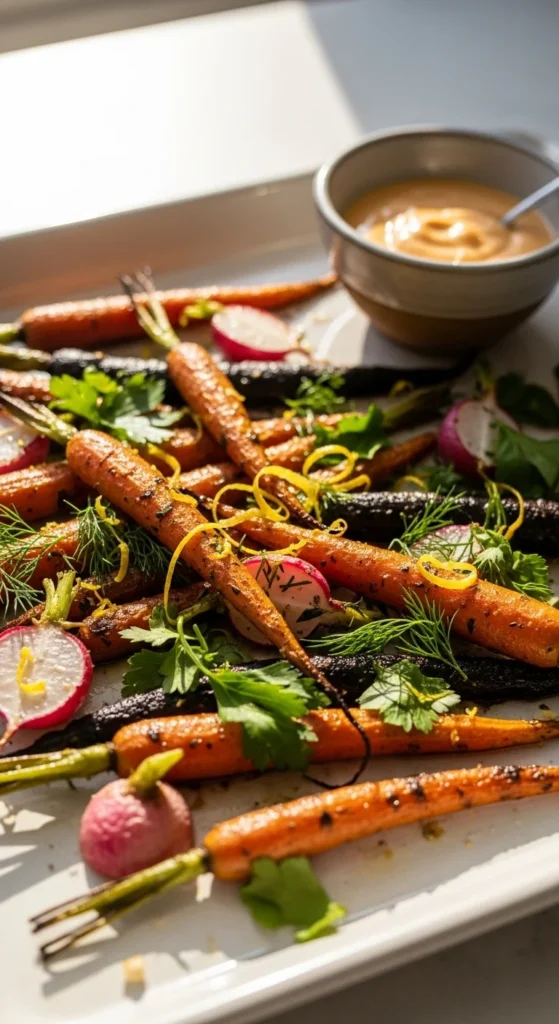
Finish roasted vegetables with:
- lemon juice
- chopped herbs
- a drizzle of tahini or yogurt sauce
- toasted nuts
Conclusion: Keep It Bright, Keep It Simple
If you want spring vegetables to stay colourful and tasty, stick to the basics: dry them well, cook them fast, don’t crowd the pan, and finish with salt plus a squeeze of lemon. That’s it. Small steps, big difference.
Save this article for later, and the next time you cook asparagus, peas, or radishes, you’ll know exactly how to keep them bright and full of flavour.

Hannah Collins is a passionate home cook and food storyteller who believes every recipe tells a little love story. At TastyWriter, she shares simple, delicious recipes made for real kitchens and busy days — from cozy comfort dishes to creative new favorites. When she’s not cooking, you’ll find her photographing food, testing family recipes, or sipping tea while dreaming up her next tasty idea.
Leave a Reply