

Spring vegetables are tender, colorful, and bursting with flavor—but only if you cook them right. Treat them like winter vegetables, and you’ll end up with mushy greens and bland plates. Treat them gently, and they’ll taste fresh, bright, and downright crave-worthy.
The secret? Spring veggies don’t need much help. A few smart techniques and simple seasonings can turn them into meals you’ll want to make on repeat.
Let’s break down exactly how to cook spring vegetables so they truly shine.
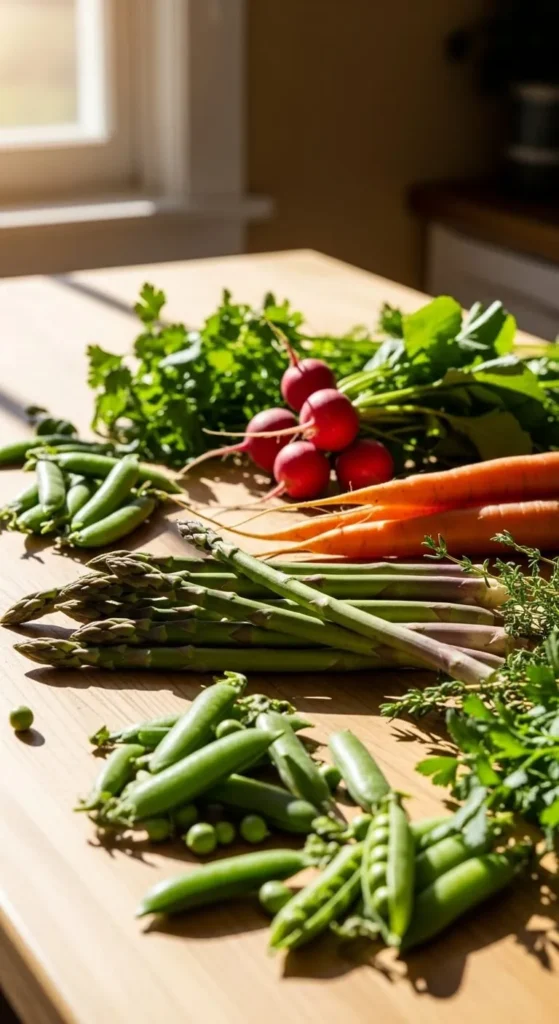
Start With the Freshest Vegetables You Can Find
Great flavor starts before you even turn on the stove. Spring vegetables are at their best when they’re fresh, crisp, and in season.
Look for:
- Bright green asparagus with firm tips
- Snap peas that actually snap
- Radishes with smooth skin and leafy tops
- Carrots that smell sweet and earthy
- Greens that look perky, not wilted
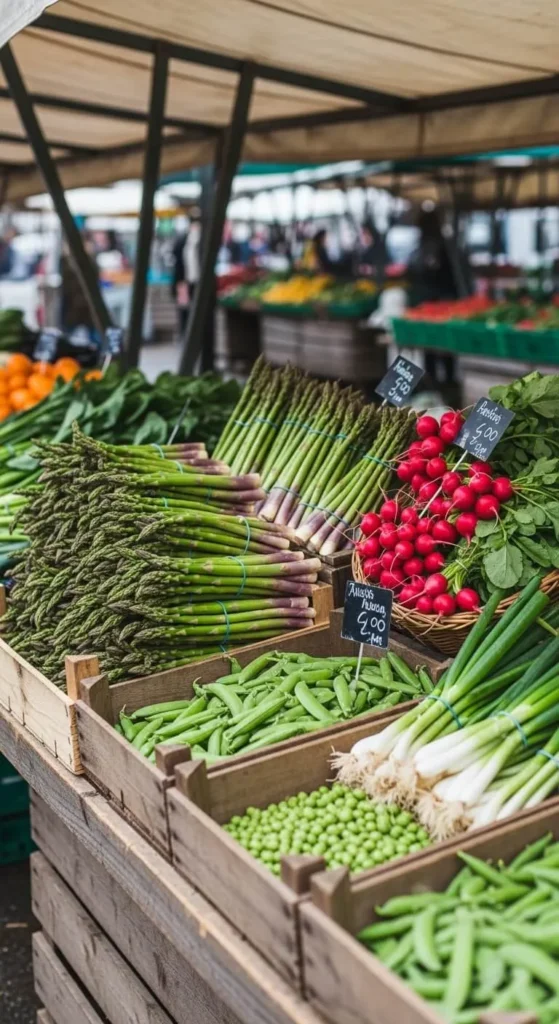
If possible, shop at a farmers market or buy produce with the shortest travel time. Fresher vegetables mean less cooking is needed—and more natural flavor comes through.
Don’t Overcook—Spring Vegetables Are Delicate
This is the most common mistake people make. Spring vegetables cook fast, and when they’re overdone, they lose both flavor and texture.
General cooking guidelines:
- Cook just until tender-crisp, not soft
- Keep colors vibrant—dull color often means overcooked
- Taste early and often
For many spring veggies, 5–8 minutes of cooking is plenty. When in doubt, stop sooner rather than later.
Use Cooking Methods That Highlight Natural Flavor
Spring vegetables shine with simple techniques that enhance—not hide—their taste.
Best methods for spring vegetables:
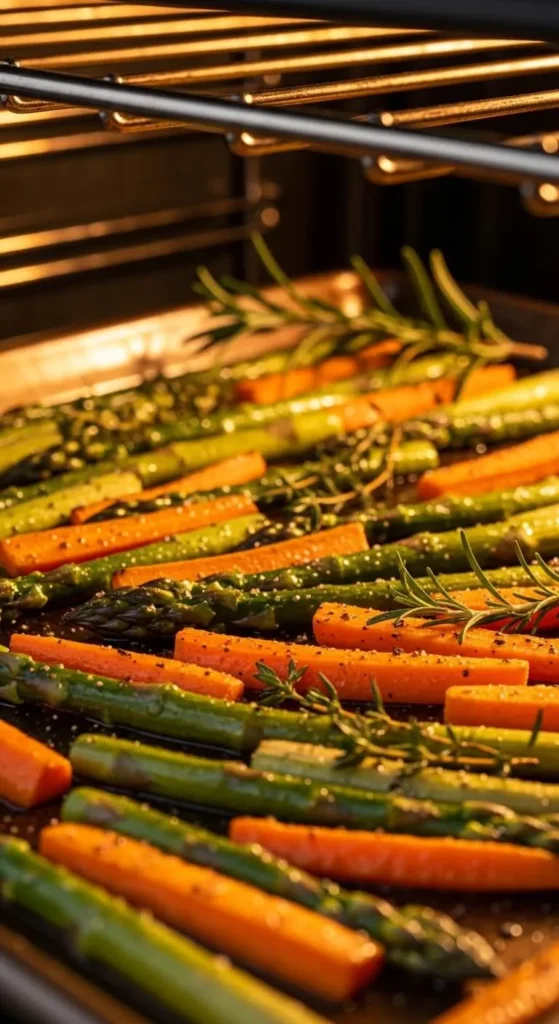
- Roasting: Brings out sweetness without heaviness
- Quick sautéing: Perfect for greens, peas, and asparagus
- Blanching: Keeps vegetables crisp and bright
- Grilling: Adds light char and smoky flavor
Avoid heavy batters, thick sauces, or long braises. Spring cooking is all about lightness.
Season Simply, But Don’t Skip It
Fresh vegetables still need seasoning—it just needs to be thoughtful.
Simple seasonings that work every time:
- Olive oil or butter
- Salt (don’t be shy)
- Freshly ground black pepper
- Lemon juice or zest
- Garlic or shallots
Season vegetables before and after cooking. A pinch of salt early brings out flavor, while a squeeze of lemon at the end makes everything pop.
Add Fresh Herbs at the End, Not the Beginning
Herbs are a spring essential, but timing matters.
Best herbs for spring vegetables:
- Parsley
- Dill
- Mint
- Chives
- Basil
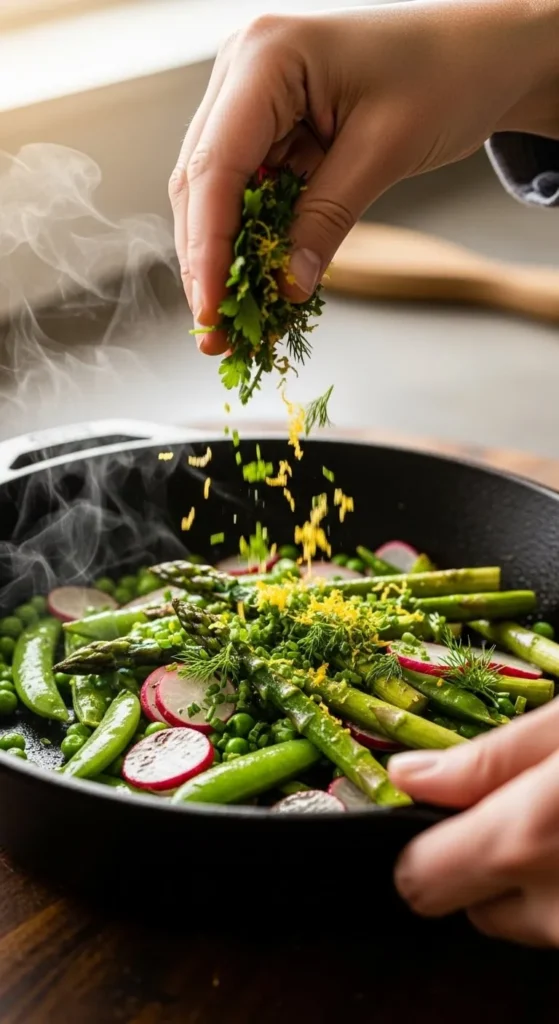
Add herbs right before serving so they stay bright and fragrant. Cooking them too long dulls their flavor and color.
Use Contrast to Make Vegetables More Exciting
A great vegetable dish has more than just “soft and green.” Contrast is what makes flavors memorable.
Easy ways to add contrast:
- Crunch: Toasted nuts, seeds, or breadcrumbs
- Creamy: Goat cheese, feta, yogurt sauce
- Acid: Vinegar, citrus, pickled onions
- Heat: Chili flakes or fresh pepper
Even one contrasting element can turn a simple veggie side into a standout dish.
Try These Easy Flavor Pairings
Not sure what goes with what? These classic pairings never fail:
- Asparagus + lemon + parmesan
- Carrots + honey + thyme
- Peas + mint + butter
- Radishes + olive oil + flaky salt
- Spinach + garlic + chili flakes
Keep these combinations in mind when cooking, and you’ll always have a reliable starting point.
Serve Them Proudly (Yes, Presentation Matters)
Spring vegetables are naturally beautiful—show them off.
- Use neutral plates
- Leave vegetables whole or in large pieces
- Finish with a drizzle of olive oil or a sprinkle of herbs
When food looks good, it tastes better too.
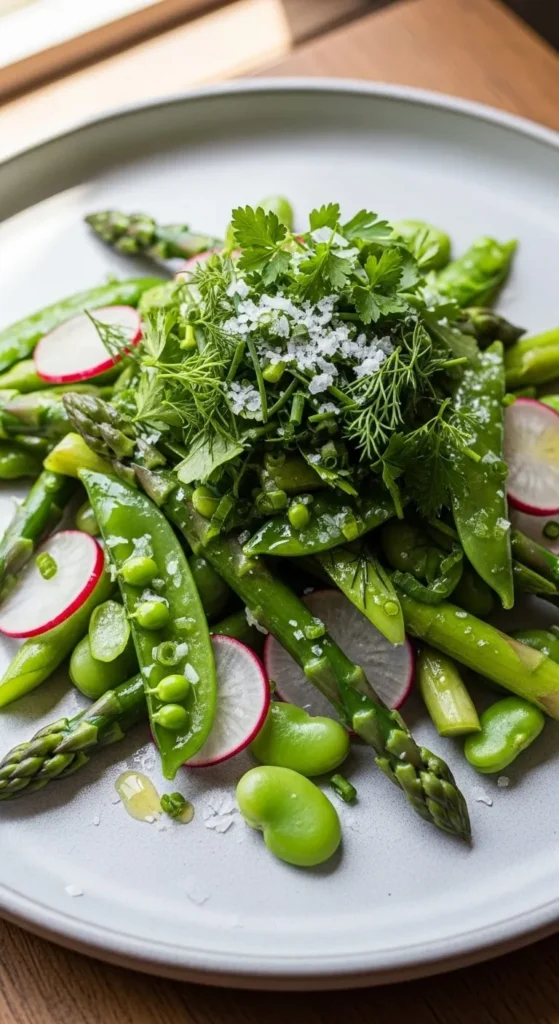
Final Takeaway: Let Spring Vegetables Be The Star
Cooking spring vegetables so they taste amazing isn’t about fancy recipes—it’s about freshness, simplicity, and restraint. Choose great produce, cook it gently, season it well, and finish with a little brightness.
Save this guide for later, pin your favorite tips, and let your spring vegetables finally steal the spotlight 🌱
Hannah Collins is a passionate home cook and food storyteller who believes every recipe tells a little love story. At TastyWriter, she shares simple, delicious recipes made for real kitchens and busy days — from cozy comfort dishes to creative new favorites. When she’s not cooking, you’ll find her photographing food, testing family recipes, or sipping tea while dreaming up her next tasty idea.
Leave a Reply