

Leafy greens are some of the healthiest foods you can eat—until they’re cooked the wrong way. Too much heat, too much water, or too much time can drain away vitamins and leave you with dull colour and flat flavour. The goal isn’t to eat everything raw. It’s to cook greens smartly so you keep their nutrients and make them enjoyable to eat.
Whether you’re working with spinach, kale, chard, collard greens, or spring greens, this guide shows you how to cook them gently, quickly, and effectively.
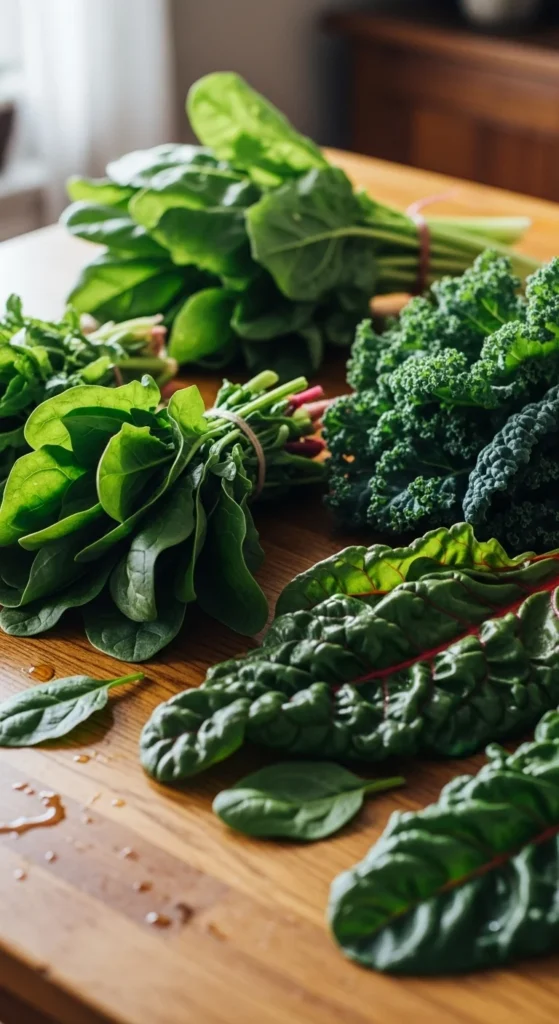
Why Nutrients Are Lost During Cooking
Greens are rich in water-soluble vitamins, especially vitamin C and some B vitamins. These nutrients break down with:
- Long cooking times
- High heat
- Excess water
The more aggressively you cook greens, the more nutrients escape into the water or are destroyed by heat. The solution is simple: shorter cooking, less water, and faster methods.
Choose Fresh, Seasonal Greens First
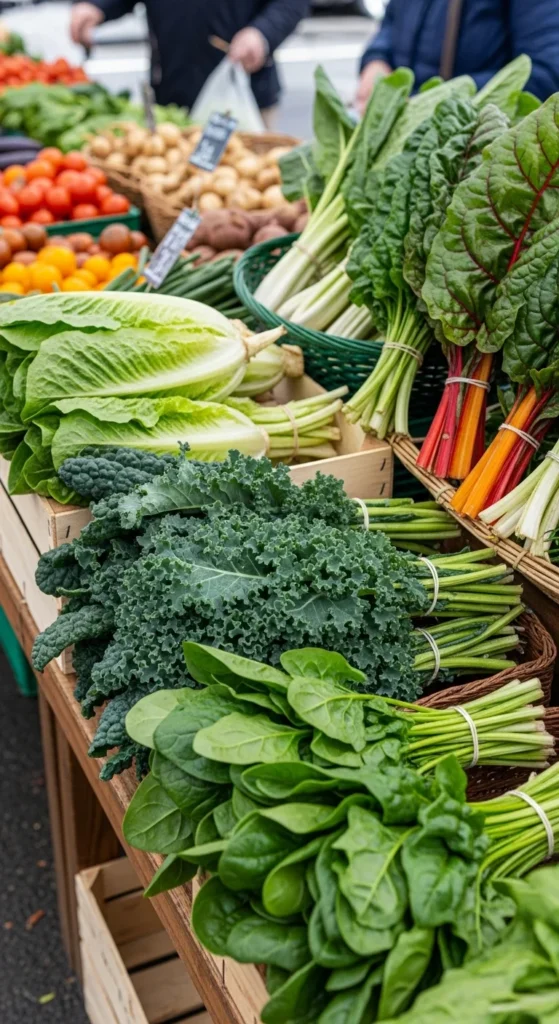
Fresh greens contain more nutrients than greens that have been sitting around.
Seasonal Greens to Look For
- Spring: Spinach, chard, arugula, beet greens
- Summer: Swiss chard, collard greens
- Autumn: Kale, mustard greens
- Winter: Cavolo nero, cabbage
Fresh greens also cook faster, which helps protect nutrients.
Wash Greens Without Overdoing It
Greens need cleaning, but soaking them too long can start nutrient loss before cooking even begins.
Best Washing Method
- Fill a large bowl with cold water
- Gently swish greens to remove dirt
- Lift greens out instead of pouring
- Pat dry or spin lightly
Avoid long soaking times. Clean and cook soon after washing.
Blanching: Fast Cooking, High Nutrient Retention
Blanching is one of the best ways to cook greens while keeping nutrients intact.
How to Blanch Properly
- Bring salted water to a rolling boil
- Add greens and cook briefly
- Remove within 30–90 seconds
- Transfer immediately to ice water
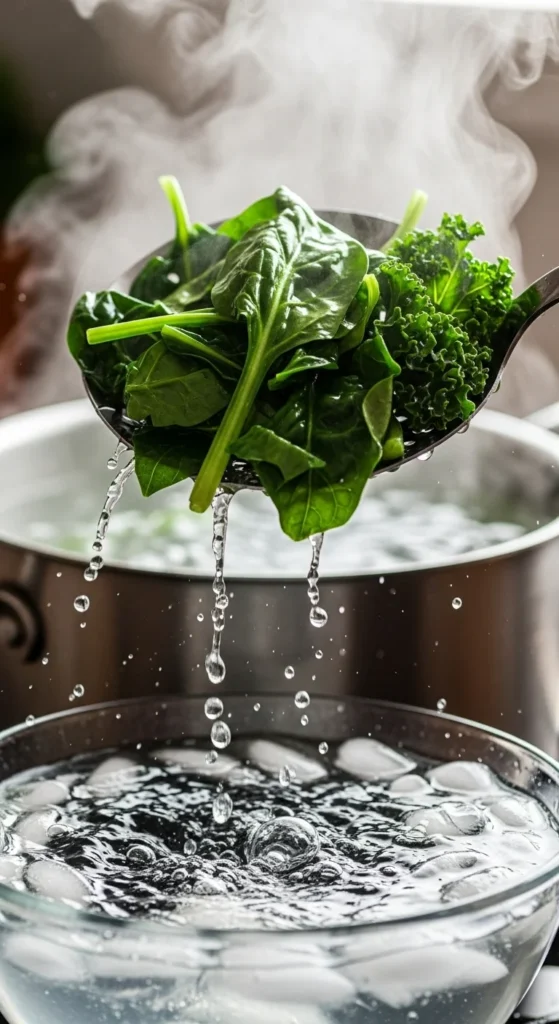
This method preserves colour, texture, and a large portion of nutrients. Just don’t leave greens sitting in hot water.
Steaming Beats Boiling Every Time
If you want to avoid nutrient loss, steaming is a safer option than boiling.
Why Steaming Works
- Greens don’t sit in water
- Less nutrient leaching
- Gentle heat control
How to Steam Greens
- Bring water to a boil first
- Add greens to a steamer basket
- Steam just until wilted
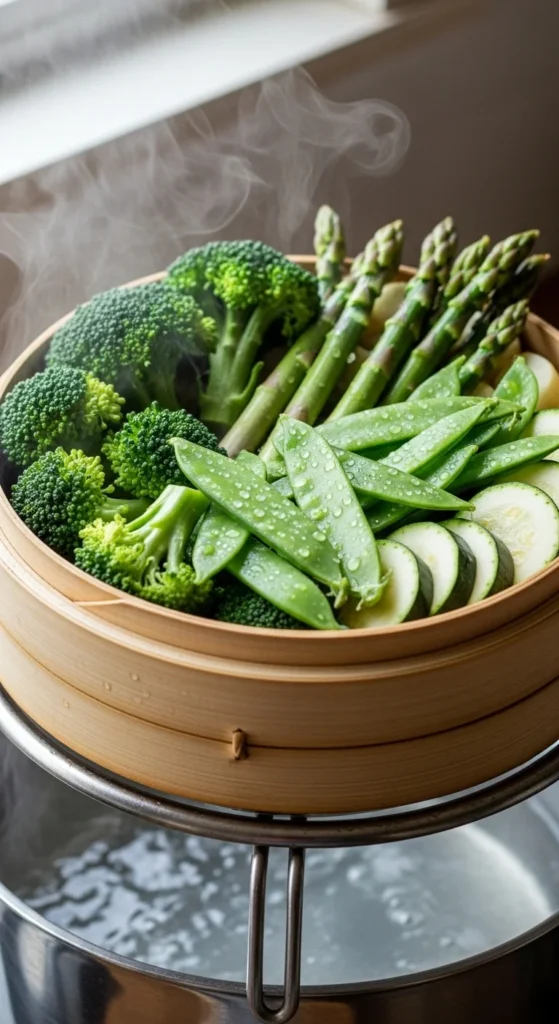
Most greens need 1–3 minutes of steaming. Any longer, and nutrients begin to decline.
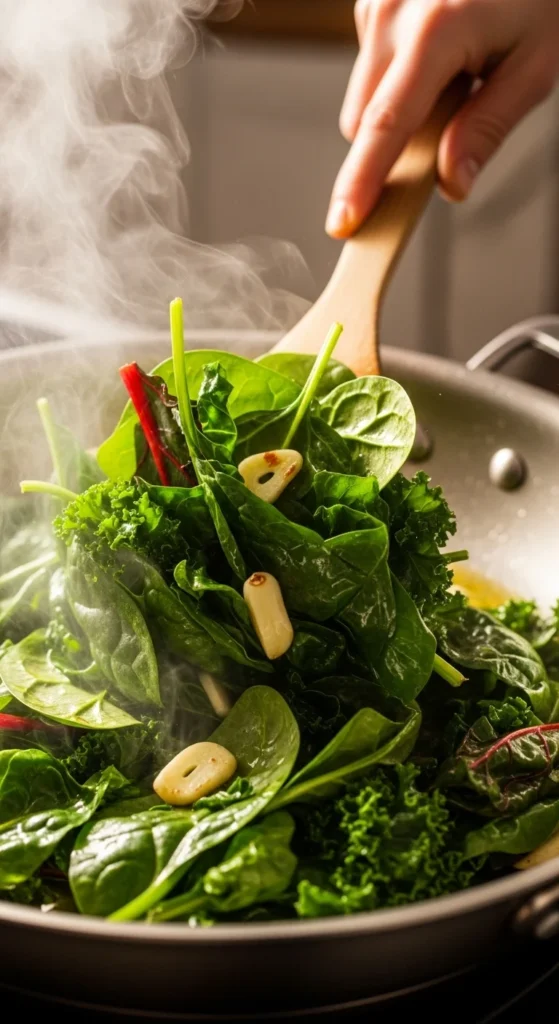
Sautéing Quickly Locks in Nutrients
Sautéing can be nutrient-friendly when done right.
Tips for Healthy Sautéing
- Use high heat
- Cook in small batches
- Stir constantly
- Remove from heat as soon as wilted
Olive oil helps absorb fat-soluble vitamins like A and K, making sautéing a smart choice when done briefly.
Avoid These Common Nutrient-Killing Mistakes
Even healthy greens can lose value when cooked poorly.
Try to avoid:
- Boiling greens for long periods
- Reheating multiple times
- Cooking greens uncovered for too long
- Discarding cooking liquid when nutrients remain
If you do boil greens, consider using the cooking water in soups or sauces.
Chop After Cooking When Possible
Chopping greens before cooking exposes more surface area to heat and oxygen.
Better Approach
- Cook leaves whole when possible
- Chop or slice after cooking
This small step helps reduce nutrient breakdown.
Season After Cooking, Not Before
Adding salt early pulls moisture out of greens, which can speed nutrient loss.
Better Seasoning Timing
- Cook first
- Season at the end
- Add acids like lemon after heat
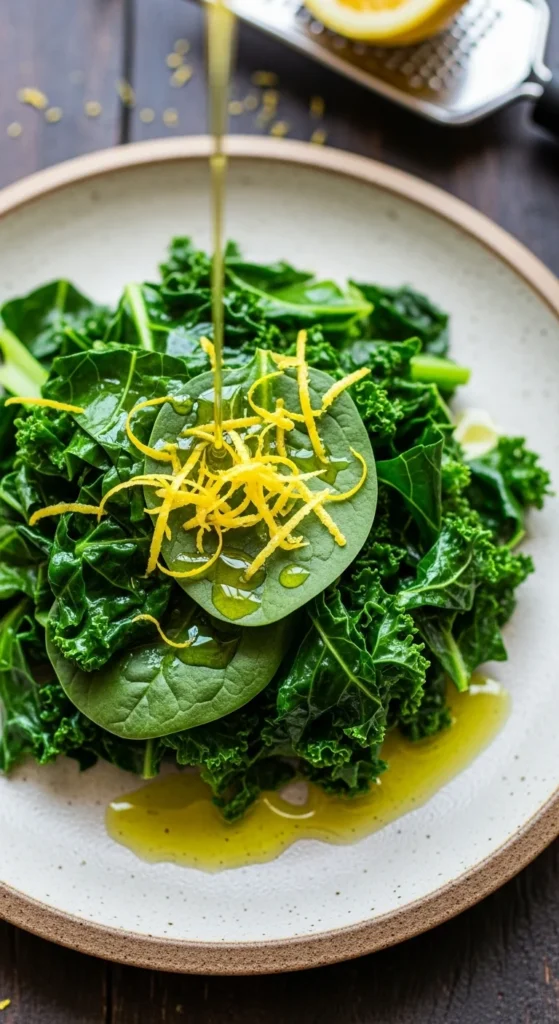
This keeps both texture and nutrients intact.
Balance Nutrition With Enjoyment
Perfect nutrition means nothing if the food isn’t eaten. Cooking greens lightly makes them:
- Easier to digest
- More flavourful
- More likely to be enjoyed regularly
The best method is the one you’ll actually use consistently.
Final Takeaway
You don’t need to eat all your greens raw to stay healthy. By choosing seasonal produce, using fast cooking methods, and avoiding excess water and heat, you can keep most of the nutrients while improving flavour and texture.
Cook smart, cook quickly, and let greens stay vibrant.
Save this guide for later and make the most of your seasonal greens every time!

Hannah Collins is a passionate home cook and food storyteller who believes every recipe tells a little love story. At TastyWriter, she shares simple, delicious recipes made for real kitchens and busy days — from cozy comfort dishes to creative new favorites. When she’s not cooking, you’ll find her photographing food, testing family recipes, or sipping tea while dreaming up her next tasty idea.
Leave a Reply