

Spinach has a bad reputation—and honestly, it’s not undeserved. One wrong move and those fresh green leaves turn into a slippery, watery pile that ruins the whole meal. But here’s the truth: slimy spinach isn’t inevitable. It’s usually the result of a few very fixable mistakes.
Once you understand why spinach turns slimy and how to control moisture and heat, cooking it becomes easy and stress-free. This guide walks you through exactly what to do, step by step, so your spinach stays tender, bright, and delicious.
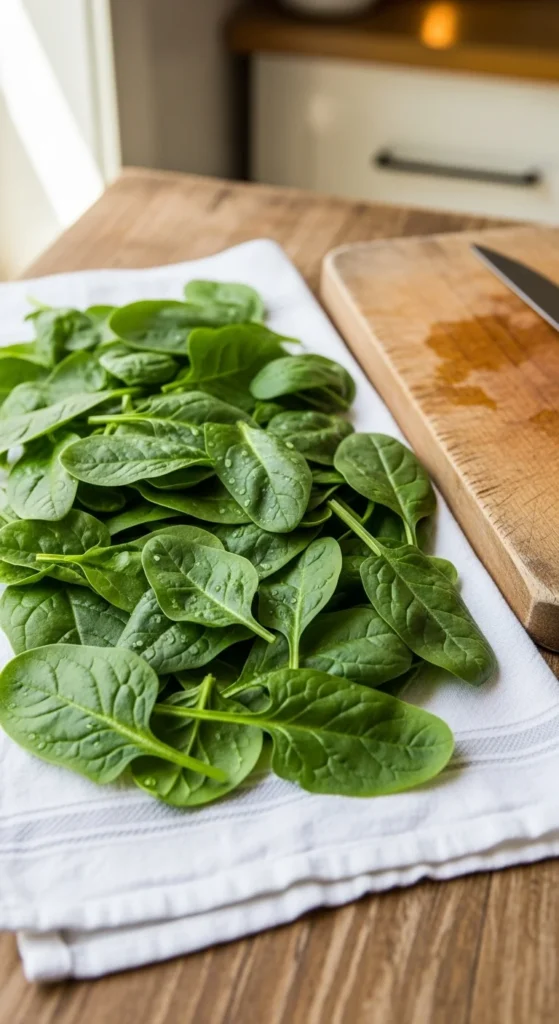
Why Spinach Turns Slimy in the First Place
Spinach is made up of nearly 90 percent water. When it’s cooked too slowly, overcrowded, or salted too early, that water leaks out and pools in the pan. Instead of sautéing, the spinach steams and breaks down into a slippery texture.
Slimy spinach usually happens because of:
- Too much moisture
- Low or medium heat
- Overcrowded pans
- Overcooking
The goal is simple: cook fast, cook hot, and let water escape.
Start With the Right Spinach
Your results depend heavily on what you buy.
Best Types for Non-Slimy Cooking
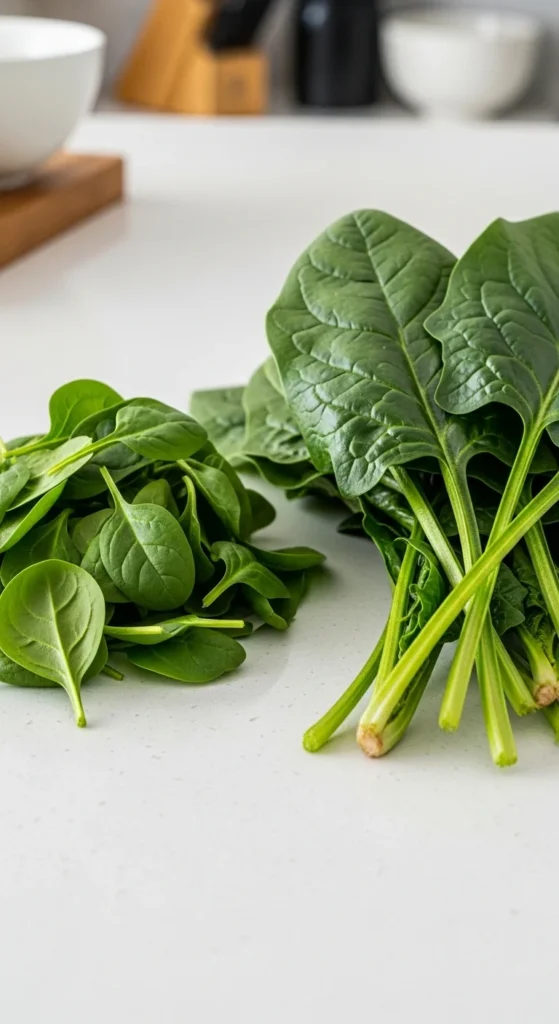
- Baby spinach: Thin leaves, cooks fast, least likely to get slimy
- Loose bunch spinach: Stronger flavour, thicker stems, needs trimming
Avoid pre-frozen spinach unless you’re making soups or dips. It releases a lot of water and is difficult to keep firm.
Wash Spinach the Right Way (Without Adding Extra Water)
Spinach needs cleaning, but soaking it carelessly can backfire.
How to Wash Properly
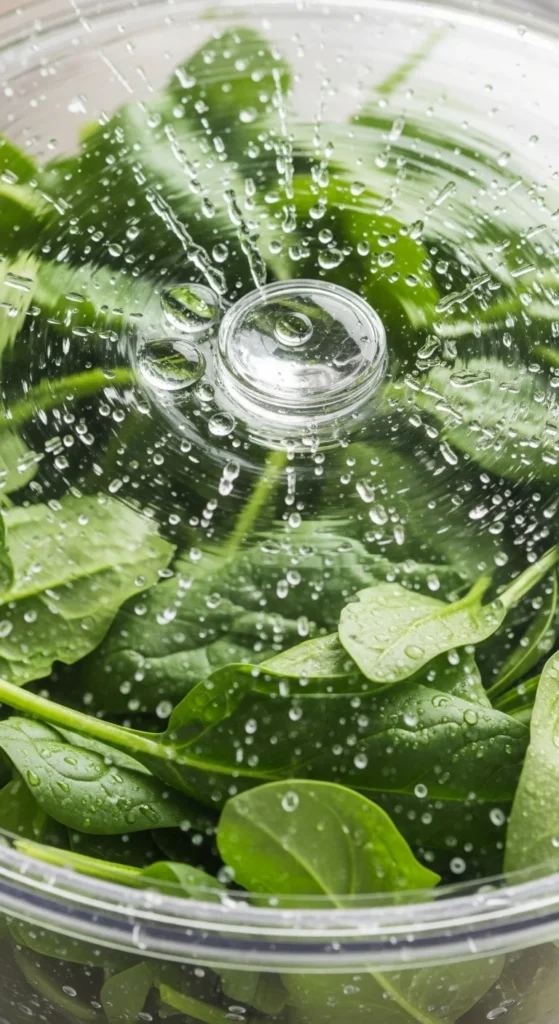
- Fill a large bowl with cold water
- Gently swish spinach to release dirt
- Lift leaves out instead of pouring
- Repeat if needed
Drying Matters More Than You Think
Spinach doesn’t need to be bone-dry, but dripping wet leaves are a problem.
- Shake leaves well
- Use a salad spinner if available
- Pat lightly with a towel
Use High Heat or Don’t Cook Spinach at All
Low heat is the enemy.
When spinach cooks slowly, it releases water before it wilts. High heat causes the leaves to collapse quickly, sealing in texture before excess moisture builds up.
Heat Rule to Remember
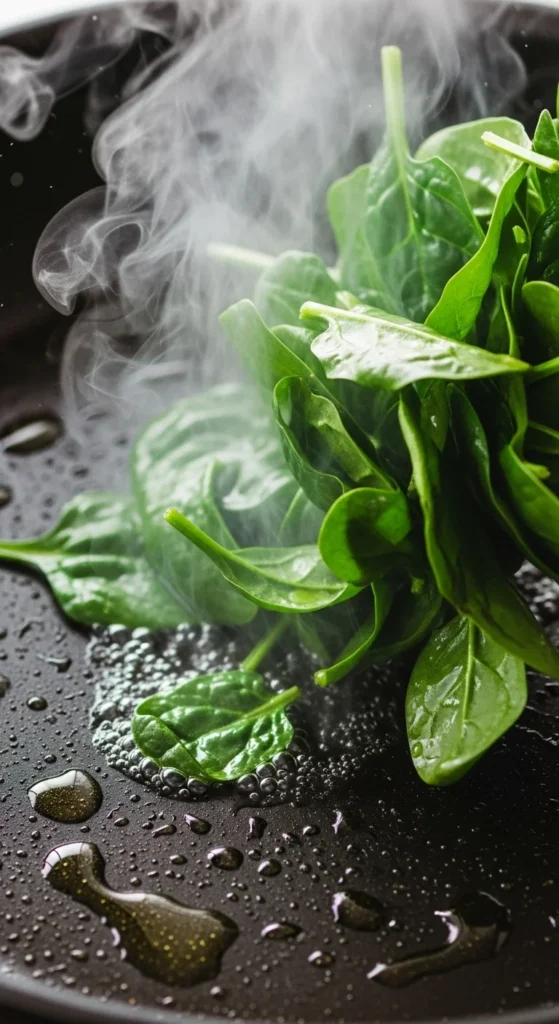
- Pan should be hot before spinach goes in
- You should hear a light sizzle immediately
If nothing happens when the spinach hits the pan, the heat is too low.
The Best Way to Sauté Spinach Without Sliminess
Sautéing is the most reliable method when done correctly.
What You Need
- Wide pan or skillet
- Olive oil or butter
- Garlic or aromatics (optional)
- Spinach
- Salt and pepper
Step-by-Step
- Heat pan on medium-high to high
- Add oil or butter
- Add garlic and cook briefly
- Add spinach in loose batches
- Toss constantly for 60–90 seconds
Once wilted, remove from heat immediately.
Important: Season after cooking. Salting early draws out water and creates slime.
Don’t Crowd the Pan (This Is Critical)
Spinach needs space. If you pile it into a small pan, trapped steam has nowhere to go.
What to Do Instead
- Use the largest pan you own
- Cook spinach in batches if needed
- Let steam escape freely
If liquid collects in the pan, your spinach is steaming instead of sautéing.
Steaming Spinach Without It Getting Mushy
Steaming can work—but timing is everything.
How to Steam Properly
- Bring water to a boil first
- Add spinach to steamer basket
- Cover and steam 30–45 seconds only
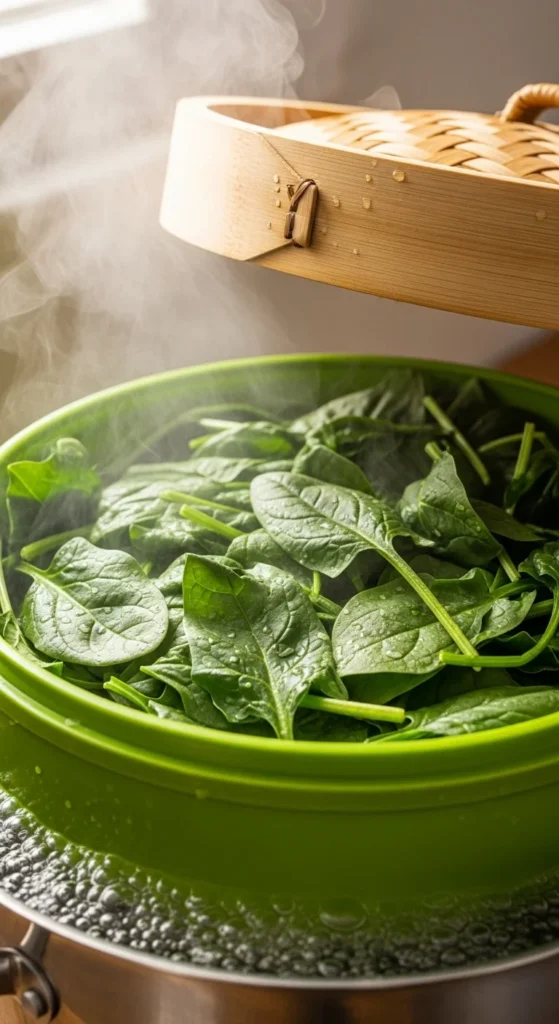
Remove immediately and press gently to remove excess moisture. Oversteaming causes limp, slippery leaves.
Common Mistakes That Cause Slimy Spinach
Avoid these and you’ll avoid slime.
- Cooking spinach too long
- Using low heat
- Adding salt too early
- Covering the pan
- Not draining excess water
Spinach is one of the fastest-cooking vegetables. Treat it that way.
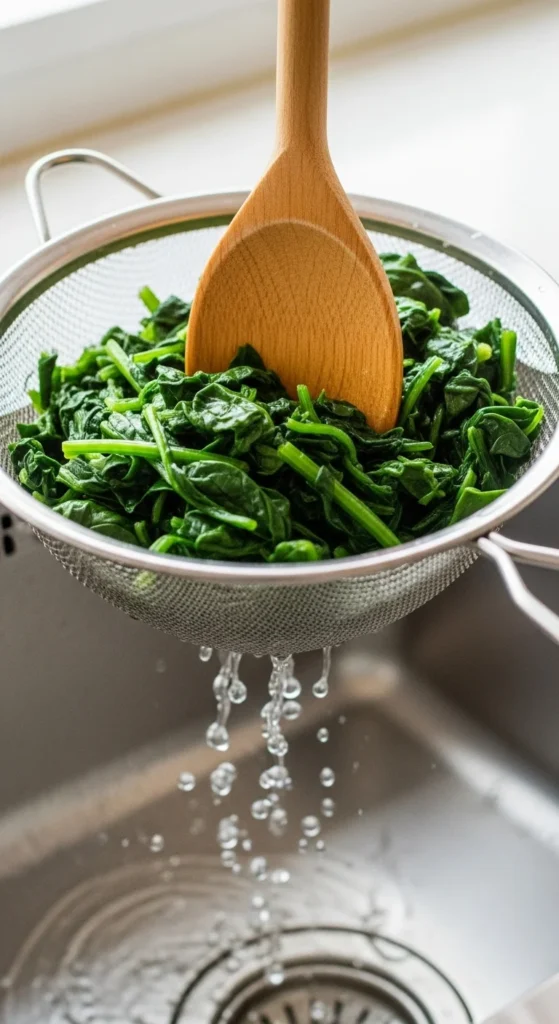
How to Fix Spinach That’s Already Watery
If things go wrong, don’t panic.
Quick Fixes
- Drain excess liquid immediately
- Return spinach to high heat briefly
- Add a splash of lemon juice or vinegar
- Toss with breadcrumbs, rice, or pasta
These steps won’t fully reverse overcooking, but they can improve texture.
Final Takeaway
Spinach turns slimy when moisture builds up faster than heat can handle it. The solution is simple: dry leaves, hot pan, quick cooking, and no crowding. Once you follow these basics, spinach becomes a fast, reliable side dish instead of a frustrating one.
Master this once, and you’ll never dread cooking spinach again.
Save this guide for later and say goodbye to slimy spinach for good!

Hannah Collins is a passionate home cook and food storyteller who believes every recipe tells a little love story. At TastyWriter, she shares simple, delicious recipes made for real kitchens and busy days — from cozy comfort dishes to creative new favorites. When she’s not cooking, you’ll find her photographing food, testing family recipes, or sipping tea while dreaming up her next tasty idea.
Leave a Reply