

Spring vegetables don’t need much help to taste amazing. In fact, the biggest mistake most of us make is doing too much. When produce is fresh, tender, and just pulled from the ground, light cooking lets its natural sweetness and crunch shine.
If you’ve ever wondered why restaurant vegetables taste so vibrant—or why your farmers’ market haul doesn’t need heavy sauces—this guide is for you. Let’s break down how to cook spring produce lightly, simply, and deliciously.
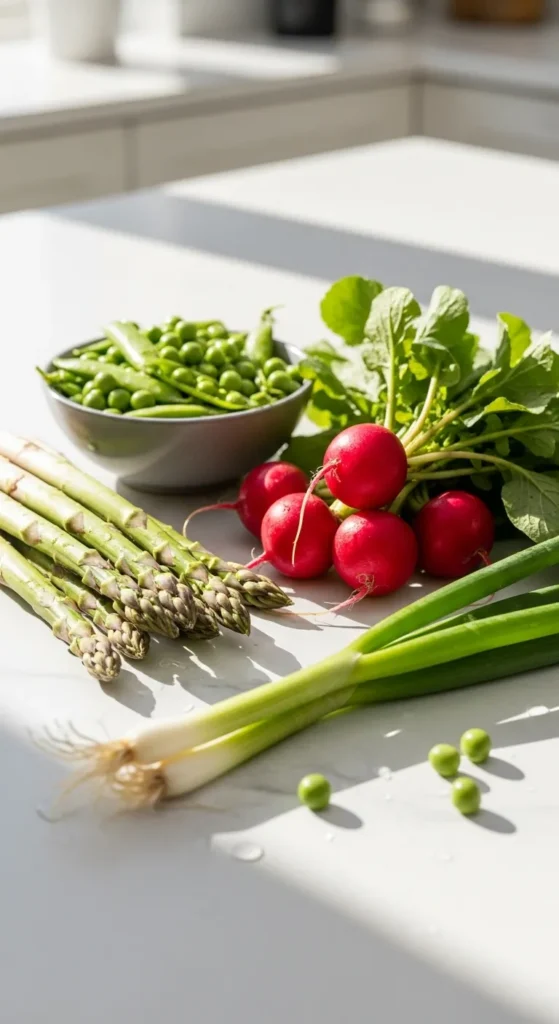
Start With Peak-Fresh Ingredients
Light cooking only works if your ingredients are fresh. Spring produce is delicate, and its flavor fades quickly when it sits too long.
Look for:
- Asparagus with tight tips and firm stalks
- Peas that are plump and bright green
- Radishes that feel heavy and crisp
- Spring greens without wilting or yellowing
- Green onions and leeks with fresh-smelling tops
When you bring them home:
- Store greens loosely wrapped in the fridge
- Wash vegetables just before cooking
- Trim only what’s necessary
Freshness is the foundation—everything else builds from there.
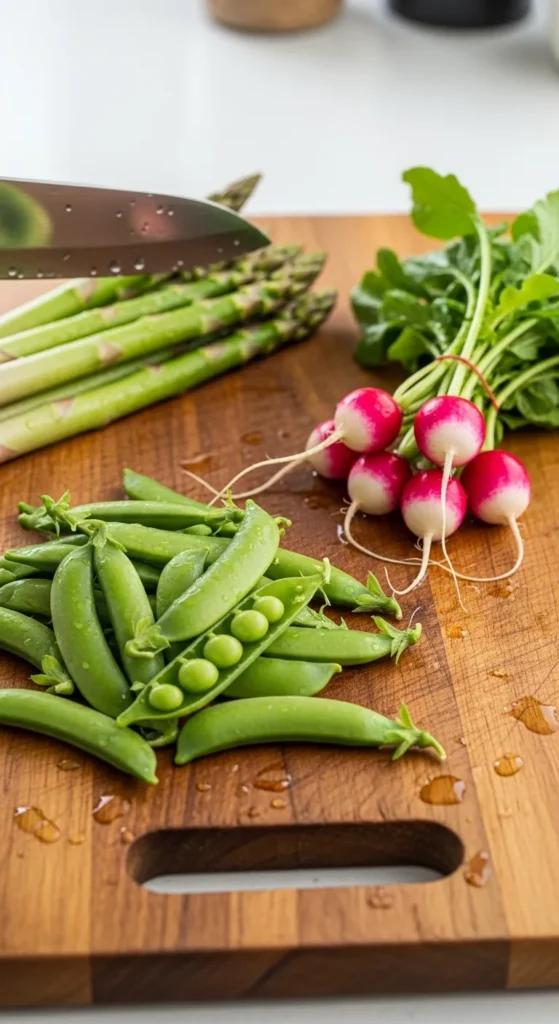
Choose Gentle Cooking Methods
Spring vegetables thrive with fast, gentle heat. The goal is to cook just enough to soften textures while keeping flavors bright.
Best methods include:
- Quick sautéing in olive oil or butter
- Steaming until just tender
- Blanching followed by a quick chill
- Light roasting at high heat for a short time
Avoid:
- Long simmering
- Heavy braising
- Overcrowding the pan
A good rule of thumb: if a vegetable turns dull or mushy, it’s gone too far.
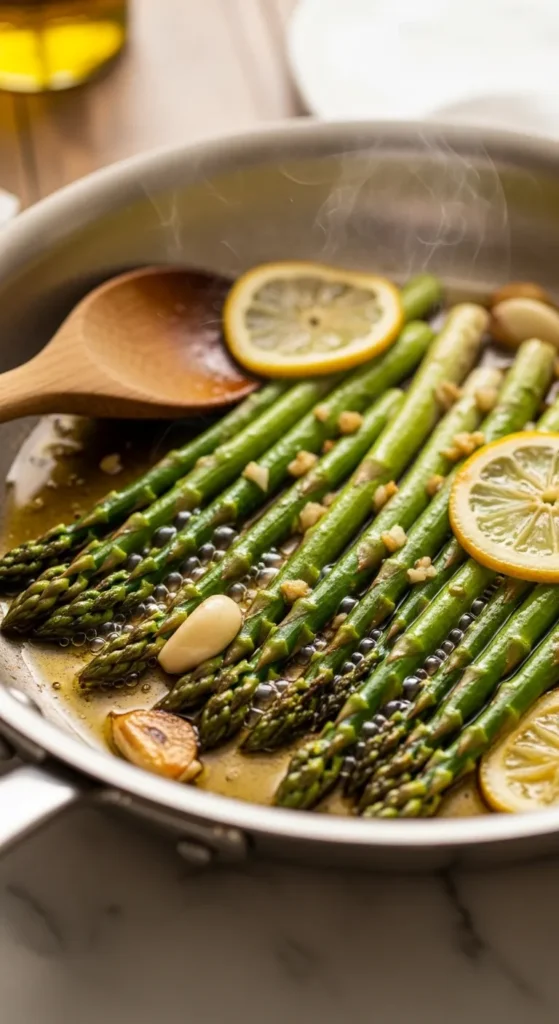
Season Simply—and at the Right Time
Spring produce doesn’t need complicated seasoning. A few thoughtful touches go a long way.
Try this simple seasoning formula:
- Fat: olive oil, butter, or ghee
- Salt: flaky or fine sea salt
- Acid: lemon juice, vinegar, or yogurt
- Fresh herbs: dill, mint, parsley, chives
Timing matters:
- Salt vegetables just before or during cooking to draw out flavor
- Add herbs and acid after cooking to keep them fresh
Skip heavy sauces. Instead, finish vegetables with:
- A squeeze of lemon
- A drizzle of infused oil
- A sprinkle of fresh herbs
This keeps flavors clean and spring-forward.
Cook by Vegetable Type
Different spring vegetables need slightly different treatment. Here’s a quick guide:
Tender Vegetables (peas, spinach, baby greens)
- Cook for 1–3 minutes max
- Steam or sauté quickly
- Season after cooking
Medium-Crisp Vegetables (asparagus, green beans)
- Sauté or roast for 5–7 minutes
- Look for bright color and gentle bite
- Finish with acid
Crunchy Vegetables (radishes, fennel)
- Can be eaten raw or lightly sautéed
- Cooking mellows sharpness and adds sweetness
When in doubt, undercook slightly—you can always add another minute.
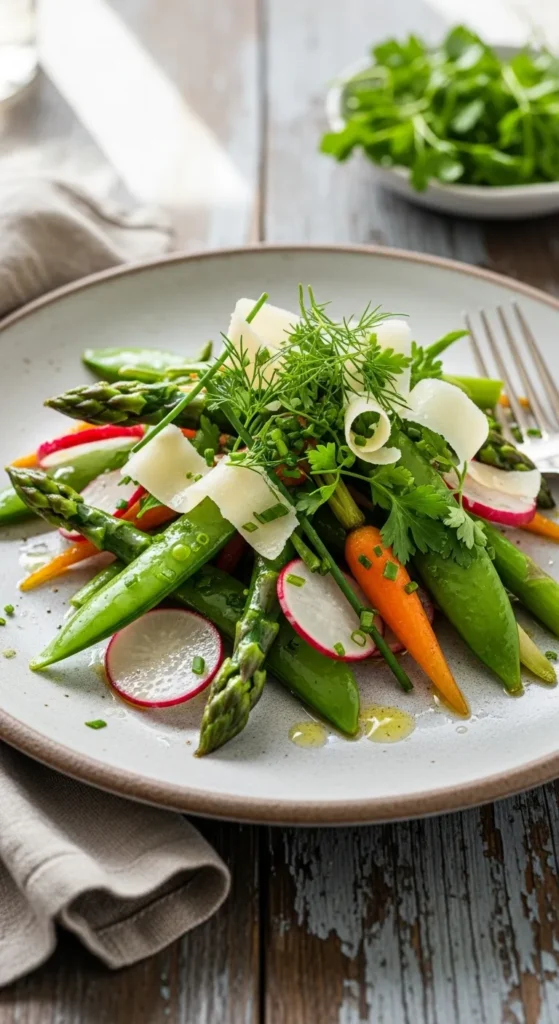
Let Texture Be the Star
Light cooking is as much about texture as flavor. Spring vegetables should feel:
- Crisp-tender, not soft
- Juicy, not dried out
- Bright in color
To protect texture:
- Use a hot pan
- Don’t overcrowd
- Stir gently and infrequently
If vegetables release water, turn up the heat briefly to evaporate it. This keeps them from steaming in their own juices.
Finish With a Simple Upgrade
A small finishing touch can elevate lightly cooked vegetables without overwhelming them.
Easy upgrades:
- Toasted nuts or seeds
- Shaved Parmesan or pecorino
- A spoon of ricotta or yogurt
- Chili flakes or cracked pepper
These additions add contrast while keeping the vegetables front and center.
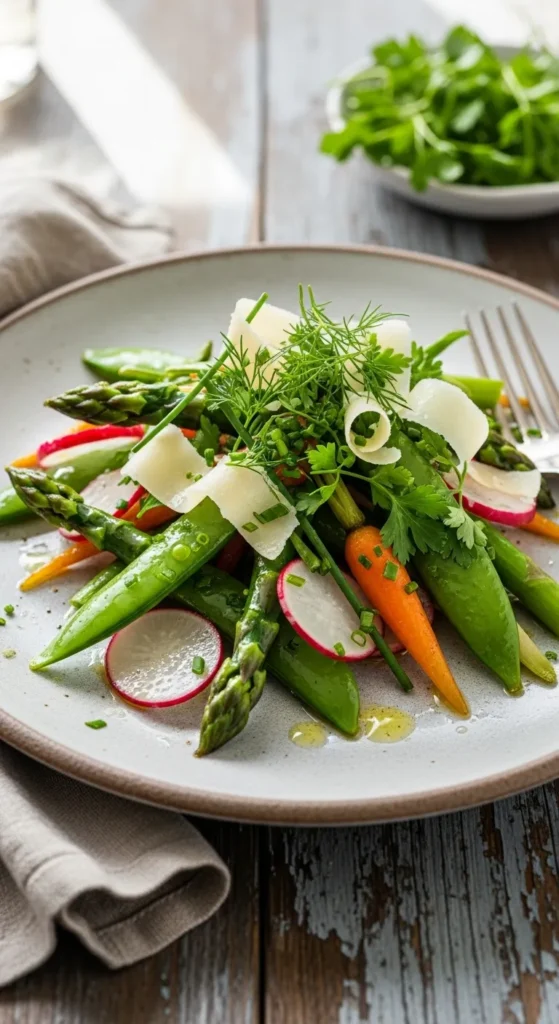
Final Takeaway
Cooking spring produce lightly is about restraint, not restriction. When you start with fresh ingredients, use gentle heat, and keep seasoning simple, the vegetables do the heavy lifting for you.
Next time you’re staring at a bunch of asparagus or a bag of peas, resist the urge to overcomplicate it. Let spring taste like spring.
Save this guide for later—and try one new vegetable this week 🌱
Hannah Collins is a passionate home cook and food storyteller who believes every recipe tells a little love story. At TastyWriter, she shares simple, delicious recipes made for real kitchens and busy days — from cozy comfort dishes to creative new favorites. When she’s not cooking, you’ll find her photographing food, testing family recipes, or sipping tea while dreaming up her next tasty idea.
Leave a Reply