

Spring pasta should feel fresh, not heavy. If winter is all about slow-simmered ragù and creamy sauces, spring is the season for brightness—lighter textures, vibrant flavors, and sauces that coat pasta without weighing it down. The good news? You don’t need complicated techniques or long cooking times to make beautiful spring pasta sauces from scratch.
This guide shows you how to build light, flavorful spring pasta sauces that taste fresh, come together quickly, and make weeknight dinners feel special.
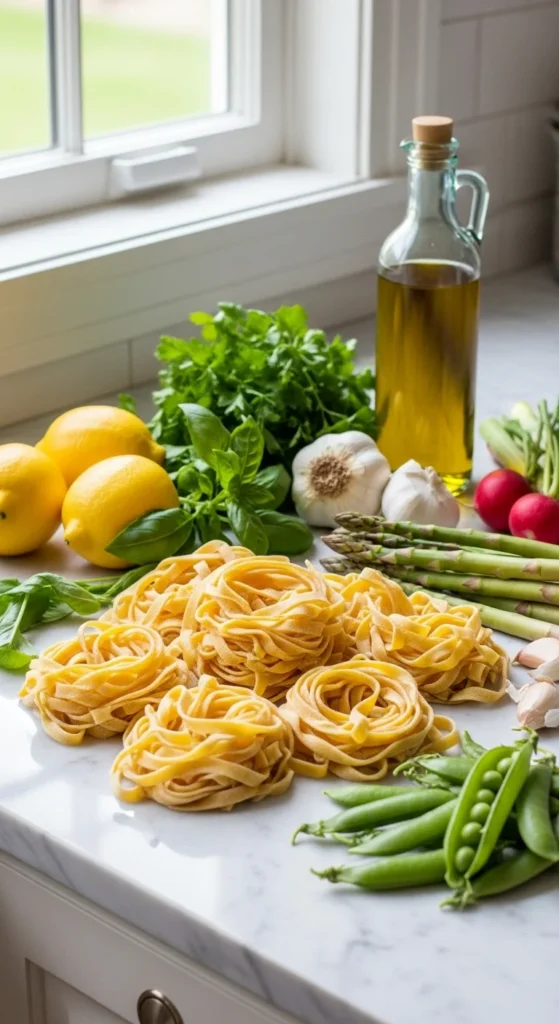
Think Flavor First, Not Thickness
Light spring pasta sauces aren’t about thickness or richness. They’re about balance.
Instead of:
- Heavy cream
- Long reductions
- Butter-heavy bases
Think:
- Olive oil
- Pasta water
- Fresh herbs
- Citrus
- Quick-cooked vegetables
A good spring sauce should lightly cling to the pasta, not pool at the bottom of the bowl.
Start With Olive Oil and Aromatics
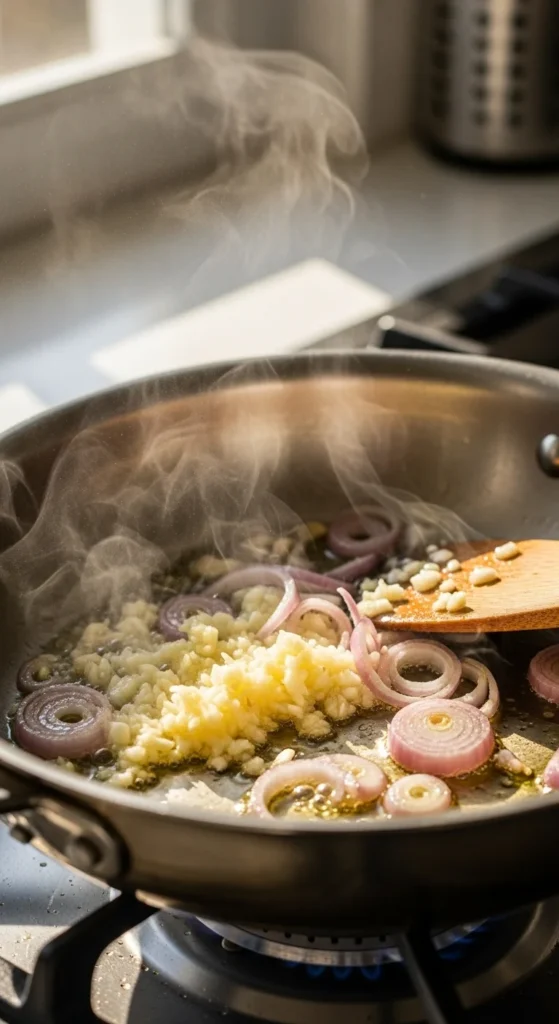
Almost every light spring sauce begins the same way: gently warming aromatics in olive oil.
Common aromatics:
- Garlic
- Shallots
- Spring onions
- Leeks
How to do it right:
- Use medium or low heat
- Let aromatics soften, not brown
- Keep flavors delicate
Once garlic turns golden, it’s too late. Pale and fragrant is the goal.
Use Pasta Water as Your Secret Weapon
Pasta water is the backbone of light sauces. It adds body without heaviness.
Why it works:
- It’s starchy
- It helps sauce cling to pasta
- It blends oil and water smoothly
How to use it:
- Reserve 1 cup before draining pasta
- Add a splash at a time to your sauce
- Toss pasta directly into the pan
This creates a silky texture without cream.
Build Sauce With Spring Vegetables
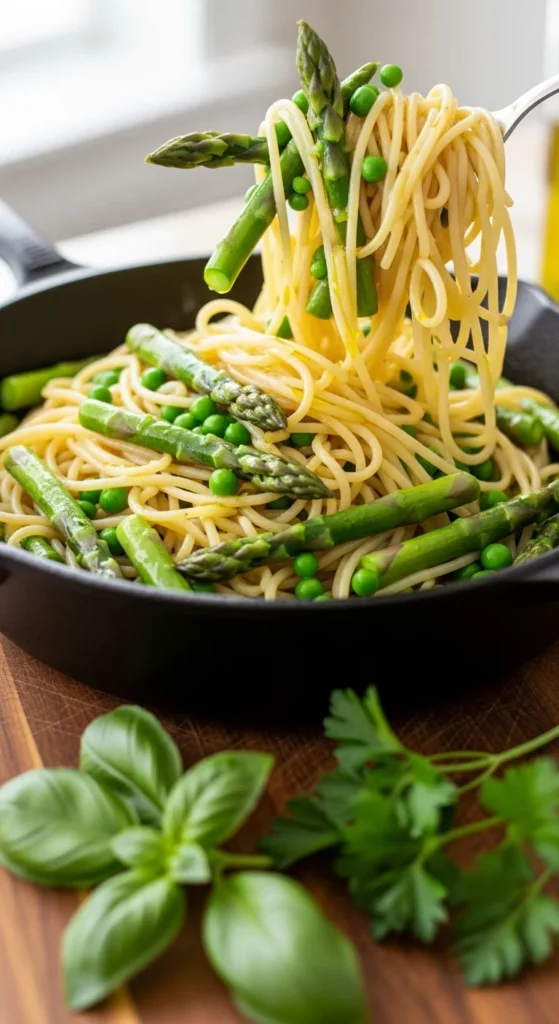
Spring vegetables cook quickly and release natural sweetness into sauces.
Best vegetables for light pasta sauces:
- Asparagus
- Peas
- Spinach
- Zucchini
- Artichokes
Cooking tips:
- Cut vegetables evenly
- Cook just until tender
- Add delicate greens at the end
Vegetables should stay bright and slightly crisp, not soft or dull.
Brighten Everything With Lemon and Herbs
Acidity is what separates spring pasta from winter pasta.
Add brightness with:
- Lemon juice or zest
- White wine
- Vinegar (used lightly)
Finish with fresh herbs:
- Basil
- Parsley
- Dill
- Chives
Always add acids and herbs at the end. Heat dulls their flavor.
Skip Heavy Cheese—Use It Wisely
Cheese still has a place in spring pasta, but it should enhance, not dominate.
Better spring-friendly choices:
- Parmesan (used lightly)
- Pecorino (small amounts)
- Ricotta (dolloped, not stirred in)
Avoid:
- Thick cheese sauces
- Large amounts of melted cheese
A light sprinkle or finishing touch is enough.
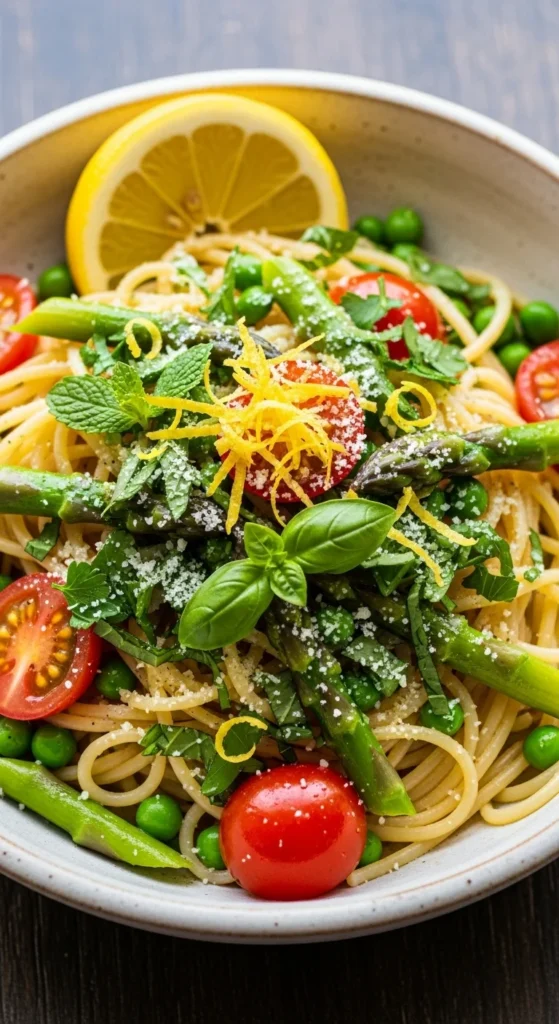
Simple Light Sauce Ideas to Try
Once you understand the basics, mixing and matching becomes easy.
Easy spring sauce combinations:
- Olive oil, garlic, lemon, spinach
- Asparagus, peas, pasta water, parmesan
- Zucchini ribbons, herbs, olive oil
- Lemon, ricotta, and fresh herbs
- Spring onions, butter, pasta water, mint
These sauces come together in under 20 minutes and rely on freshness—not complexity.
Toss Pasta and Sauce Together, Always
Never pour sauce over pasta in the bowl. Toss them together in the pan.
Why it matters:
- Sauce coats evenly
- Pasta absorbs flavor
- Texture stays silky
If the sauce looks dry:
- Add a splash of pasta water
- Toss again
Stop once everything looks glossy and lightly coated.
Keep Portions Balanced
Light sauces shine when they’re not overloaded.
Good ratio:
- More pasta than sauce
- Vegetables integrated, not piled on top
- Cheese used sparingly
This keeps the dish fresh and satisfying without feeling heavy.
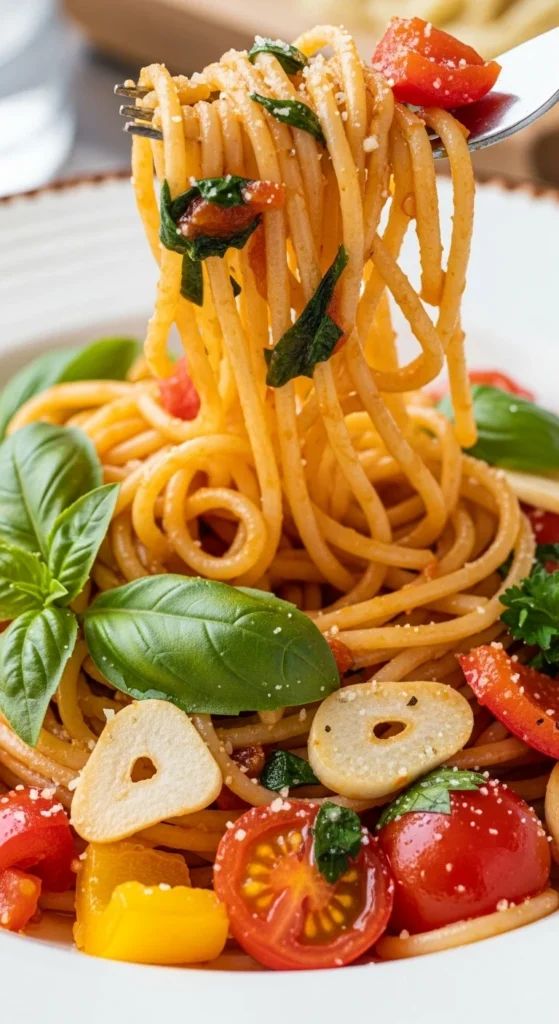
Final Takeaway
Making light spring pasta sauces from scratch is about restraint. Start with olive oil and aromatics, use pasta water for body, add seasonal vegetables, and finish with lemon and herbs. Skip heavy creams and thick sauces. Let freshness do the work.
Once you master these basics, spring pasta becomes one of the easiest—and most rewarding—meals to cook.
Save this guide for later and enjoy lighter, brighter pasta all season long.

Hannah Collins is a passionate home cook and food storyteller who believes every recipe tells a little love story. At TastyWriter, she shares simple, delicious recipes made for real kitchens and busy days — from cozy comfort dishes to creative new favorites. When she’s not cooking, you’ll find her photographing food, testing family recipes, or sipping tea while dreaming up her next tasty idea.
Leave a Reply