

There’s nothing more satisfying than slicing into a cheesecake and seeing a smooth, creamy surface — no cracks, no sinking center, just pure perfection. But if you’ve ever baked one before, you know how easily those deep lines can form across the top.
The good news? Cracked cheesecake isn’t a mystery. It’s usually caused by a few simple mistakes that are easy to avoid.
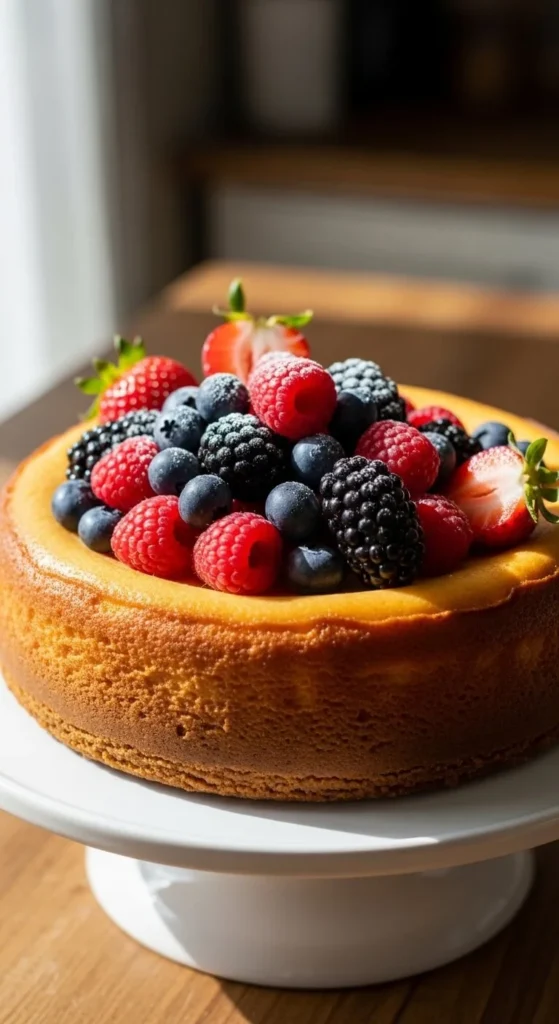
If you follow the right techniques, you can bake a cheesecake that looks bakery-perfect every time.
Start With Room Temperature Ingredients
One of the biggest reasons cheesecakes crack is uneven mixing. Cold ingredients don’t blend smoothly, which leads to lumps and trapped air.
Before baking, let these sit out for about 30–60 minutes:
- Cream cheese
- Eggs
- Sour cream
- Heavy cream
Room temperature ingredients mix evenly and create a smooth batter.
Cold cream cheese forces you to overmix, which adds too much air. Too much air causes cracks during baking.
Smooth batter = smooth cheesecake.
Mix Gently — Don’t Overbeat
It’s tempting to whip the batter until it looks extra fluffy, but that’s exactly what you want to avoid.
Overmixing:
- Incorporates too much air
- Causes rising and collapsing
- Leads to surface cracks
Instead:
- Beat cream cheese until smooth
- Add sugar and mix gently
- Add eggs one at a time
- Mix on low speed
Stop mixing once everything is combined.
The batter should look creamy, not airy.
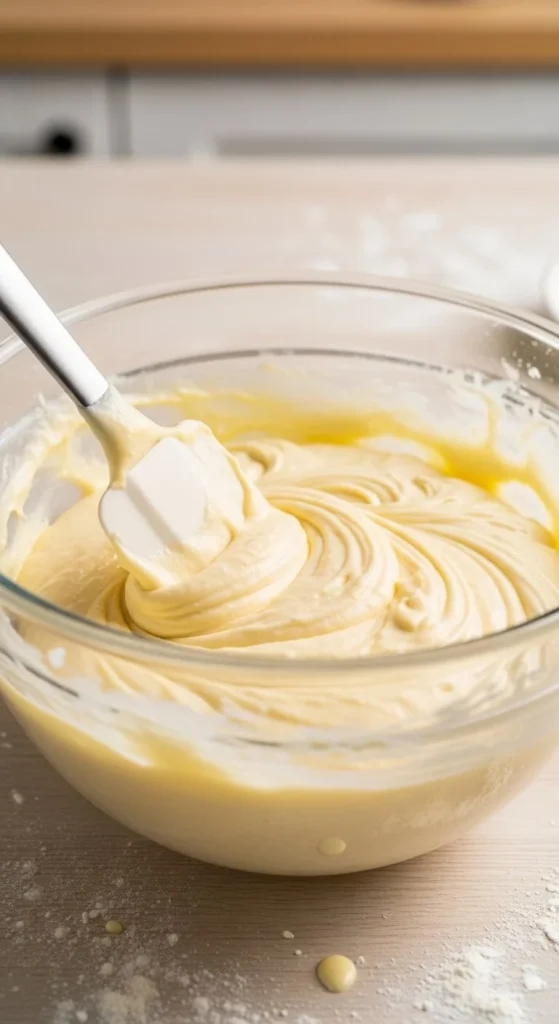
Less air means fewer cracks.
Use a Water Bath for Even Baking
A water bath (also called a bain-marie) is one of the best ways to prevent cracking.
Why it works:
- Creates gentle, even heat
- Prevents sudden temperature changes
- Keeps the cheesecake moist
To use a water bath:
- Wrap your springform pan in foil
- Place it in a larger baking pan
- Pour hot water around it
The water should come halfway up the sides.
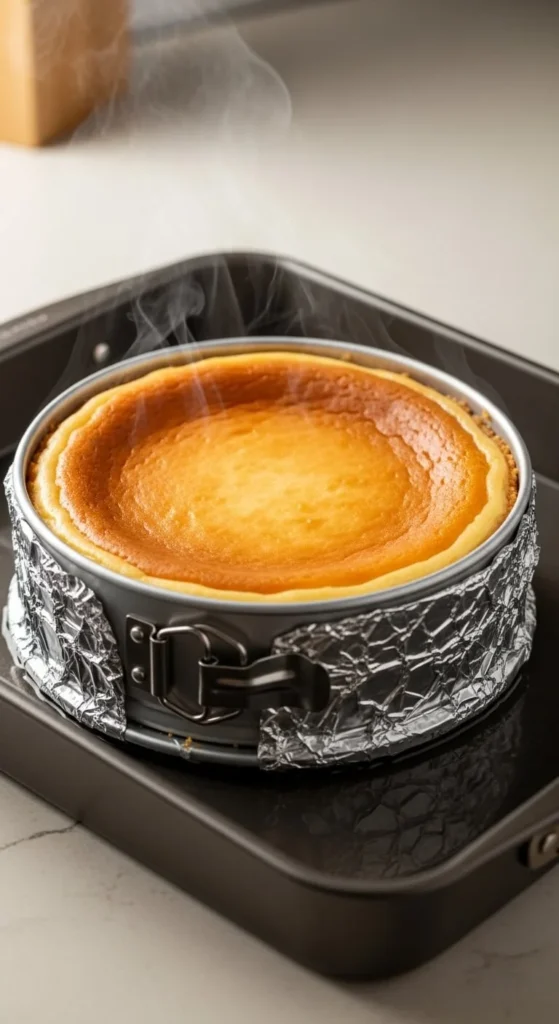
This method reduces the risk of overbaking and drying out the edges.
Bake at a Lower Temperature
High heat is the enemy of smooth cheesecake.
Bake at around 160–165°C (325°F).
Lower temperature:
- Cooks evenly
- Reduces sudden expansion
- Prevents surface cracking
Avoid opening the oven door repeatedly. Temperature changes can cause the top to split.
Patience is key.
Don’t Overbake
Overbaking is one of the most common mistakes.
A cheesecake is done when:
- The edges are set
- The center still jiggles slightly
It should wobble gently in the middle when shaken.
The center will continue to cook as it cools.
If you bake until completely firm, it’s already overdone — and likely to crack.
Cool Slowly to Avoid Sudden Shrinking
Rapid cooling causes cracks.
Once baking time is done:
- Turn off the oven
- Leave the door slightly open
- Let the cheesecake cool inside for 1 hour
This gradual cooling prevents shock.
After that, transfer it to the counter to cool fully before refrigerating.
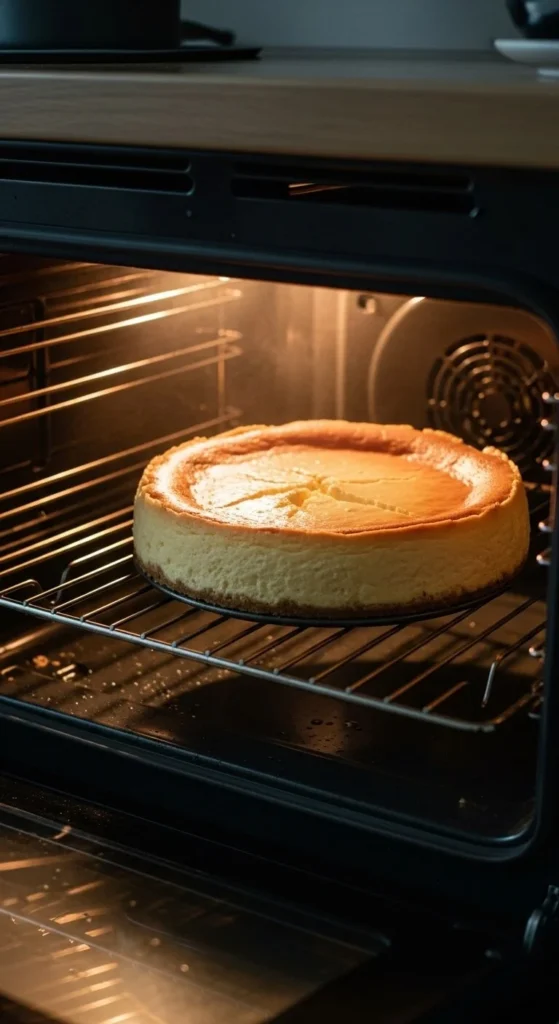
Sudden temperature drops create tension in the surface.
Slow cooling keeps it smooth.
Chill Completely Before Slicing
Cheesecake needs time to firm up.
Refrigerate for at least 4 hours, preferably overnight.
Chilling allows:
- Texture to set properly
- Flavors to develop
- Clean slices
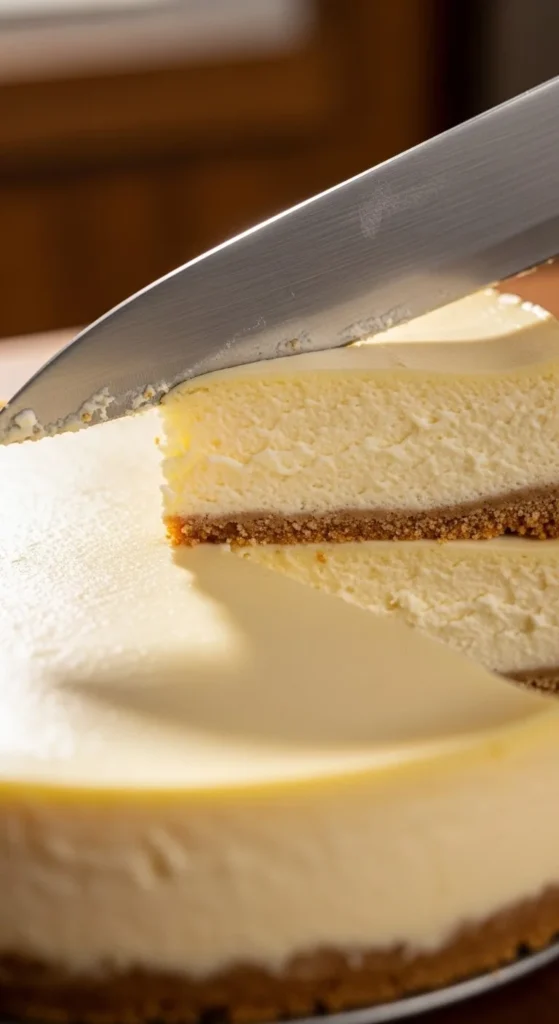
Trying to cut too early can ruin the smooth top.
Use a sharp knife dipped in warm water for neat slices.
Common Mistakes That Cause Cracks
Avoid these errors:
- Overmixing batter
- Baking at high temperature
- Skipping the water bath
- Overbaking
- Rapid cooling
Each of these creates stress in the cheesecake.
Cheesecake likes gentle treatment.
Think slow and steady.
What If It Still Cracks?
Even experienced bakers sometimes get cracks.
If it happens, don’t panic.
Easy fixes:
- Add fruit topping
- Spread sour cream glaze
- Drizzle caramel or chocolate
- Cover with whipped cream
Cracks don’t change the taste.
But with these techniques, you’ll see fewer and fewer of them.
Why These Techniques Work
Cheesecake is delicate because of its high fat and egg content.
It reacts strongly to:
- Heat changes
- Overmixing
- Overbaking
By controlling temperature and mixing gently, you reduce tension on the surface.
Smooth baking leads to smooth results.
Final Thoughts
Baking cheesecake without cracks isn’t about luck. It’s about gentle mixing, steady heat, and patient cooling.
Use room temperature ingredients. Bake low and slow. Let it cool gradually.
With these simple techniques, you’ll get a creamy, smooth cheesecake that looks as good as it tastes.
Save this guide for later and bake your next cheesecake with confidence.

Hannah Collins is a passionate home cook and food storyteller who believes every recipe tells a little love story. At TastyWriter, she shares simple, delicious recipes made for real kitchens and busy days — from cozy comfort dishes to creative new favorites. When she’s not cooking, you’ll find her photographing food, testing family recipes, or sipping tea while dreaming up her next tasty idea.
Leave a Reply