

Spring vegetables are one of the best reasons to step back into the kitchen. They’re vibrant, tender, and naturally full of flavor—but only if you know how to treat them right. Cook them too much, and they lose their magic. Cook them well, and suddenly your home meals taste restaurant-worthy.
The good news? You don’t need chef-level skills to cook spring vegetables like a pro. You just need a few smart techniques and a lighter touch.
Let’s break it down step by step.
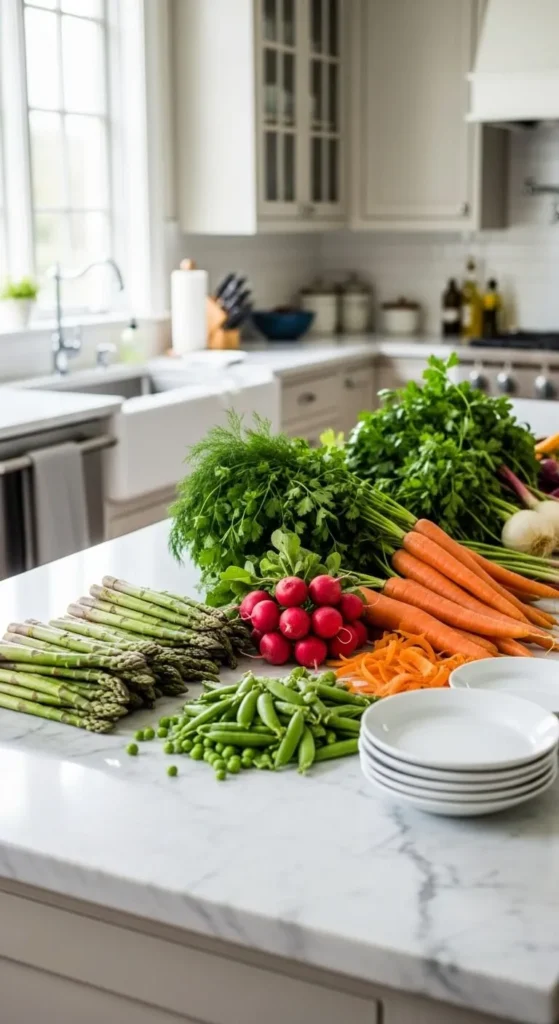
Start With Peak-Season Vegetables (This Is Half the Work)
Professional-level flavor starts with great ingredients. Spring vegetables are at their best when they’re fresh, crisp, and in season.
Look for:
- Asparagus with firm stalks and tight tips
- Snap peas that feel plump and crunchy
- Radishes with smooth skins and leafy greens
- Carrots that smell sweet and earthy
- Greens that look perky, not limp
When vegetables are fresh, they need less seasoning and less cooking time. That’s why chefs rely so heavily on seasonal produce—it does most of the work for them.
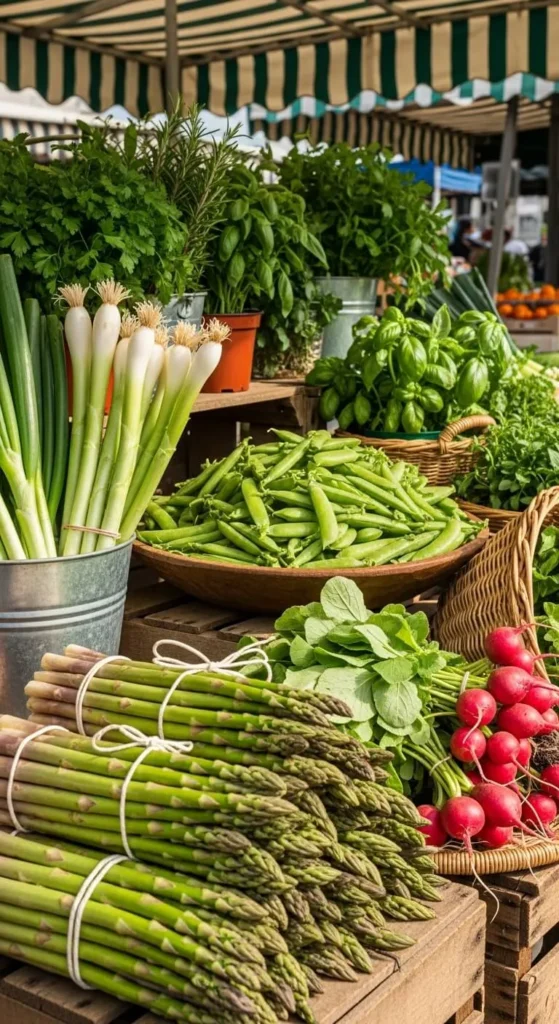
Prep Like a Pro (Clean Cuts Matter)
How you prep vegetables affects how they cook—and how they look on the plate.
Simple pro prep tips:
- Trim woody ends from asparagus
- Peel carrots only if needed (scrub instead when possible)
- Cut vegetables into similar-sized pieces so they cook evenly
- Keep tender greens whole or roughly torn
Clean, intentional cuts help vegetables cook evenly and give your dishes that polished, professional feel.
Use Cooking Methods That Respect Tender Vegetables
Spring vegetables are delicate, so heavy cooking methods can overwhelm them. Pros focus on techniques that enhance natural flavor.
Best cooking methods for spring veggies:
- Roasting: Brings out sweetness without heaviness
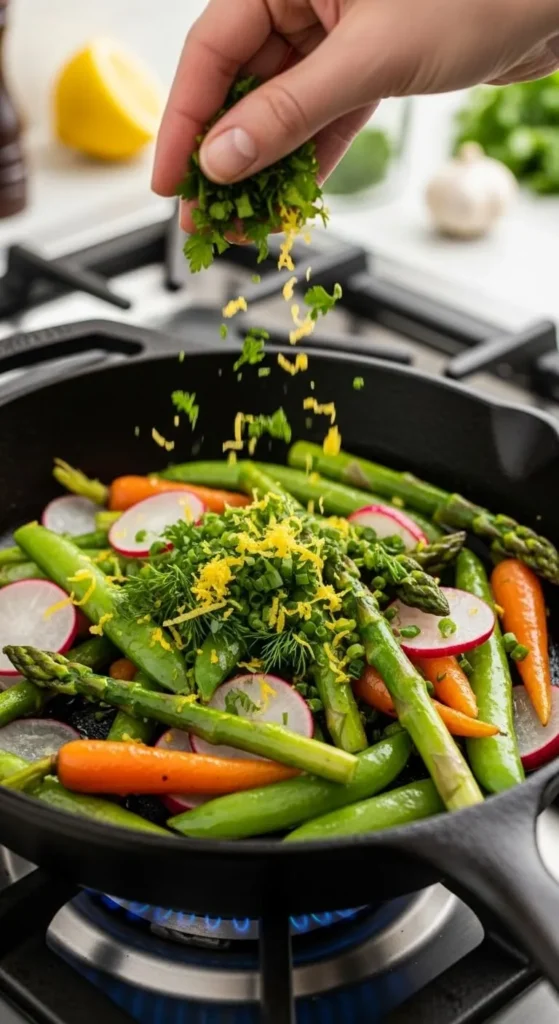
- Quick sautéing: Ideal for greens, peas, and asparagus
- Blanching: Keeps color bright and texture crisp
- Grilling: Adds light char and depth
Avoid long braises or deep frying—those are better saved for tougher vegetables.
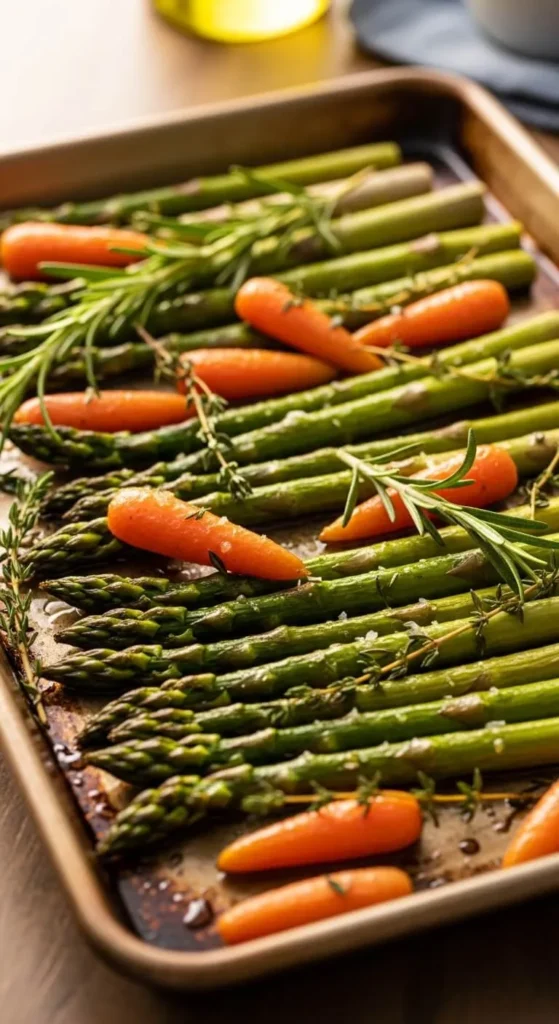
Season in Layers, Not All at Once
One big difference between home cooks and pros? Timing.
Pro seasoning approach:
- Salt vegetables lightly before cooking
- Taste as they cook
- Finish with salt, acid, or fat after cooking
This layered seasoning builds depth without overpowering the vegetables. A final squeeze of lemon or drizzle of olive oil makes everything taste brighter and fresher.
Master the Power of Acid and Fresh Herbs
Spring vegetables love contrast. A little acidity and fresh herbs bring everything to life.
Best acids for spring dishes:
- Lemon juice or zest
- White wine vinegar
- Champagne vinegar
- Balsamic (used lightly)
Go-to spring herbs:
- Parsley
- Dill
- Chives
- Mint
- Basil
Always add herbs at the end. Cooking them too long dulls their color and flavor.
Add Texture for Restaurant-Level Results
Professional dishes aren’t just about flavor—they’re about texture.
Easy ways to add contrast:
- Toasted nuts or seeds
- Crispy breadcrumbs
- Shaved parmesan or crumbled feta
- A soft-boiled or fried egg
Even one crunchy or creamy element can elevate a simple vegetable dish instantly.
Pair Vegetables With Flavors That Naturally Work
Not sure how to combine flavors? Chefs rely on classic pairings that never fail.
Foolproof spring pairings:
- Asparagus + lemon + parmesan
- Peas + butter + mint
- Carrots + honey + thyme
- Radishes + olive oil + flaky salt
- Spinach + garlic + chili flakes
Use these as a base, then adjust based on what you love.
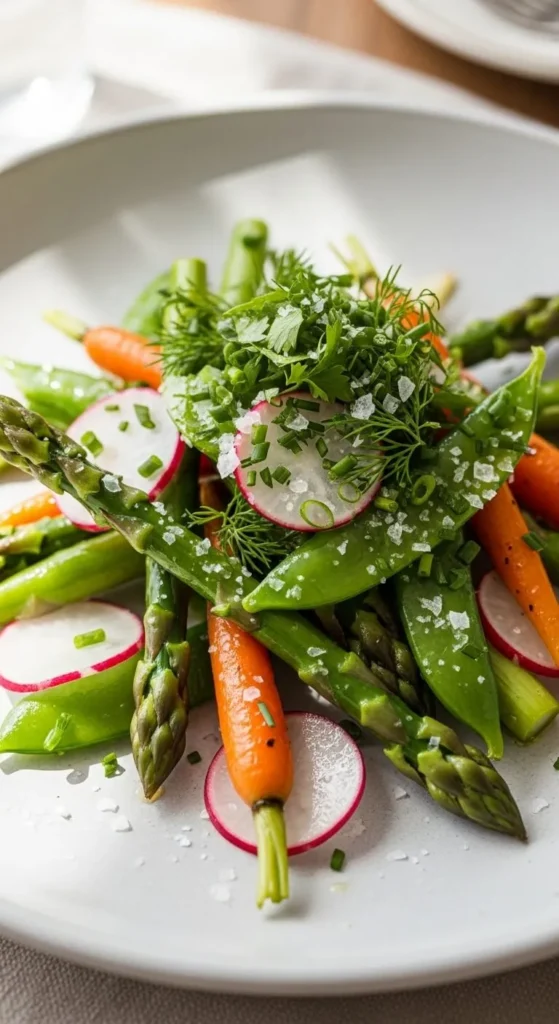
Plate Simply and Let the Vegetables Shine
Spring vegetables are naturally beautiful—don’t bury them.
Pro plating tips:
- Use neutral plates
- Leave vegetables in larger pieces
- Finish with olive oil, herbs, or flaky salt
Less clutter on the plate makes food look more intentional—and more appetizing.
Final Takeaway: Cook With Confidence, Not Complexity
Cooking spring vegetables like a pro isn’t about fancy techniques or long recipes. It’s about choosing great produce, cooking it gently, seasoning thoughtfully, and finishing with brightness and texture.
Save this guide for later, pin your favorite tips, and let your spring vegetables steal the spotlight this season 🌿
Hannah Collins is a passionate home cook and food storyteller who believes every recipe tells a little love story. At TastyWriter, she shares simple, delicious recipes made for real kitchens and busy days — from cozy comfort dishes to creative new favorites. When she’s not cooking, you’ll find her photographing food, testing family recipes, or sipping tea while dreaming up her next tasty idea.
Leave a Reply