

Spring cooking feels different—in the best way. After months of heavier meals, fresh produce shows up bright, crisp, and full of life. The flavors are lighter. The colors are better. And suddenly, meals don’t need much effort to taste good. The key is knowing how to cook with fresh spring produce without overpowering it or overcomplicating things.
This guide walks you through how to shop, prep, and cook spring produce so your meals feel fresh, seasonal, and effortless.
Start With What’s Actually in Season
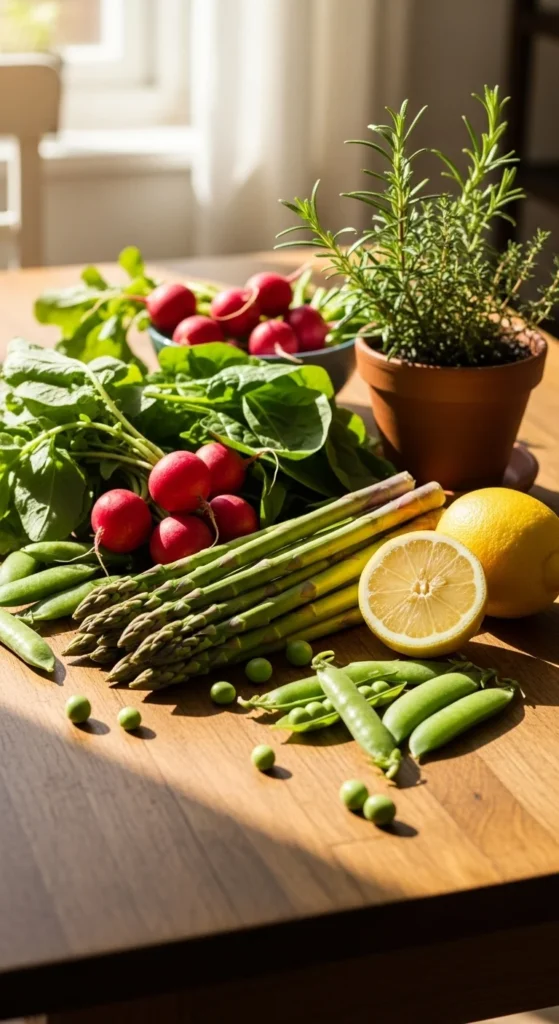
Spring produce is at its best when you let the season lead. In-season fruits and vegetables are more flavorful, cook faster, and need less seasoning.
Common spring produce to look for:
- Asparagus
- Peas and snap peas
- Spinach and arugula
- Radishes
- Spring onions
- Artichokes
- Strawberries
When produce is fresh, you don’t need heavy sauces or long cooking times. Simplicity works.
Tip: If you’re unsure what’s in season, check local markets or grocery store signage—it’s usually a good guide.
Prep Gently to Protect Flavor and Texture
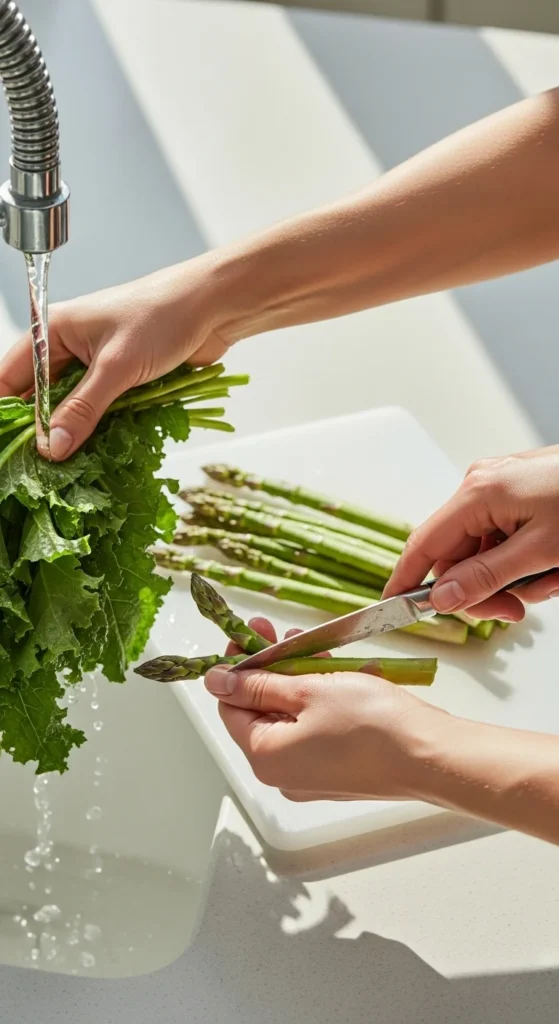
Spring vegetables are more delicate than winter ones. Rough handling or over-prepping can bruise them and dull their flavor.
Smart prep habits:
- Wash produce just before using
- Pat greens dry instead of squeezing them
- Slice only what you need
- Keep cuts simple
Avoid peeling unless necessary. Many spring vegetables taste better with their skins on, and you’ll keep more nutrients that way.
Use Cooking Methods That Let Produce Shine
Spring meals benefit from quick, gentle cooking. The goal is to highlight natural sweetness and freshness—not cook it away.
Best methods for spring produce:
- Light sautéing
- Steaming
- Blanching
- Grilling
- Eating raw or lightly dressed
Avoid:
- Long roasting times
- Heavy breading
- Thick sauces
For example:
- Sauté asparagus for a few minutes instead of roasting
- Steam peas briefly instead of boiling them
- Toss spinach into warm dishes so it wilts naturally
Less heat, less time, more flavor.
Build Meals Around Vegetables, Not the Other Way Around
Instead of treating vegetables as sides, make them the base of the meal.
Easy spring meal ideas:
- Pasta with sautéed greens and lemon
- Grain bowls with fresh herbs and vegetables
- Omelets filled with spring onions and spinach
- Salads topped with warm vegetables and protein
When vegetables lead the dish, meals feel lighter but still satisfying.
Season Lightly and Finish Fresh
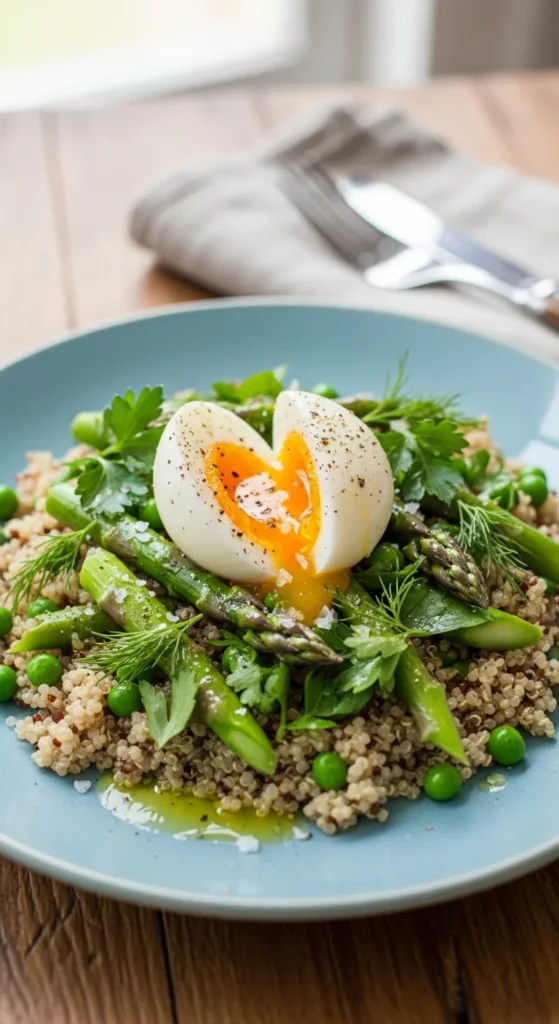
Spring produce doesn’t need much seasoning to taste good. Over-seasoning hides its natural character.
Stick to simple flavors:
- Olive oil or butter
- Salt and black pepper
- Lemon juice or zest
- Fresh herbs like dill, parsley, or chives
Finish dishes after cooking:
- Add herbs at the end
- Squeeze lemon just before serving
- Drizzle oil instead of cooking everything in it
This keeps flavors bright and clean.
Mix Raw and Cooked for Better Texture
One of the easiest ways to make spring meals more exciting is mixing raw and cooked produce.
Try combinations like:
- Raw radishes with warm greens
- Fresh herbs on cooked vegetables
- Shaved asparagus in salads
- Raw peas sprinkled over pasta
This contrast adds crunch, freshness, and balance to every bite.
Don’t Overload the Plate
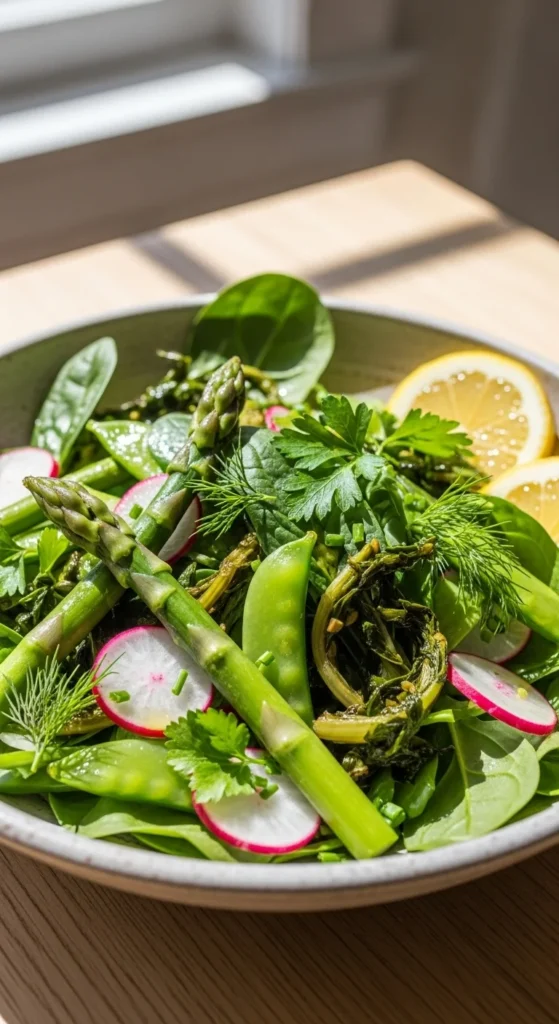
Spring meals work best when they feel uncluttered. Too many ingredients can overwhelm delicate flavors.
Aim for:
- One main vegetable
- One supporting vegetable
- One protein or grain
- One simple dressing or sauce
If everything tastes fresh on its own, the dish will feel complete without being heavy.
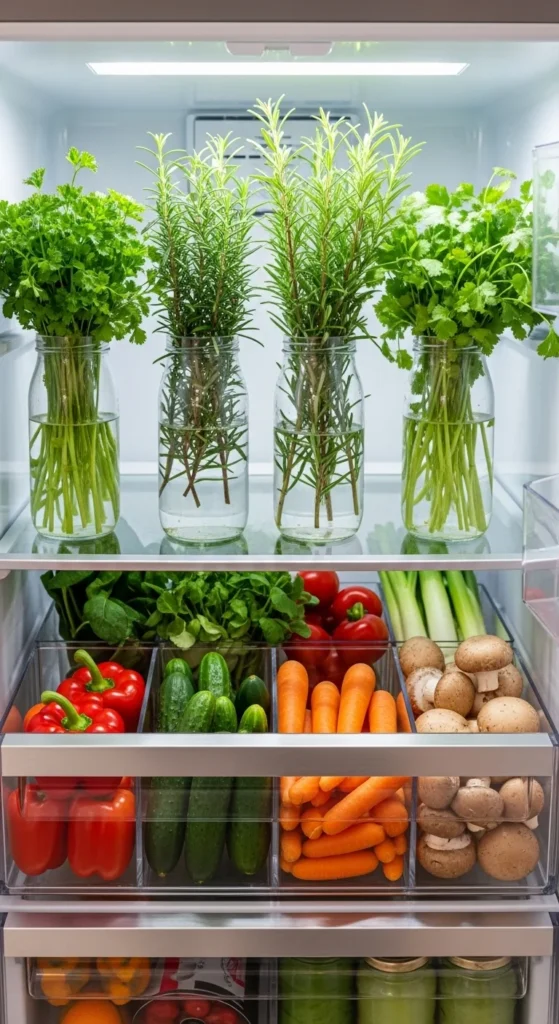
Store Produce Properly to Keep It Fresh Longer
Fresh produce only works if it stays fresh.
Storage tips:
- Keep herbs wrapped in a damp towel
- Store greens loosely, not tightly packed
- Keep asparagus upright in a jar with water
- Don’t wash produce until ready to use
Good storage means better texture and flavor when it’s time to cook.
Final Takeaway
Cooking with fresh produce for spring meals is about restraint, not effort. Choose what’s in season, prep gently, cook lightly, and let natural flavors lead. When you treat spring produce with care, meals feel fresher, brighter, and easier to enjoy.
Save this guide for later and let spring ingredients do the hard work for you.
Hannah Collins is a passionate home cook and food storyteller who believes every recipe tells a little love story. At TastyWriter, she shares simple, delicious recipes made for real kitchens and busy days — from cozy comfort dishes to creative new favorites. When she’s not cooking, you’ll find her photographing food, testing family recipes, or sipping tea while dreaming up her next tasty idea.
Leave a Reply