

Cold weather has a way of making the body feel stiff, tired, and a little inflamed. Short days, heavier food, and less movement all add up. That’s why winter is the perfect time to focus on anti-inflammatory meals that warm you from the inside while supporting how your body feels.
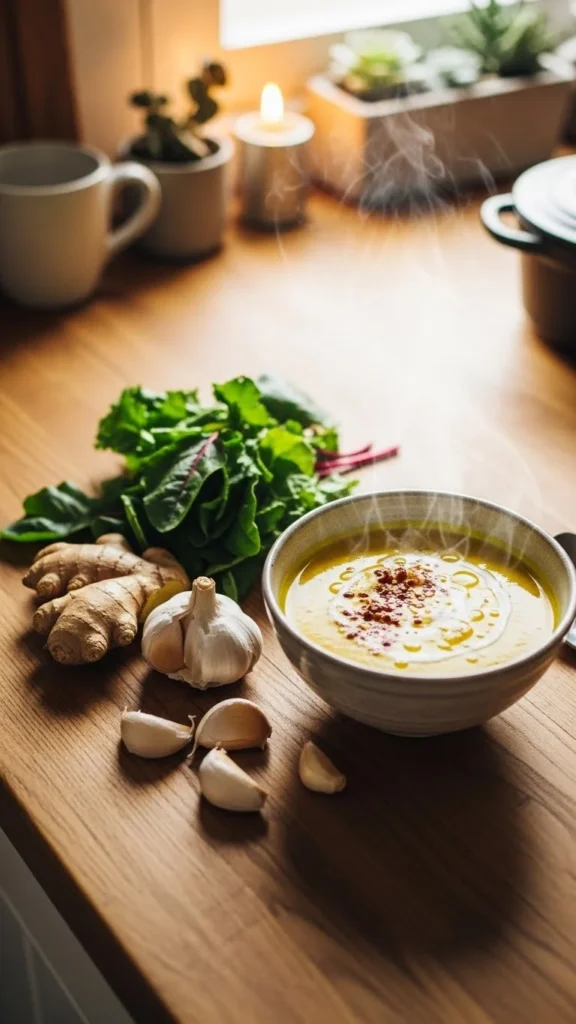
The good news? Anti-inflammatory winter meals don’t need special diets, expensive ingredients, or complicated recipes. With a few smart choices, you can cook comforting food that feels good to eat and good afterward.
What Makes a Meal Anti-Inflammatory?
Anti-inflammatory meals focus on whole foods that calm the body instead of stressing it.
These foods usually:
- Support digestion
- Reduce internal stress
- Balance blood sugar
- Provide warming comfort in cold months
You don’t need to cut everything out. It’s more about adding the right ingredients consistently.
Think warm, slow-cooked, colourful, and nourishing.
Winter Ingredients That Reduce Inflammation
Winter is packed with naturally anti-inflammatory foods. Many are already in your kitchen.
Look for these staples:
- Root vegetables like sweet potatoes, carrots, and beets
- Leafy greens such as kale, spinach, and chard
- Healthy fats like olive oil, avocado, nuts, and seeds
- Spices including turmeric, ginger, cinnamon, and garlic
- Protein from lentils, beans, eggs, fish, or chicken
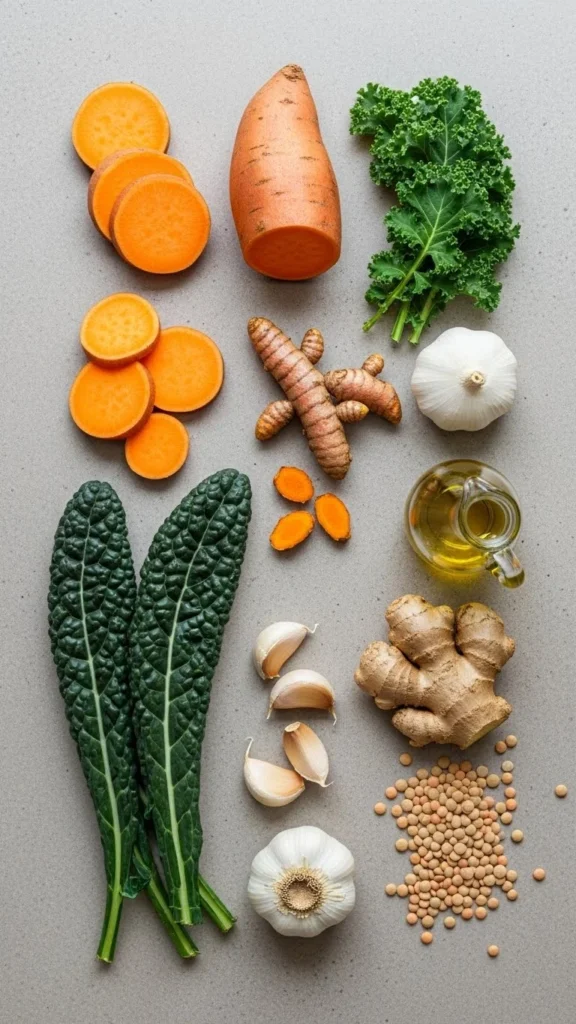
These ingredients help create meals that are warming, filling, and gentle on the body.
Simple Cooking Methods That Help
How you cook matters just as much as what you cook.
Best winter-friendly methods:
- Slow simmering
- Roasting at moderate heat
- One-pot meals
- Light sautéing with olive oil
Avoid over-frying or cooking at very high heat. Gentle cooking keeps nutrients intact and flavours deeper.
Bonus: these methods are easier and require less cleanup.
Easy Anti-Inflammatory Winter Meal Ideas
You don’t need a new recipe every night. Start with flexible meal templates.
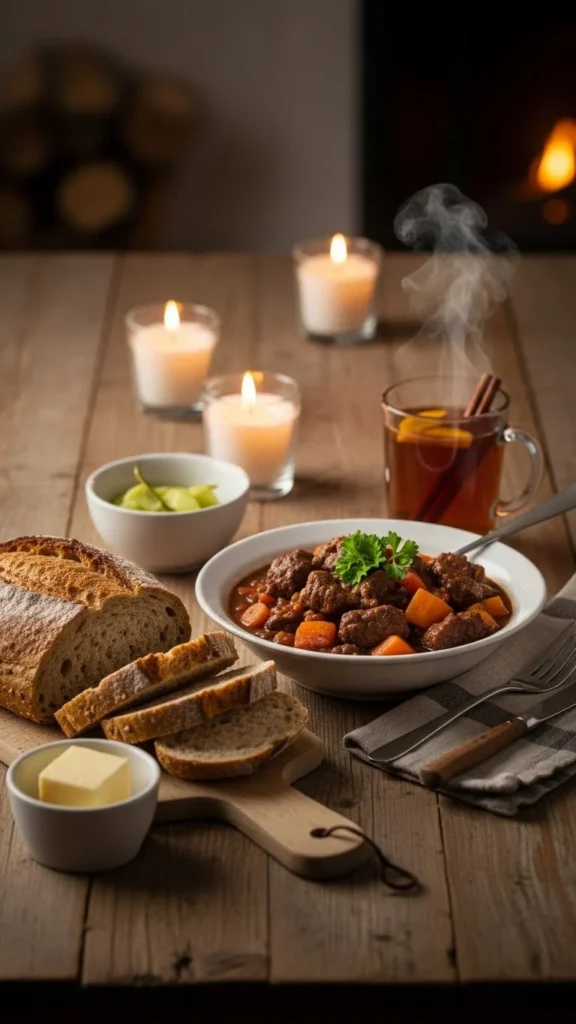
Warming Soups and Stews
These are ideal for winter and inflammation support.
Build them with:
- Onion, garlic, and ginger as the base
- Root vegetables for sweetness
- Lentils or beans for protein
- Leafy greens added at the end
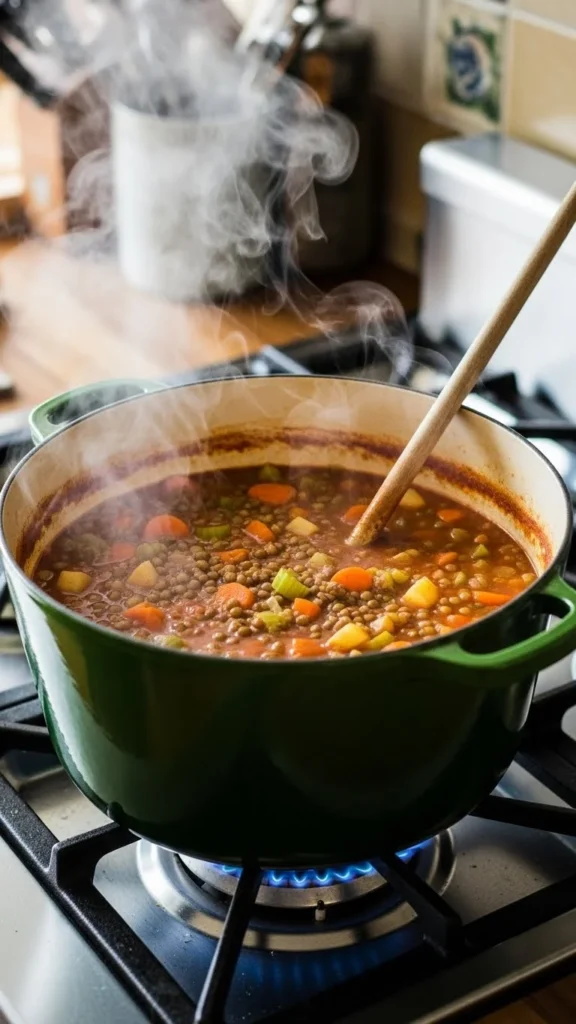
Soups hydrate the body, aid digestion, and feel deeply comforting.
Cozy Grain Bowls
Warm grain bowls are perfect when you want something hearty.
Use:
- Brown rice, quinoa, or barley
- Roasted vegetables
- A drizzle of olive oil or tahini
- Herbs and spices for flavour
They’re filling without feeling heavy.
Simple One-Pan Dinners
Roast everything together for ease.
Try:
- Salmon or chicken
- Sweet potatoes and carrots
- Broccoli or Brussels sprouts
- Olive oil, garlic, and turmeric
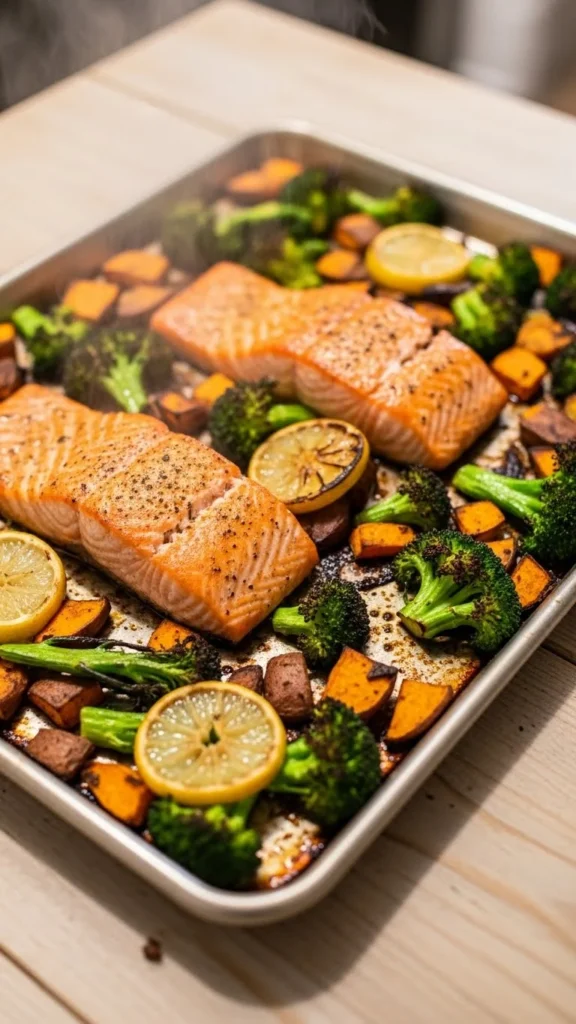
One-pan meals save time and still deliver warmth and balance.
Spices That Make the Biggest Difference
Spices are the quiet heroes of anti-inflammatory cooking.
Focus on:
- Turmeric for joint and muscle comfort
- Ginger for digestion and warmth
- Cinnamon for blood sugar balance
- Garlic for immune support
Always pair turmeric with a little black pepper and fat to help absorption.
Even small amounts used daily can add up over time.
How to Build an Anti-Inflammatory Plate
Keep meals simple by following this structure:
- Half vegetables
- One quarter protein
- One quarter whole grains or healthy fats
Add warmth with spices and avoid heavy sauces loaded with sugar.
Consistency matters more than perfection.
Common Mistakes to Avoid
Even healthy meals can miss the mark.
Try not to:
- Skip meals and overeat later
- Rely too much on refined carbs
- Forget healthy fats
- Overdo cold foods in winter
Warm meals support digestion better during colder months.
Make It Easy to Stick With
The best anti-inflammatory meals are the ones you’ll actually cook.
Helpful habits:
- Prep vegetables once or twice a week
- Keep frozen greens on hand
- Cook double portions for leftovers
- Rotate a few favourite meals
Simple routines remove stress and make healthy eating feel natural.
Final Takeaway
Anti-inflammatory winter meals don’t need to feel restrictive or boring. With warm cooking methods, nourishing ingredients, and comforting flavours, you can support your body while enjoying every bite.
Focus on warmth, balance, and consistency. Let your meals work with your body, not against it.
Save this guide for later, and make winter eating both healing and satisfying.

Hannah Collins is a passionate home cook and food storyteller who believes every recipe tells a little love story. At TastyWriter, she shares simple, delicious recipes made for real kitchens and busy days — from cozy comfort dishes to creative new favorites. When she’s not cooking, you’ll find her photographing food, testing family recipes, or sipping tea while dreaming up her next tasty idea.
Leave a Reply