

There’s something magical about a stack of perfectly fluffy pancakes — crisp on the edges, cloud-soft in the middle, and so tender they practically disappear as you bite into them. Yet so many home pancakes turn out flat, dense, or rubbery. The difference isn’t luck. It’s technique.
Imagine cutting into a tall, golden pancake and watching steam gently rise as butter slowly melts and maple syrup cascades down the sides. That’s the texture you’re aiming for — light, airy, and irresistible.
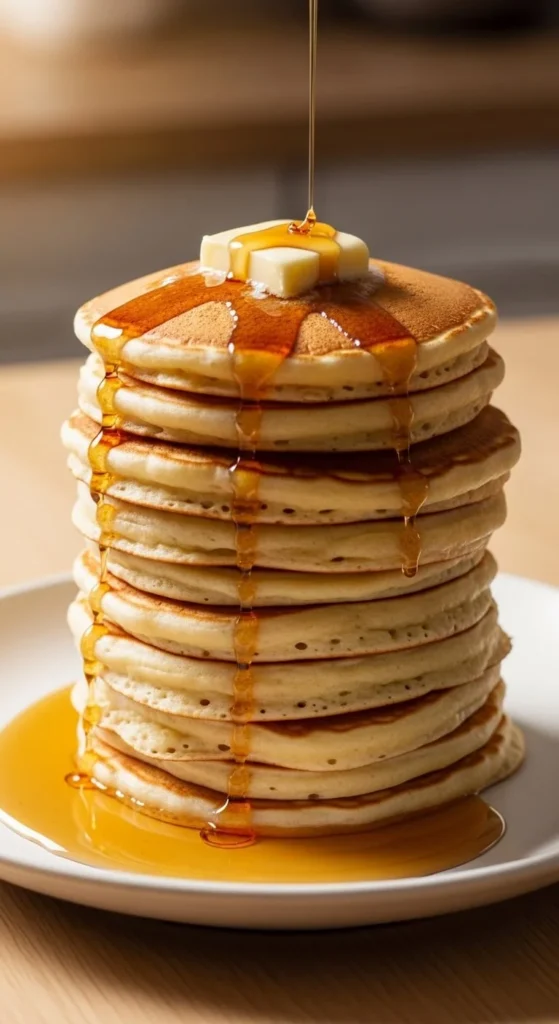
If you’ve ever wondered how cafés get that dreamy fluff, this guide will walk you through every step — simply, clearly, and without fuss.
Start With the Right Ingredients
Fluffy pancakes begin long before the pan heats up. The ingredients matter more than you think.
You’ll need:
- All-purpose flour
- Baking powder (your main leavening hero)
- A pinch of salt
- Sugar (just a little)
- Milk
- Eggs
- Melted butter or oil
- Vanilla (optional but lovely)
Two key rules:
- Fresh baking powder — old baking powder = flat pancakes.
- Room-temperature eggs and milk — they blend better and help the batter rise evenly.
Think of your ingredients as a team. When they’re in sync, the pancakes rise beautifully.
Mix Gently — Don’t Overwork the Batter
This is where most people go wrong.
In one bowl, whisk the dry ingredients. In another, mix the wet ones. Then pour wet into dry and stir just until combined.
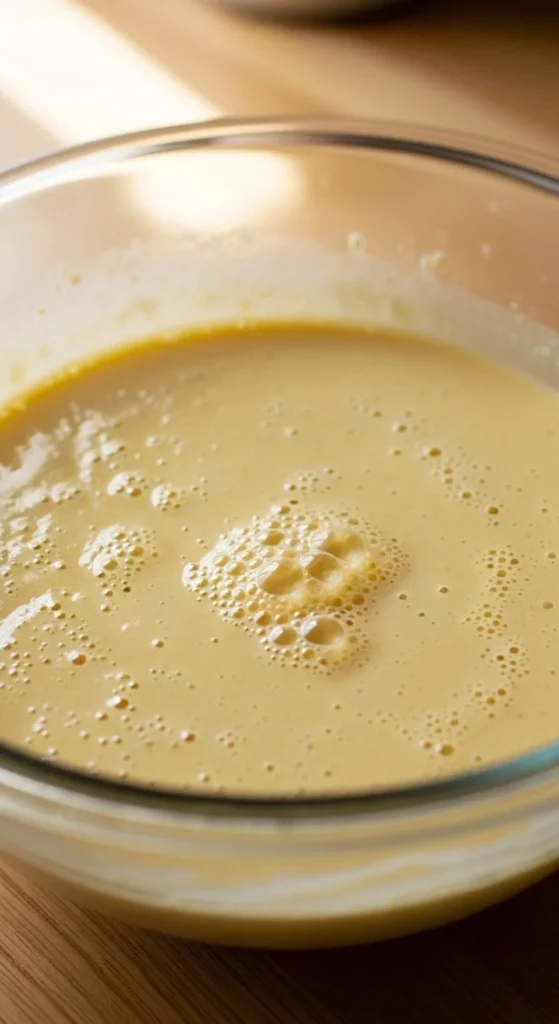
Your batter should look:
- Thick
- Slightly lumpy
- Pourable, but not runny
If you mix until perfectly smooth, you activate too much gluten. That gives you tough, chewy pancakes instead of tender ones.
Lumps are not your enemy. They are your fluff insurance.
Let the Batter Rest
This step is small but powerful.
Let your batter sit for 5–10 minutes before cooking. During this time:
- The flour hydrates
- Air bubbles form
- The baking powder starts working
When you come back, the batter will look slightly puffed and airy — that’s exactly what you want.
Heat the Pan Just Right
Temperature can make or break your pancakes.
Use a non-stick pan or well-seasoned griddle. Set heat to medium-low.
Test with a drop of water:
If it sizzles gently and evaporates slowly, you’re ready.
Add a small pat of butter or light oil. Spread it evenly, then wipe out the excess with a paper towel. You want a slick surface, not a butter pool.
Too hot? Pancakes burn outside and stay raw inside.
Too cool? They spread and turn flat.
Pour Perfect Portions
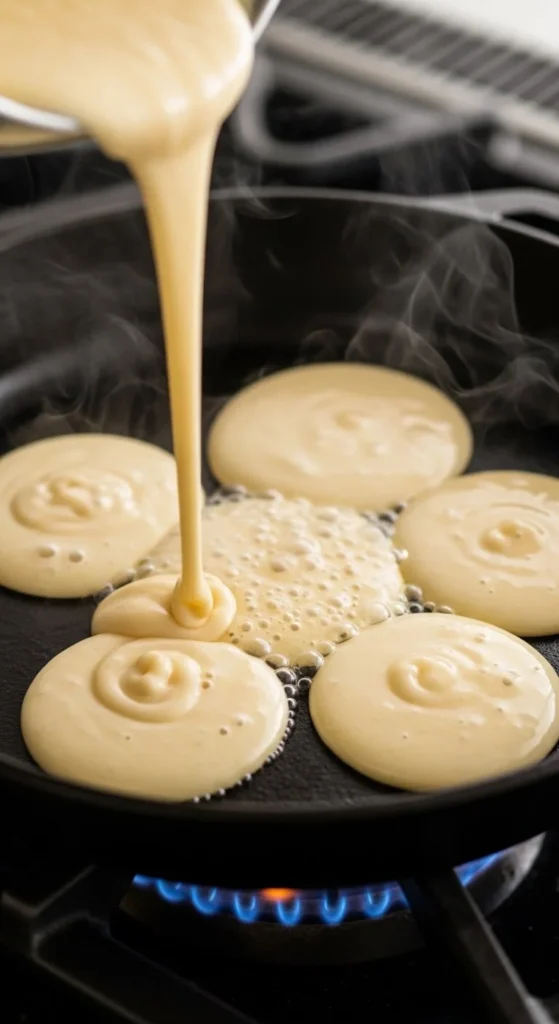
Use a ladle or measuring cup for consistency — about 1/3 cup per pancake.
Pour straight down in one spot and let the batter spread naturally into a round shape. Don’t swirl it around.
Leave space between pancakes so you can flip easily.
Watch closely. You’ll start seeing bubbles form on top. That’s your cue.
Flip Once — And Only Once
When bubbles pop and the edges look slightly set, it’s flip time.
Slide a spatula under the pancake, lift gently, and flip in one smooth motion.
Cook the second side for about 30–45 seconds. It should turn golden, not dark brown.
Resist the urge to press down. Squishing pushes out all that precious air you worked so hard to create.
Keep Pancakes Warm (The Smart Way)
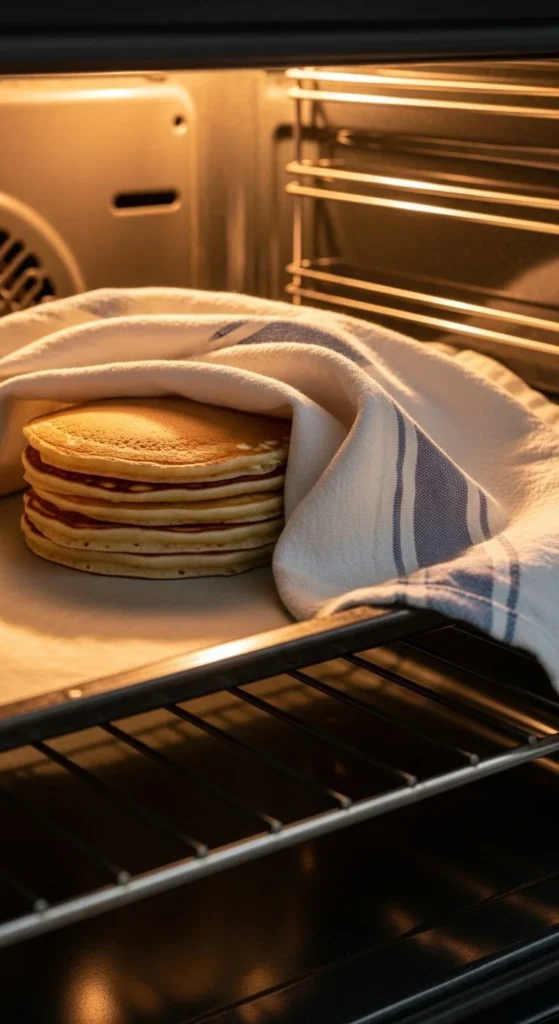
If you’re cooking multiple batches, preheat your oven to 170°F / 75°C.
Place cooked pancakes on a baking sheet in a single layer. This keeps them warm without steaming or drying out.
Never stack them right away — steam makes them soggy.
Make Them Extra Fluffy With One Secret Trick
Want café-level fluff? Separate your eggs.
- Whisk yolks into the milk.
- Beat the egg whites separately until soft peaks form.
- Gently fold whites into the batter at the very end.
This adds extra air and makes your pancakes impossibly light.
It’s optional — but worth it for special breakfasts.
Flavor Variations You’ll Love
Once you master the base, try these twists:
Vanilla Buttermilk
Replace regular milk with buttermilk for extra tenderness.
Blueberry Clouds
Drop fresh blueberries onto each pancake right after pouring.
Chocolate Chip Dream
Sprinkle chips lightly over the batter before flipping.
Banana Cinnamon
Add mashed banana and a pinch of cinnamon to the mix.
Each version keeps the same fluffy base — just with personality.
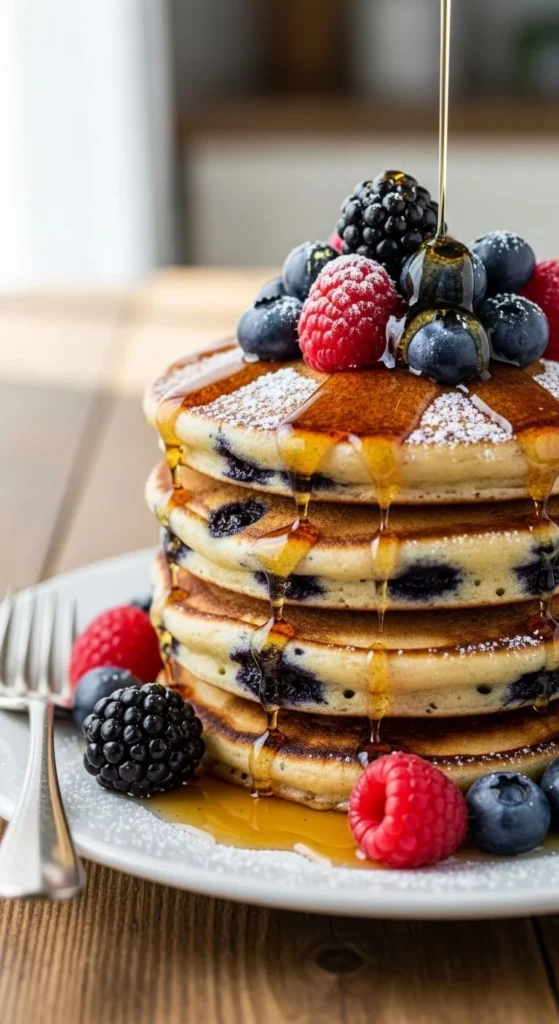
Toppings That Take Them Over the Top
Great pancakes deserve great toppings. Try:
- Real maple syrup
- Honey or agave
- Fresh fruit
- Whipped cream
- Nut butter
- Greek yogurt
- A sprinkle of powdered sugar
For a restaurant finish, add butter first, then syrup. The butter creates a silky layer that helps the syrup spread beautifully.
Common Pancake Mistakes to Avoid
- Overmixing the batter
- Using old baking powder
- Cooking on too high heat
- Flipping too early
- Pressing pancakes with a spatula
- Skipping the rest time
Avoid these, and you’re already ahead of most home cooks.
Make-Ahead Tips
You can prep pancake batter the night before — with one tweak.
Mix dry ingredients separately and store them airtight. In the morning, add fresh wet ingredients and rest the batter briefly.
You can also freeze cooked pancakes. Just layer parchment paper between them and reheat in a toaster or oven.
Final Takeaway
Fluffy pancakes aren’t about fancy tools or secret recipes. They’re about gentle mixing, the right heat, and a little patience. Master those, and you’ll make pancakes that are soft, airy, and truly melt-in-your-mouth good.
Love this recipe? Save it for your next cozy breakfast — and treat yourself (or someone you love) to the fluffiest pancakes ever.
Hannah Collins is a passionate home cook and food storyteller who believes every recipe tells a little love story. At TastyWriter, she shares simple, delicious recipes made for real kitchens and busy days — from cozy comfort dishes to creative new favorites. When she’s not cooking, you’ll find her photographing food, testing family recipes, or sipping tea while dreaming up her next tasty idea.
Leave a Reply