

A great salad isn’t just about fresh vegetables. The real magic comes from the dressing. It’s what brings everything together, adding flavour, richness, and balance. Store-bought dressings can be convenient, but they often lack freshness and contain unnecessary additives.
Making salad dressing at home is easier than you think. With just a few simple ingredients, you can create fresh, flavourful dressings that taste better and feel more satisfying.
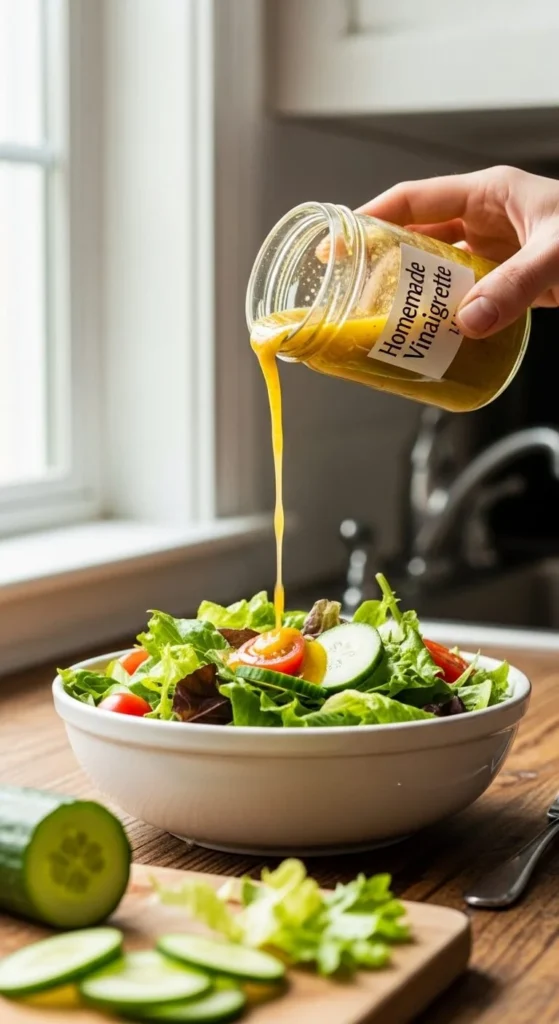
Once you start making your own dressings, you may never go back to store-bought again.
Understand the Basic Formula of Salad Dressing
Most salad dressings follow a simple formula. Once you understand this, you can create endless variations.
The basic components are:
- Oil
- Acid
- Seasoning
- Optional flavour additions
Oil provides richness. Acid adds brightness. Seasoning enhances flavour.
Common oils include:
- Olive oil
- Avocado oil
- Vegetable oil
Common acids include:
- Lemon juice
- Vinegar
- Apple cider vinegar
This balance creates a smooth and flavourful dressing.
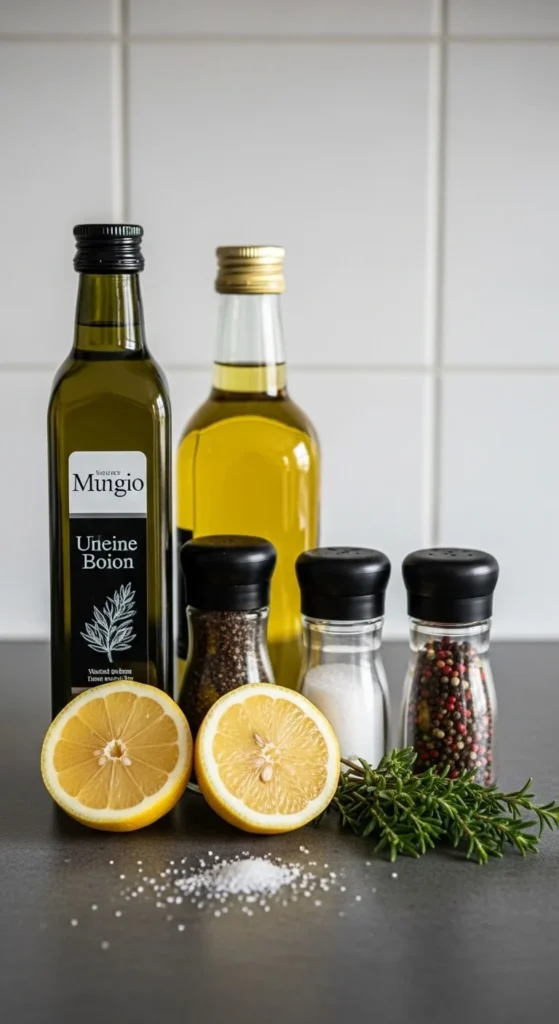
This simple formula works every time.
Choose High-Quality Ingredients for Best Results
Because dressing uses only a few ingredients, quality matters.
Use fresh lemon juice instead of bottled when possible.
Choose good olive oil for richer flavour.
Fresh herbs improve aroma and taste.
Better ingredients create better dressing.
Even simple combinations can taste amazing when ingredients are fresh.
Mix Oil and Acid Properly for Smooth Texture
The key to good dressing is blending oil and acid correctly.
When mixed well, the dressing becomes smooth and balanced.
You can combine ingredients in:
- A small bowl
- A jar with a lid
- A blender
Whisking or shaking helps blend everything evenly.
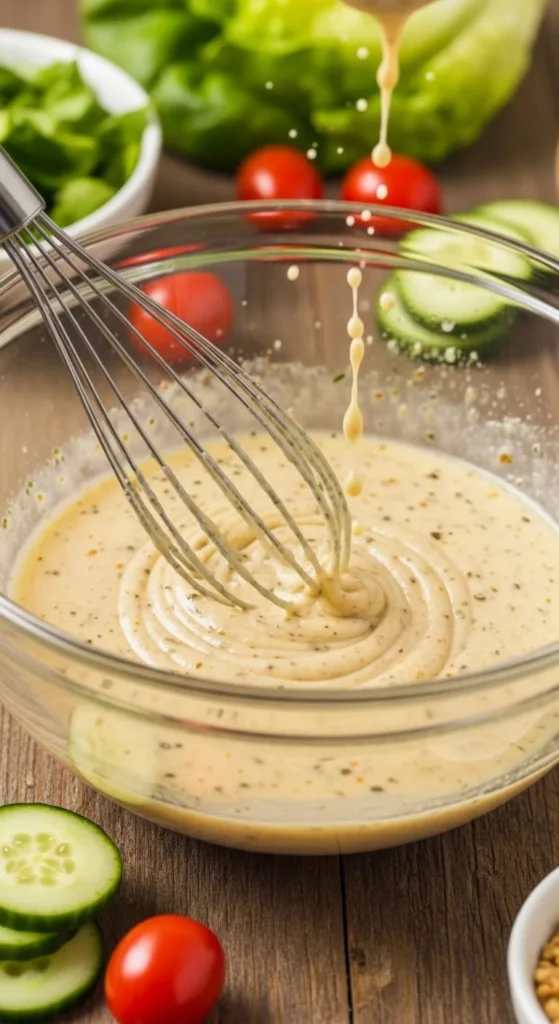
Mixing properly improves both texture and flavour.
Add Seasoning to Enhance Flavour
Seasoning brings the dressing to life.
Basic seasoning includes:
- Salt
- Black pepper
Optional additions include:
- Garlic
- Mustard
- Honey
Garlic adds depth. Honey adds sweetness. Mustard adds richness.
Start with small amounts. Taste and adjust.
Seasoning should balance the dressing, not overpower it.
Try Classic Homemade Dressing Combinations
Once you understand the basics, you can try different variations.
Simple combinations include:
Classic vinaigrette:
- Olive oil
- Lemon juice or vinegar
- Salt and pepper
Honey mustard dressing:
- Olive oil
- Mustard
- Honey
- Lemon juice
Garlic dressing:
- Olive oil
- Garlic
- Lemon juice
- Salt
Each combination takes only minutes to prepare.
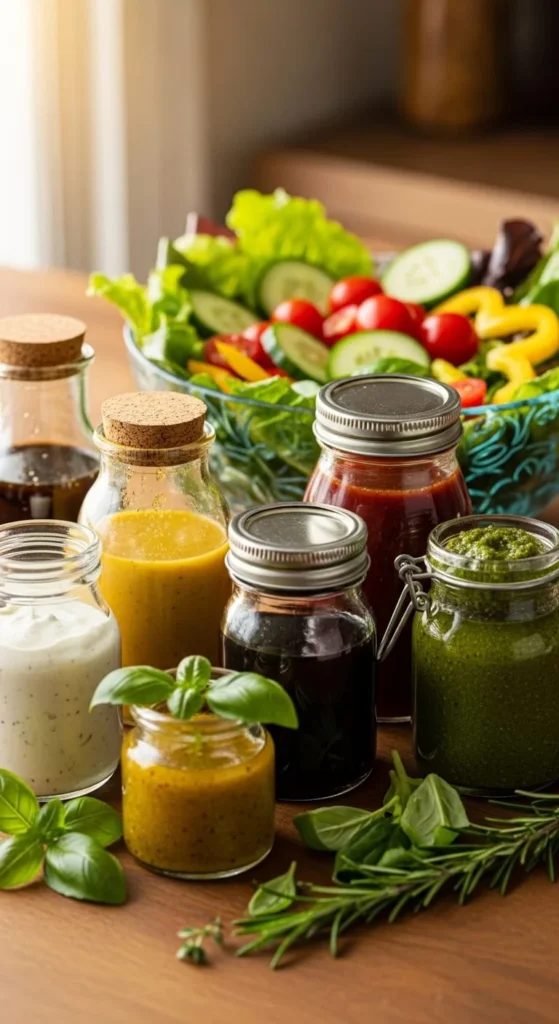
Variety makes salads more exciting.
Taste and Adjust Before Serving
Always taste your dressing before using it.
If it tastes too sharp, add a small amount of oil.
If it tastes too mild, add more acid or seasoning.
Small adjustments improve flavour balance.
This step ensures the best result.
Store Dressing Properly for Freshness
Homemade dressing can be stored in a sealed container.
Keep it in the refrigerator.
Most dressings stay fresh for several days.
Shake or stir before using again.
This helps re-blend the ingredients.
Proper storage maintains freshness.
Use Homemade Dressing on More Than Just Salad
Homemade dressing works in many dishes.
You can use it on:
- Green salads
- Pasta salads
- Roasted vegetables
- Grain bowls
It adds flavour to many meals.
Fresh dressing enhances simple ingredients.
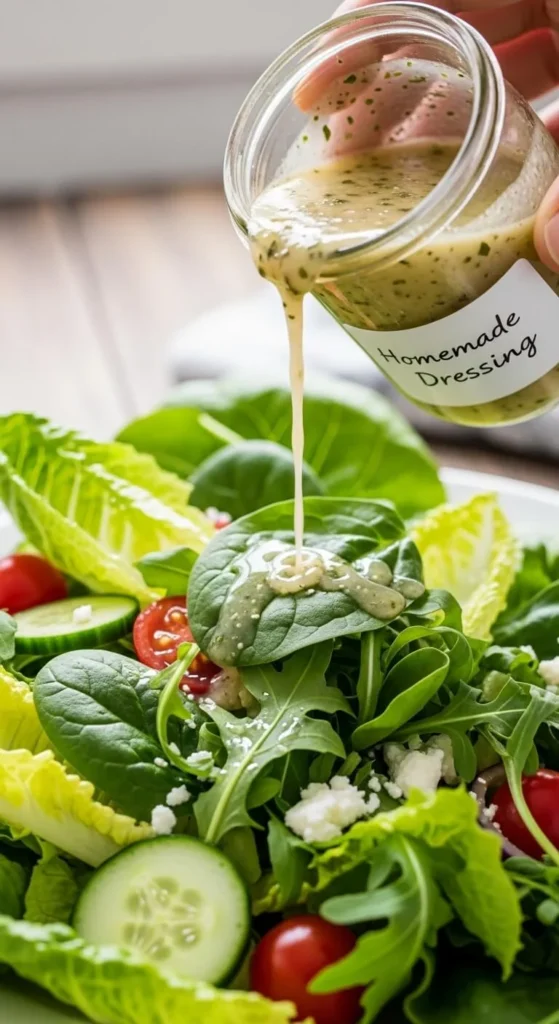
Simple dressing makes meals feel complete.
Why Homemade Dressing Is Better
Homemade dressing gives you full control.
You choose:
- Ingredients
- Flavour
- Freshness
It contains no unnecessary additives.
It tastes fresher and more natural.
Making dressing at home is fast and rewarding.
Final Thoughts: Homemade Salad Dressing Is Simple and Worth It
Making salad dressing at home takes only minutes but makes a big difference in flavour.
With simple ingredients and basic mixing, you can create fresh dressings anytime.
Start with oil, acid, and seasoning. Adjust to your taste. Try new combinations.
Save this guide and start making your own fresh salad dressings at home.

Hannah Collins is a passionate home cook and food storyteller who believes every recipe tells a little love story. At TastyWriter, she shares simple, delicious recipes made for real kitchens and busy days — from cozy comfort dishes to creative new favorites. When she’s not cooking, you’ll find her photographing food, testing family recipes, or sipping tea while dreaming up her next tasty idea.
Leave a Reply