

Spring food is all about brightness—crisp vegetables, fresh herbs, citrusy finishes. So the idea of making those dishes ahead of time can feel risky. Will everything wilt? Go soggy? Lose that just-picked flavor?
Here’s the good news: with a few smart techniques, spring dishes can absolutely be prepped in advance and still taste fresh when it’s time to serve.
Whether you’re planning for guests, weekly meals, or just trying to save time, this guide will show you how to stay ahead without sacrificing flavor.
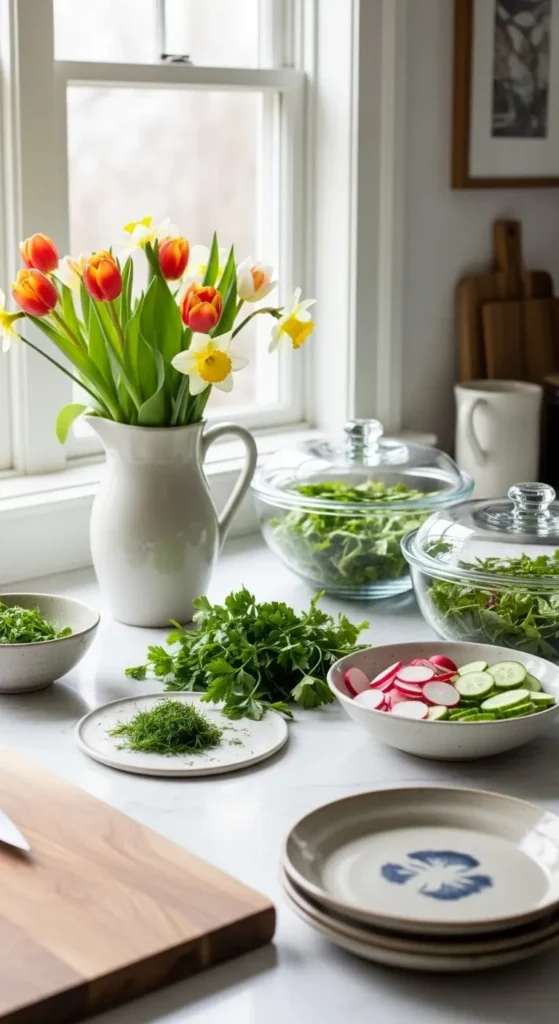
Understand What “Fresh” Really Means
Freshness isn’t just about timing—it’s about texture, balance, and contrast. Many spring dishes lose their appeal because all the elements are combined too early.
To keep dishes tasting fresh:
- Store components separately
- Add acids and herbs at the last minute
- Avoid overdressing or oversaucing
Think of your dish in layers. If you protect each layer, the final result still feels lively and light.
Choose Make-Ahead–Friendly Spring Recipes
Some spring dishes are naturally better suited for advance prep than others.
Best spring dishes to make ahead:
- Grain salads (farro, couscous, quinoa)
- Roasted or blanched vegetables
- Marinated proteins
- Pureed soups (pea, asparagus, leek)
More delicate dishes—like leafy salads or herb-heavy sauces—are best assembled close to serving.
When in doubt, ask: Can this be finished later? If yes, it’s a great make-ahead candidate.
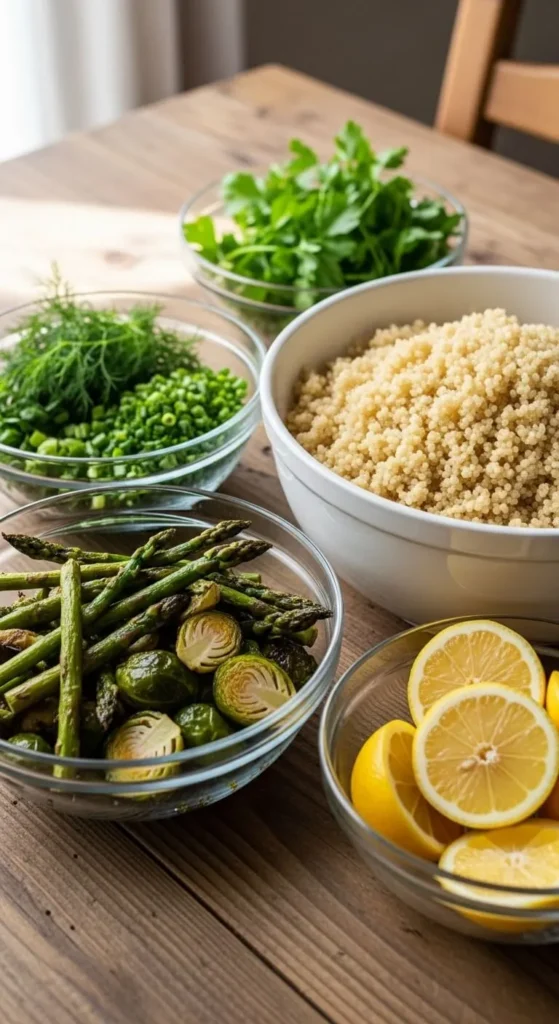
Cook Vegetables Gently (and Slightly Under)
Overcooking is the fastest way to lose freshness. Spring vegetables should be tender but still vibrant.
Best methods for advance prep:
- Blanching vegetables and shocking them in ice water
- Light roasting at high heat
- Quick sautéing just until tender
Pro tips:
- Stop cooking one minute early
- Avoid heavy seasoning at this stage
- Cool vegetables completely before storing
This keeps textures intact and prevents mushiness when reheated or served cold.
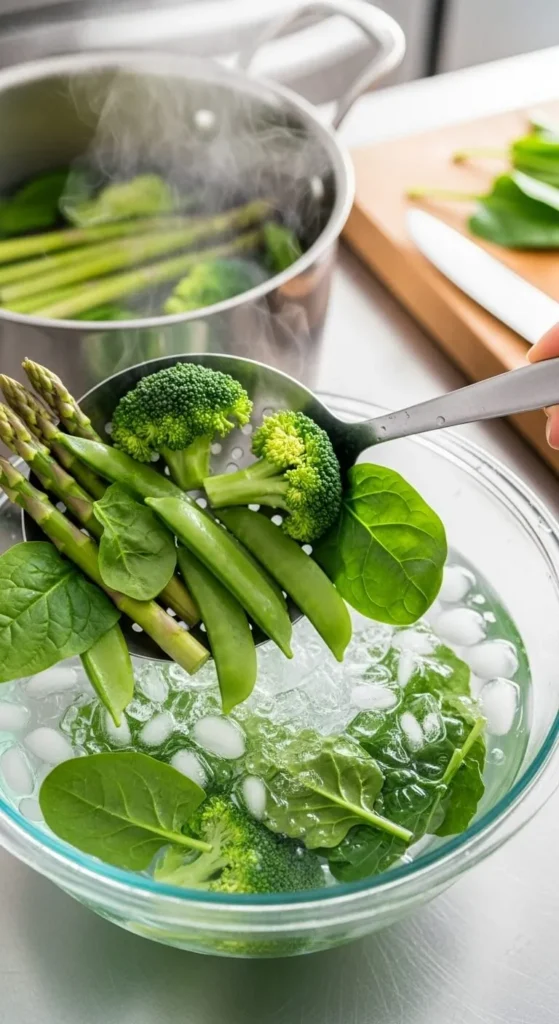
Keep Dressings, Herbs, and Crunch Separate
This is the single most important rule of make-ahead spring cooking.
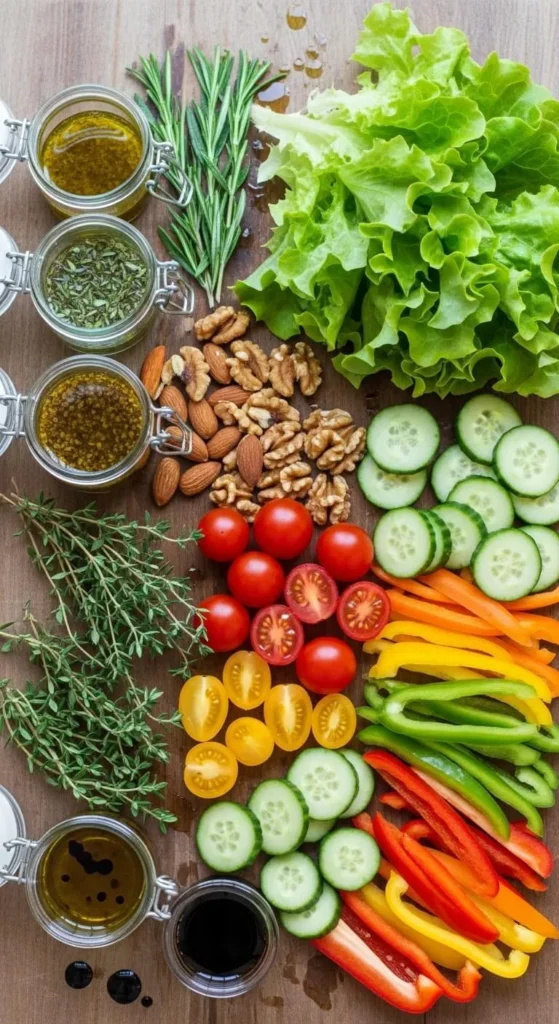
Always store separately:
- Salad dressings
- Fresh herbs
- Nuts, seeds, or breadcrumbs
- Cheese toppings
Why it works:
- Greens stay crisp
- Herbs stay fragrant
- Crunch stays crunchy
Instead of tossing everything together, think “assemble, then finish.”
Five minutes of finishing touches can save hours of regret later.
Store Everything the Right Way
Even the best-cooked food can lose freshness if it’s stored poorly.
Storage tips for spring dishes:
- Use airtight containers
- Let food cool fully before sealing
- Store vegetables and grains separately
- Avoid stacking warm food
How long things last:
- Cooked vegetables: 3–5 days
- Grains and legumes: up to 5 days
- Sauces and dressings: 5–7 days
If moisture is the enemy, a paper towel in the container can help absorb excess humidity.
Reawaken Dishes Before Serving
Food that’s been sitting needs a little love before it hits the table.
Easy ways to refresh spring dishes:
- Add lemon juice or vinegar
- Drizzle with good olive oil
- Sprinkle with flaky salt
- Toss in fresh herbs
If reheating:
- Use a pan instead of the microwave when possible
- Heat gently and briefly
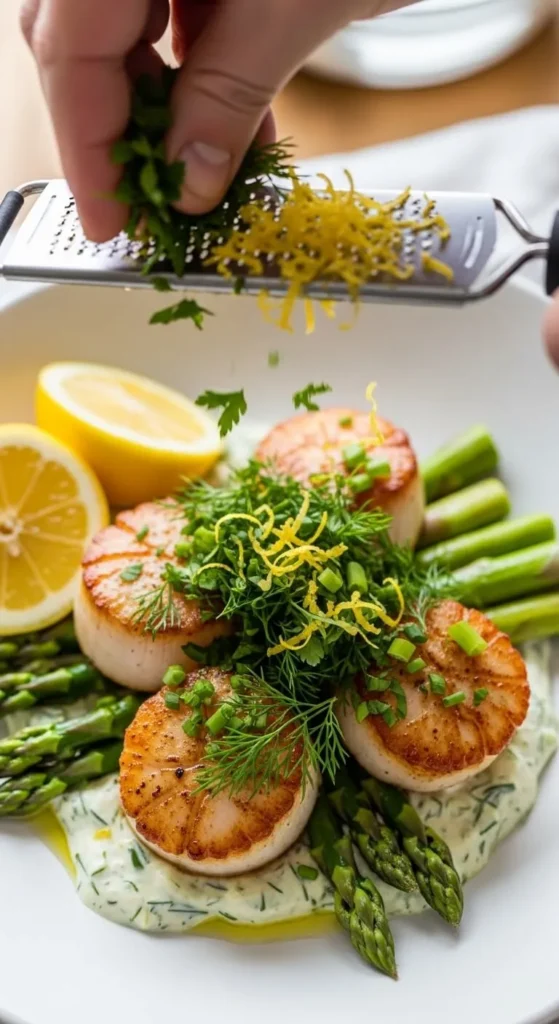
- Finish with something fresh and cold
That contrast between warm and fresh is what makes make-ahead dishes shine.
Plan for Assembly, Not Perfection
Instead of trying to make a dish complete ahead of time, plan for quick assembly.
A simple make-ahead flow:
- Prep and cook base ingredients
- Store components separately
- Assemble just before serving
- Finish with herbs, acid, and crunch
This approach works for:
- Dinner parties
- Weeknight meals
- Spring lunches and picnics
It’s less stress—and better food.
Final Takeaway
Making spring dishes ahead doesn’t mean sacrificing freshness. With gentle cooking, smart storage, and last-minute finishing touches, your food can still taste bright, seasonal, and full of life.
Prep what you can. Finish what matters.
Save this guide for your next spring meal plan 🌸
Hannah Collins is a passionate home cook and food storyteller who believes every recipe tells a little love story. At TastyWriter, she shares simple, delicious recipes made for real kitchens and busy days — from cozy comfort dishes to creative new favorites. When she’s not cooking, you’ll find her photographing food, testing family recipes, or sipping tea while dreaming up her next tasty idea.
Leave a Reply