

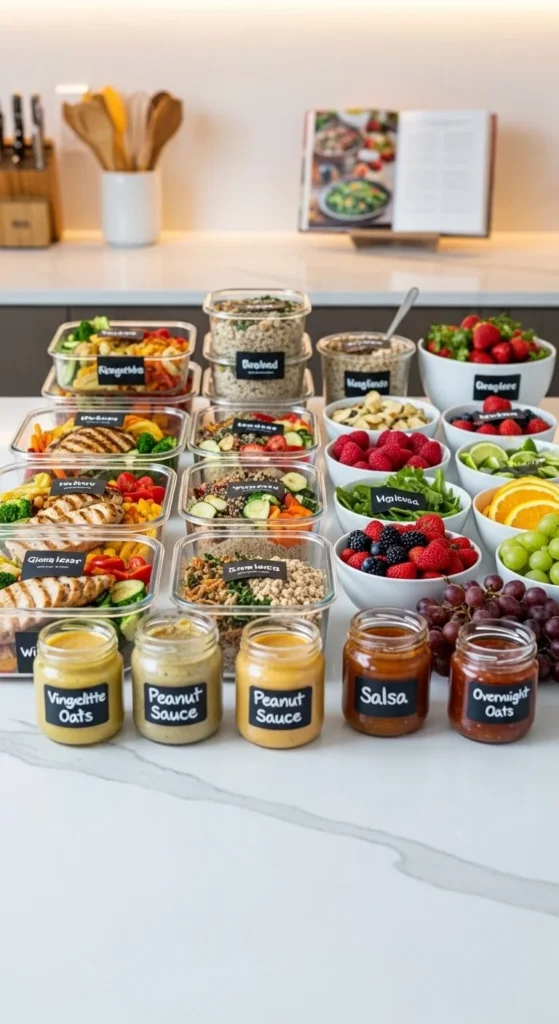
Imagine opening your fridge on a busy Tuesday night and seeing neat containers filled with colorful, ready-to-eat meals instead of takeout menus and half-used groceries. No stress. No last-minute spending. Just simple, tasty food waiting for you.
Meal prep isn’t just for fitness influencers — it’s one of the smartest ways to save money, reduce food waste, and eat better during a hectic week. And you don’t need fancy containers, exotic ingredients, or hours in the kitchen to make it work. You just need a simple plan.
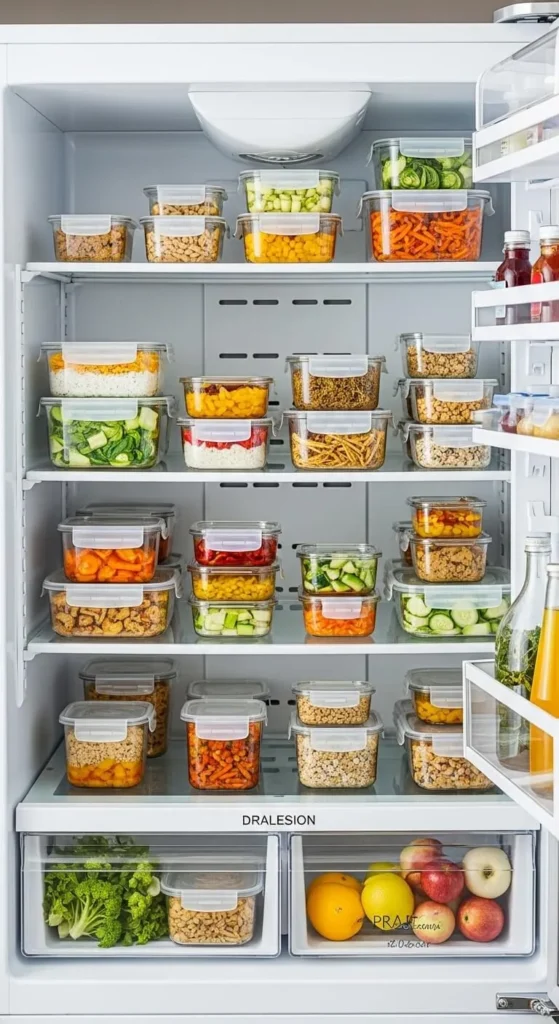
If you want to eat well, spend less, and feel organized, this guide will show you exactly how to meal prep for the week on a budget.
Plan before you shop (this saves the most money)
The biggest budget mistake is shopping without a plan. Meal prep starts on paper, not in the kitchen.
Take 10 minutes and ask yourself:
- How many breakfasts, lunches, and dinners do I need?
- Will I eat out once or twice this week?
- What ingredients do I already have?
Then sketch a simple menu like:
- Breakfast: oatmeal or eggs
- Lunch: grain bowls or wraps
- Dinner: roasted veggies + protein
Write your list around repeat ingredients so nothing goes to waste. For example, one bag of rice can serve lunches and dinners all week.
Shop smart and buy affordable staples
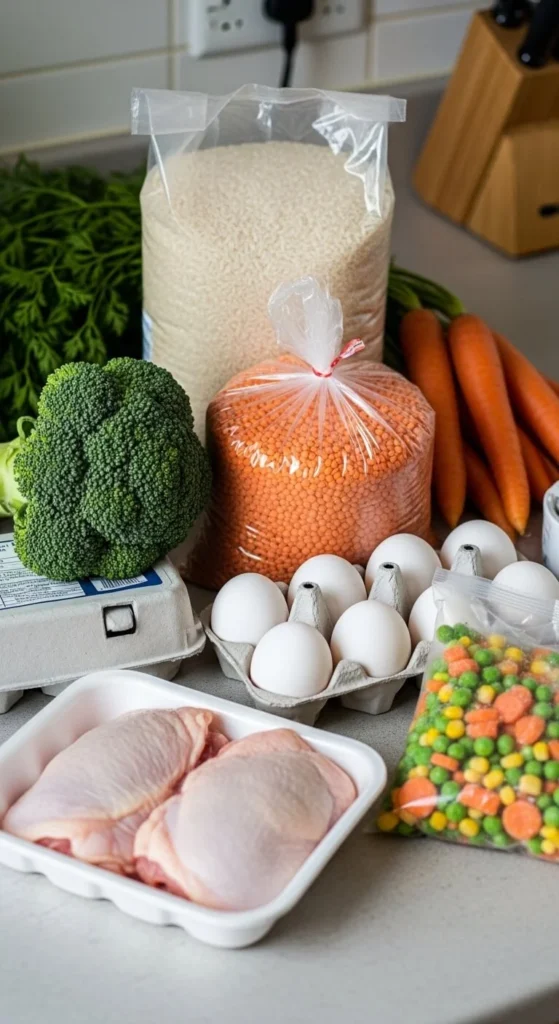
Budget meal prep works best with low-cost, versatile foods. Build your cart around these:
Carbs (cheap + filling):
- Rice
- Pasta
- Oats
- Potatoes
Proteins (affordable options):
- Eggs
- Canned beans or chickpeas
- Chicken thighs
- Tofu
- Lentils
Veggies (seasonal is cheaper):
- Carrots
- Broccoli
- Cabbage
- Zucchini
- Frozen vegetables
Buy in bulk when it makes sense, especially for rice, oats, and beans. And don’t skip frozen veggies — they’re cheap, nutritious, and last longer.
Cook in big batches (one session, many meals)
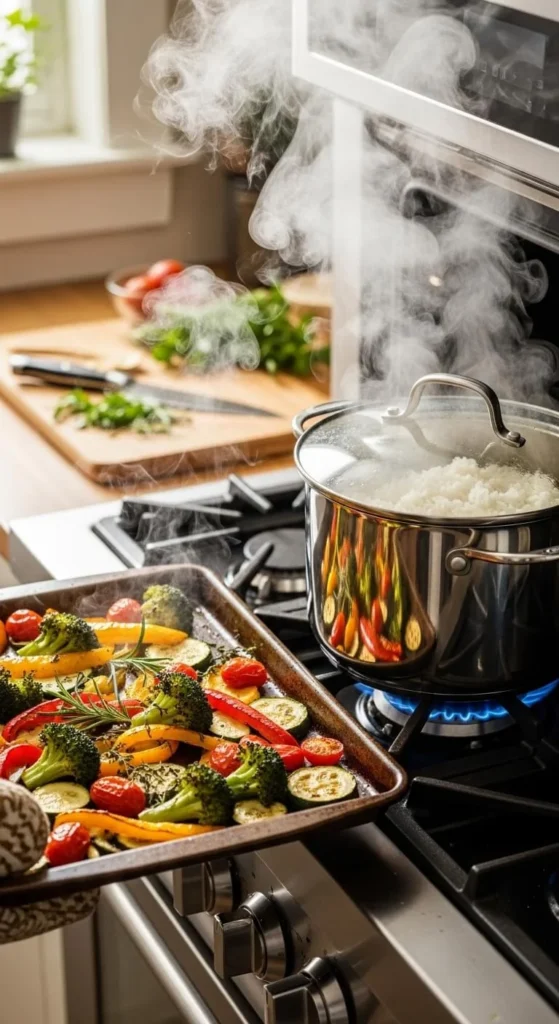
Pick one day — usually Sunday — and cook everything at once. Aim for 60–90 minutes total.
Here’s an easy batch method:
- Cook your carbs:
- Make a big pot of rice or pasta.
- Roast your veggies:
- Chop, toss with oil, salt, and pepper, and roast on one large tray.
- Prepare your protein:
- Bake chicken, pan-fry tofu, or simmer lentils.
While one thing cooks, prep the next. You’re using your time efficiently instead of cooking every single day.
Build balanced meals, not random leftovers
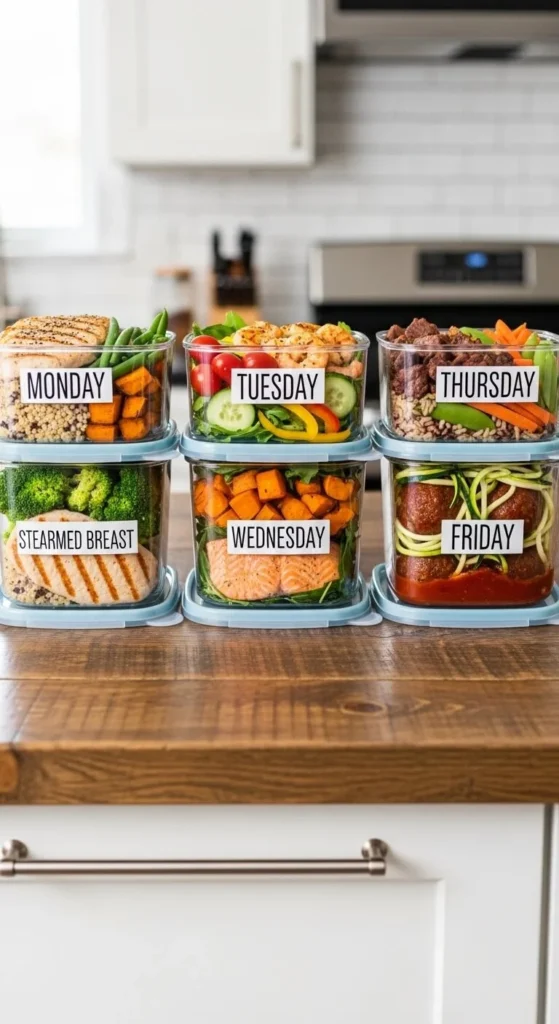
When everything is cooked, assemble your meals using a simple formula:
Each container should have:
- 1 portion of carbs (rice, pasta, or potatoes)
- 1 portion of protein (chicken, beans, or eggs)
- 1–2 portions of veggies
For example:
- Brown rice + roasted broccoli + chicken
- Pasta + lentil sauce + mixed veggies
- Quinoa + chickpeas + roasted carrots
This keeps meals filling, nutritious, and satisfying — so you’re less tempted to order takeout.
Store smart so food actually lasts
How you store food is just as important as how you cook it.
Use airtight containers and follow these rules:
- Keep salads and dressings separate.
- Store sauces in small jars to add later.
- Label containers with dates.
Most cooked food lasts 3–5 days in the fridge. If you prep more than that, freeze part of it on day one.
Make your meals taste different all week
Nobody wants to eat the exact same thing five days in a row. The trick is sauces.
Keep a few cheap flavor boosters on hand:
- Soy sauce
- Hot sauce
- Pesto
- Greek yogurt
- Lemon juice
- Simple vinaigrette
Same base ingredients can taste totally new with different toppings:
- Day 1: rice bowl with soy sauce
- Day 2: same bowl with yogurt sauce
- Day 3: add hot sauce and herbs
Variety without extra cooking.
Stretch your food even further
Want to lower costs even more? Try these ideas:
- Add extra veggies to every meal — they’re cheap and filling.
- Mix beans into ground meat to double your portions.
- Turn leftover rice into fried rice later in the week.
- Use bones or veggie scraps to make homemade broth.
Every small trick adds up to real savings over time.
Budget-friendly sample prep for one week
Here’s a simple, low-cost plan you can copy:
Cook once:
- 4 cups rice
- 1 large tray roasted veggies
- 1 kg baked chicken thighs
Eat all week:
- Lunch: rice + veggies + chicken
- Dinner: same base, different sauces
- Breakfast: oatmeal or eggs
Total grocery cost can often stay under what you’d spend on two takeout meals.
Avoid common meal prep mistakes
Don’t:
- Cook too many complicated recipes.
- Skip seasoning — bland food gets wasted.
- Overfill your fridge with fragile foods like salad greens.
- Forget snacks (fruit, nuts, yogurt).
Do:
- Keep things simple.
- Use salt, oil, and herbs generously.
- Prep snacks so you don’t impulse-buy chips or candy.
Make it a habit, not a chore
Meal prep gets easier every week. You’ll learn:
- What you actually like to eat
- How much food you really need
- Which recipes save you the most money
Soon, it becomes routine — not effort.
Final takeaway
Meal prepping on a budget isn’t about perfection — it’s about intention. Plan first, cook once, reuse smartly, and flavor creatively. You’ll save money, reduce waste, and feel calmer all week long.
Love this approach? Save this guide for your next grocery day and start building a simple, affordable meal prep routine that actually works.

Hannah Collins is a passionate home cook and food storyteller who believes every recipe tells a little love story. At TastyWriter, she shares simple, delicious recipes made for real kitchens and busy days — from cozy comfort dishes to creative new favorites. When she’s not cooking, you’ll find her photographing food, testing family recipes, or sipping tea while dreaming up her next tasty idea.
Leave a Reply