

There’s something special about placing a golden, perfectly roasted turkey at the center of your holiday table. It’s more than just a meal — it’s tradition, celebration, and comfort all in one. But roasting a turkey can feel intimidating. Dry meat, uneven cooking, burnt skin… the fear is real.
The good news? A juicy, flavorful holiday turkey is absolutely achievable with the right preparation and a few simple techniques.
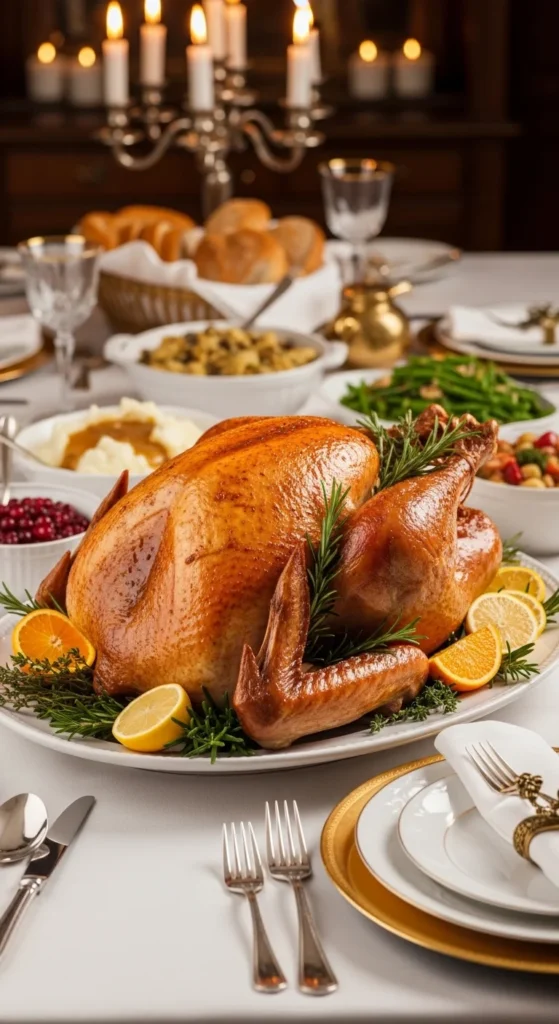
Let’s walk through exactly how to roast a turkey that’s moist inside and beautifully crisp on the outside.
Choose the Right Turkey
Start with the right bird.
Plan for about:
- 1 to 1½ pounds of turkey per person
This ensures leftovers (and there should always be leftovers).
Fresh or frozen both work well. If using frozen, thaw it completely in the refrigerator. This can take several days depending on size.
Never rush thawing at room temperature. Even thawing is key for even roasting.
Brine for Extra Moisture (Optional but Worth It)
Brining helps prevent dryness.
You can choose:
- Wet brine (saltwater solution)
- Dry brine (salt rubbed directly on turkey)
A simple dry brine works beautifully:
- Pat turkey dry
- Rub generously with salt
- Refrigerate uncovered for 24 hours
Salt draws out moisture, then reabsorbs it, seasoning the meat deeply.
This step adds flavor and improves juiciness.
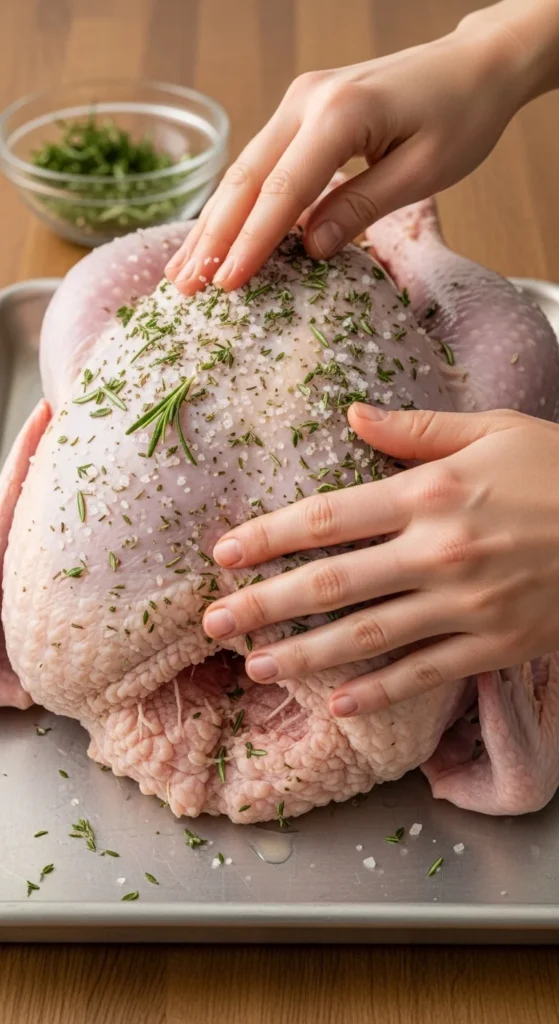
If short on time, you can skip brining — but it does make a difference.
Prep the Turkey Properly
Before roasting:
- Remove giblets
- Pat turkey completely dry
- Let it sit at room temperature for 30–60 minutes
Dry skin equals crisp skin.
Moisture on the surface prevents browning.
You can stuff the cavity loosely with:
- Onion
- Lemon
- Garlic
- Fresh herbs
These add subtle flavor without affecting cooking time too much.
Avoid tightly packed stuffing inside the bird, as it can cook unevenly.
Season Generously
Flavor comes from both the outside and under the skin.
Gently loosen the skin over the breast and rub softened butter underneath.
Then coat the outside with:
- Butter or olive oil
- Salt
- Black pepper
- Fresh herbs like thyme or rosemary
Butter helps crisp the skin and adds richness.
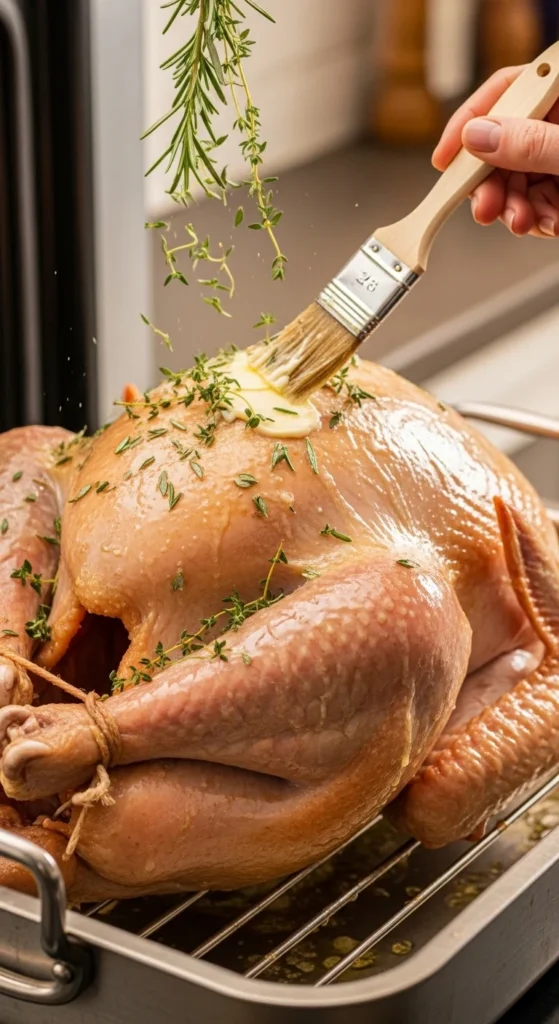
Don’t be shy with seasoning. It’s a large bird.
Roast at the Right Temperature
Preheat your oven to 325°F (165°C).
Place the turkey breast-side up on a roasting rack inside a roasting pan.
Roast uncovered.
General timing guideline:
- About 13–15 minutes per pound
Baste occasionally with pan juices, but don’t open the oven too often.
Too much door opening drops the temperature and affects cooking.
If the skin browns too quickly, loosely tent with foil.
Use a Meat Thermometer
This is the most reliable way to avoid dry turkey.
Insert the thermometer into:
- The thickest part of the thigh (without touching bone)
Turkey is done when it reaches:
- 165°F (74°C) internal temperature
The breast may finish slightly earlier, but as long as the thigh reaches safe temperature, the turkey is ready.
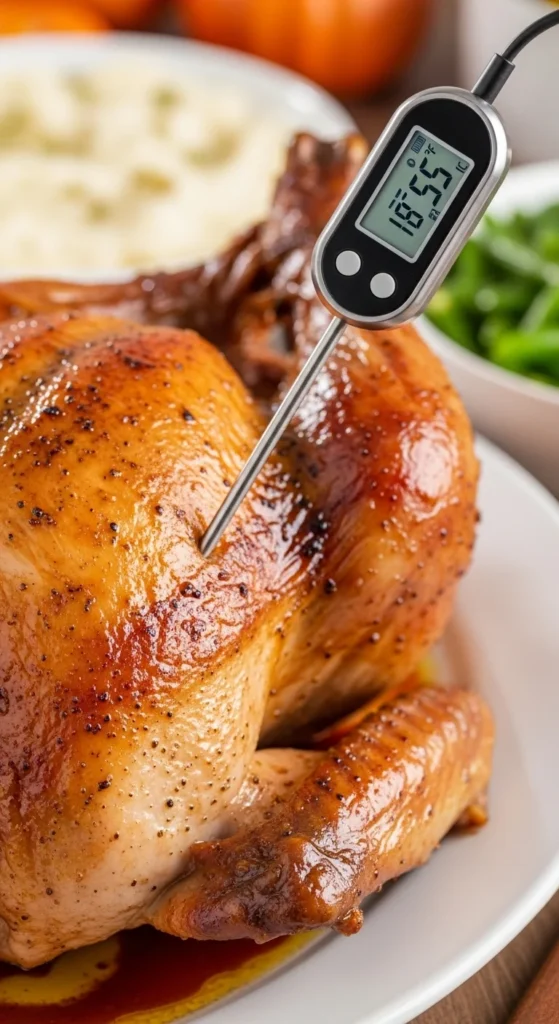
Remove it from the oven immediately once it reaches temperature.
Overcooking even by 10–15 minutes can dry it out.
Let It Rest Before Carving
Resting is essential.
After roasting:
- Tent loosely with foil
- Let it rest 20–30 minutes
Resting allows juices to redistribute throughout the meat.
If you carve immediately, juices will run out and the turkey will dry quickly.
Patience here makes a big difference.
Carve for Beautiful Presentation
Carving properly makes serving easier and cleaner.
Steps:
- Remove legs and thighs first
- Slice breast meat against the grain
- Arrange on a serving platter
Add fresh herbs or citrus slices for presentation.
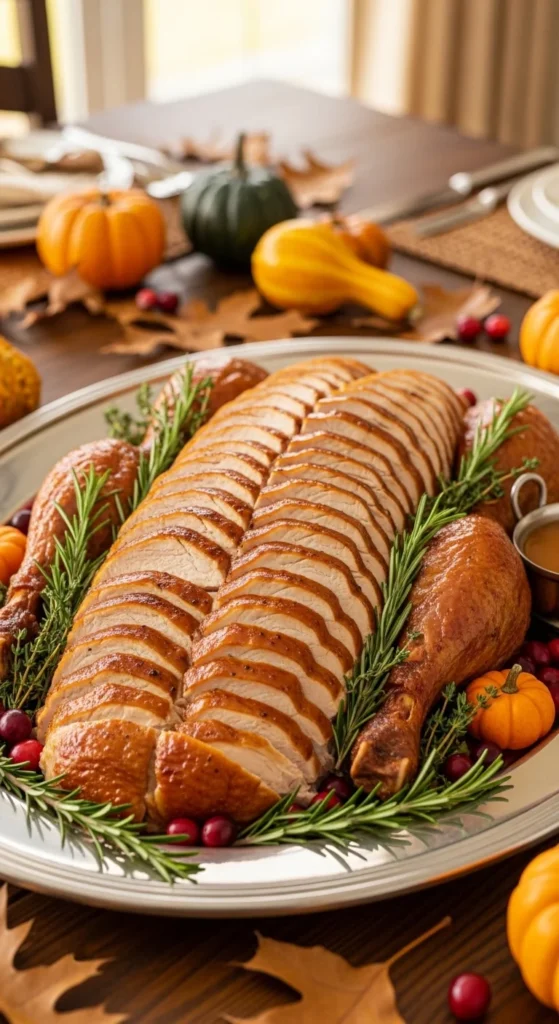
Presentation enhances the holiday experience.
Avoid Common Holiday Turkey Mistakes
Here’s what often leads to dry or uneven turkey:
- Not thawing completely
- Skipping seasoning
- Overcooking
- Not using a thermometer
- Carving too soon
Each of these affects texture and flavor.
Keep it simple and controlled.
Why These Techniques Work
Juicy turkey comes down to:
- Proper thawing
- Generous seasoning
- Controlled roasting temperature
- Accurate internal temperature
- Resting time
Holiday cooking doesn’t need to be stressful.
Once you understand the basics, roasting turkey becomes manageable.
Final Thoughts
Roasting a turkey for the holidays is about preparation, patience, and timing. With proper seasoning, the right oven temperature, and a good thermometer, you’ll get a beautifully golden bird that’s tender and full of flavor.
It’s not about perfection. It’s about gathering around the table and sharing a meal made with care.
Save this guide for later and roast your next holiday turkey with confidence.

Hannah Collins is a passionate home cook and food storyteller who believes every recipe tells a little love story. At TastyWriter, she shares simple, delicious recipes made for real kitchens and busy days — from cozy comfort dishes to creative new favorites. When she’s not cooking, you’ll find her photographing food, testing family recipes, or sipping tea while dreaming up her next tasty idea.
Leave a Reply