

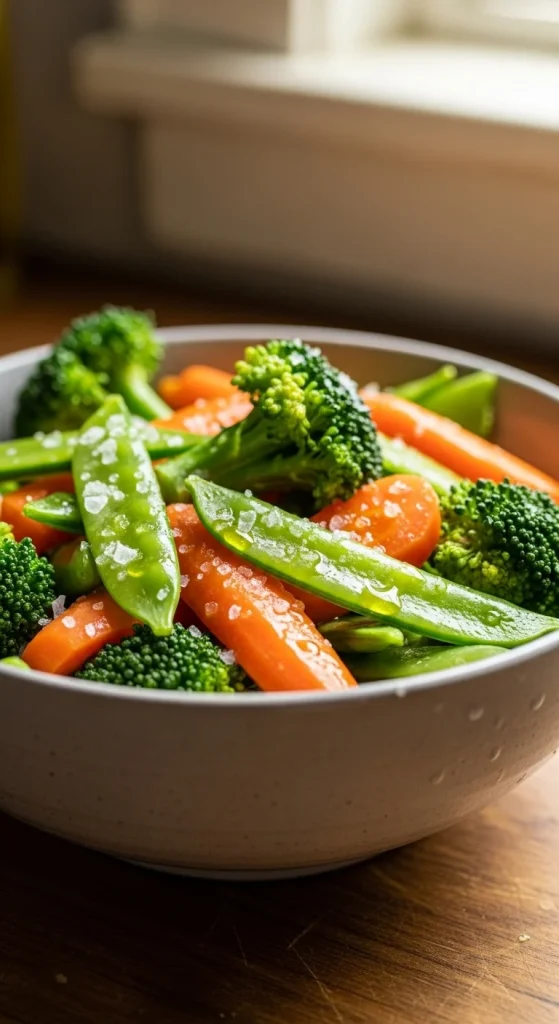
There’s nothing more disappointing than overcooked, dull, and mushy vegetables — especially when you know how vibrant and crisp they should be. Steaming vegetables is one of the easiest, healthiest cooking methods, but doing it right takes just a bit of know-how. When done properly, you’ll get vegetables that are bright, crisp, and packed with flavor — not soggy or bland.
Why Steaming Beats Boiling
When you boil vegetables, much of their nutrition — especially vitamins C and B — leaches into the water and disappears down the drain. Steaming, on the other hand, keeps nutrients locked in while preserving the natural color and crunch.
It’s also one of the simplest cooking methods: no oil, no mess, and no fancy gadgets required. Whether you’re using a bamboo steamer, a metal insert, or just a heat-safe sieve over a pot, the principles stay the same.
The goal: cook the vegetables until just tender while keeping their natural color and bite.
Step 1: Choose & Prep Your Veggies
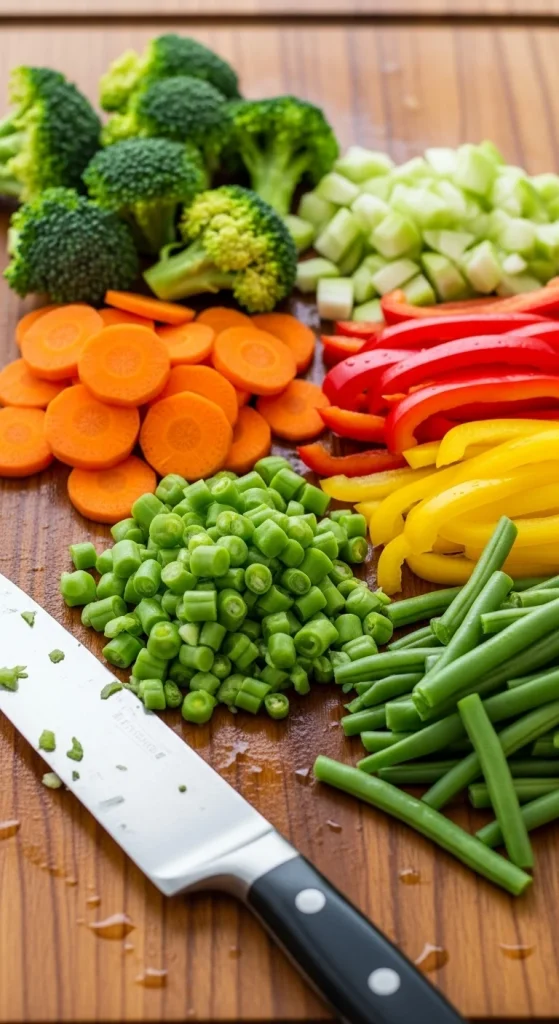
Different vegetables steam at different rates, so knowing how to prep them makes all the difference.
- Quick steamers: Spinach, kale, peas, and broccoli florets cook in just a few minutes.
- Medium steamers: Carrots, cauliflower, and green beans take a bit longer.
- Slow steamers: Root vegetables like potatoes or beets need extra time or smaller cuts.
Prep tip:
Cut vegetables into even pieces so they cook at the same rate. Thicker chunks will take longer, so go smaller for harder veggies.
Step 2: Set Up Your Steamer
If you have a steamer basket, great! If not, don’t worry — you can improvise.
Here’s how to set it up:
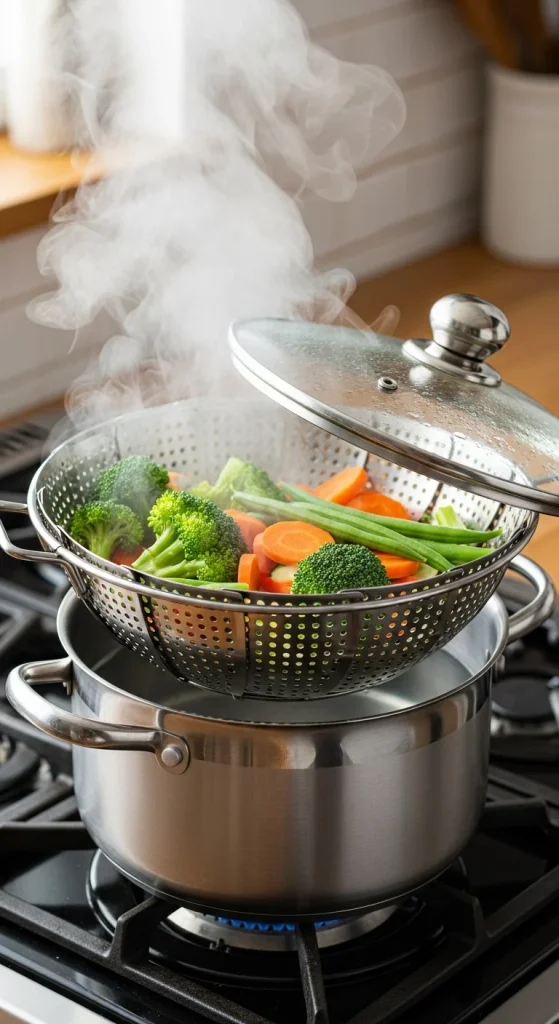
- Fill a pot with about one inch of water.
- Place your steamer basket (or heatproof colander) above the water line.
- Cover with a lid to trap the steam.
The key is keeping the vegetables above the water, not in it. Steam cooks by heat and moisture, not direct boiling.
Add herbs or lemon slices to the water for a subtle flavor infusion. As the steam rises, it carries those aromas into your veggies.
Step 3: Steam to the Perfect Doneness
Timing is everything when steaming vegetables. Too short and they’re raw; too long and you lose that color and crunch.
Here’s a handy guide:
| Vegetable | Steam Time |
| Spinach or kale | 2–3 minutes |
| Broccoli florets | 4–5 minutes |
| Carrots (sliced) | 6–8 minutes |
| Cauliflower florets | 7–8 minutes |
| Green beans | 5–6 minutes |
| Potatoes (cubed) | 10–12 minutes |
Check doneness by piercing with a fork — it should go in easily but still meet a little resistance.
Pro tip: Keep the lid on as much as possible. Every time you lift it, steam escapes and lowers the temperature.
Step 4: Lock In Flavour After Steaming
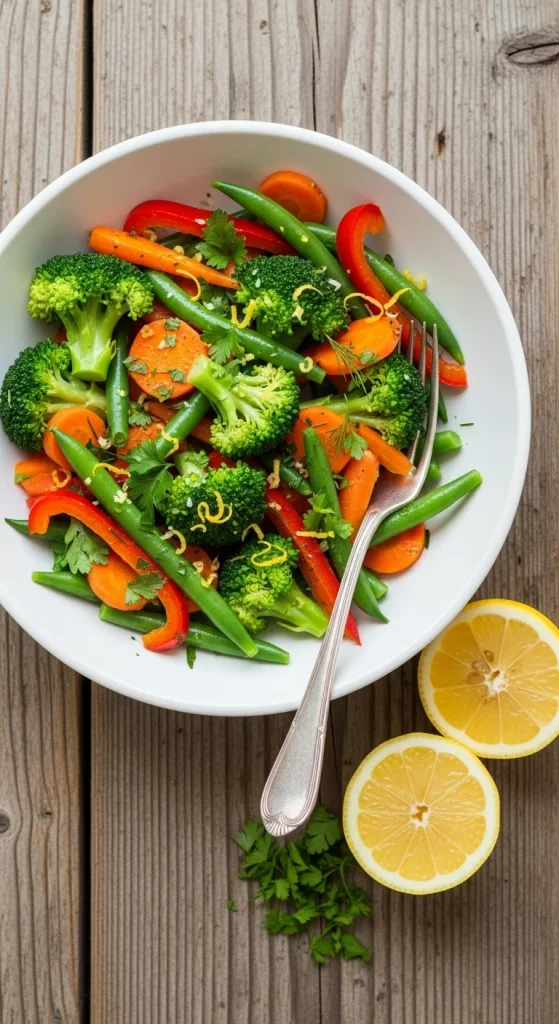
Steamed vegetables can taste amazing with the right finishing touches. Don’t just serve them plain — a quick seasoning transforms everything.
Try these easy upgrades:
- Toss with olive oil, salt, and pepper for a simple finish.
- Add a squeeze of lemon or lime for brightness.
- Melt a bit of butter with garlic and drizzle it on top.
- Sprinkle with Parmesan or toasted nuts for texture.
For an Asian-inspired twist, mix soy sauce, sesame oil, and a pinch of chili flakes, then toss your steamed veggies while still warm.
Step 5: Avoid Common Mistakes
Even though steaming seems foolproof, these small errors can ruin your results:
- Overcrowding the basket: Steam needs space to circulate. Cook in batches if needed.
- Too much water: The veggies shouldn’t touch the boiling water — that turns them soggy.
- Forgetting to season: Steam enhances flavor, but a touch of salt or lemon brings it to life.
- Skipping the lid: Without it, steam escapes and the veggies cook unevenly.
If you accidentally oversteam, shock the vegetables in ice-cold water for a few seconds to stop the cooking and help them regain some firmness and color.
Bonus Tip: Batch-Prep for the Week
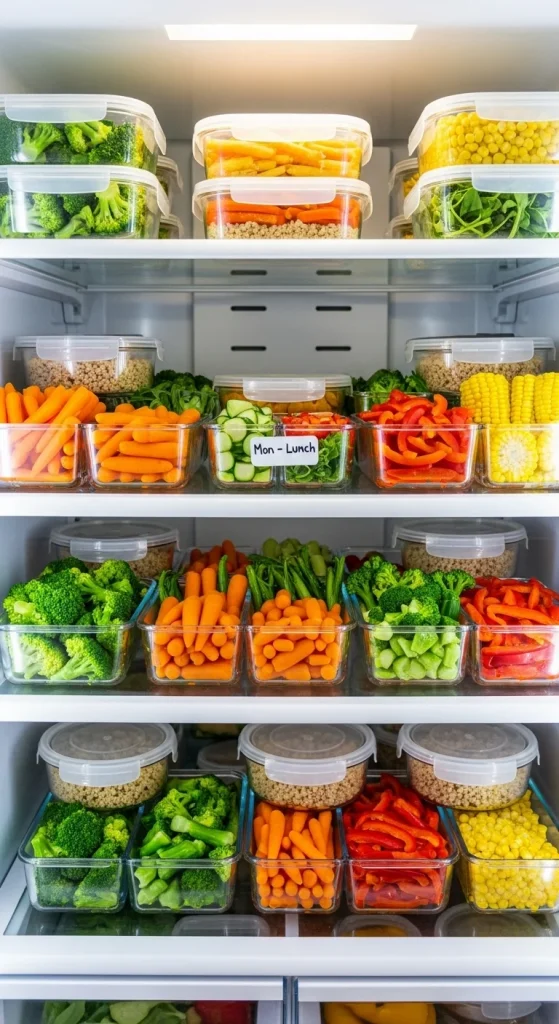
Steamed vegetables store beautifully for meal prep. Cool them completely before refrigerating in airtight containers.
They’ll stay crisp and colorful for 3–4 days. Reheat gently in the microwave with a damp paper towel or toss them quickly in a hot skillet to revive that just-steamed texture.
The Takeaway
Steaming vegetables the right way is all about balance — just enough time to soften, but not enough to dull. When done properly, they keep their vibrant color, crisp texture, and delicious natural flavor without needing heavy sauces or extra calories.
Once you master the basics, you’ll find yourself using this technique again and again — for quick weeknight sides, light lunches, or elegant dinner plates.
Save this guide for your next meal — your veggies will never be boring again!

Hannah Collins is a passionate home cook and food storyteller who believes every recipe tells a little love story. At TastyWriter, she shares simple, delicious recipes made for real kitchens and busy days — from cozy comfort dishes to creative new favorites. When she’s not cooking, you’ll find her photographing food, testing family recipes, or sipping tea while dreaming up her next tasty idea.
Leave a Reply